
By Jeff Mason and Trevor Hunnicutt
WASHINGTON, Dec 2 (Reuters) - U.S. Defense Secretary Pete Hegseth said on Tuesday he had watched the first U.S. strike in September on an alleged drug-smuggling vessel in real time but did not see survivors in the water or the second lethal strike that he described as being carried out in the "fog of war."
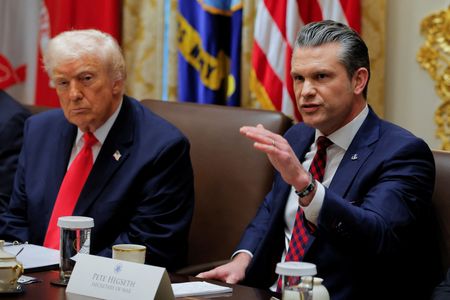
Hegseth, speaking at a Cabinet meeting alongside President Donald Trump, defended the follow-up strike that has drawn bipartisan scrutiny from Congress and concerns about the legality of the administration's moves.
The Pentagon chief's remarks were his most fulsome explanation of the events on September 2, when U.S. forces blew up the first in a series of alleged drug-carrying vessels as part of Trump's efforts to curtail the inflow of narcotics from Latin America and put pressure on Venezuela.
Hegseth has faced particular scrutiny about the strikes after the Washington Post reported the commander overseeing the operation ordered a second strike to take out two survivors who were clinging to the structure in the water in order to comply with the Pentagon chief's direction that everyone be killed.
Sitting next to Trump at the White House, Hegseth said he had seen the first strike that day and then went on to another meeting.
"I watched that first strike live," Hegseth said. "At the Department of War we've got a lot of things to do, so I didn't stick around...I moved on to my next meeting."
A couple of hours later, he said, he learned that Admiral Frank Bradley had ordered the second strike.
"Admiral Bradley made the correct decision to ultimately sink the boat and eliminate the threat," Hegseth said.
Two U.S. officials told Reuters that Hegseth has ordered lethal strikes on drug vessels, including the one in question, as part of a broader Trump administration campaign that equates suspected drug traffickers with terrorists despite objections from many legal experts.
However, the officials did not confirm Hegseth's involvement in the operational decision-making that led to the second strike on the day in question to complete the mission to destroy the drug vessel. The decision-making on the operation itself was handed off to Bradley, the head of U.S. Special Operations Command, which carried out the operation, they said.
The White House said on Monday that Bradley had authorization to conduct the second strike, which Hegseth reiterated.
"We have his back," Hegseth said.
Pressed on whether he saw survivors after the first strike, Hegseth said no. "I did not personally see survivors," Hegseth said. "That thing was on fire...This is called the fog of war."
Trump, who told reporters on Air Force One on Sunday that he would not have wanted the second strike, largely voiced support on Tuesday, while saying he hadn't been aware of the second strike.
(Reporting by Jeff Mason and Trevor Hunnicutt; additional reporting by Phil Stewart and Idrees Ali; Editing by Colleen Jenkins and Lincoln Feast)