
By Krisztina Than and Gergely Szakacs
BUDAPEST, Dec 2 (Reuters) - Hungarian Prime Minister Viktor Orban's Fidesz party narrowed the gap on opposition rival Tisza in November, an opinion poll showed on Tuesday, helped by large-scale spending ahead of next year's election and a slight improvement in consumer confidence.
The poll conducted on November 21-28 by 21 Research Centre, a Budapest-based think tank, showed Tisza still had a strong lead over Orban's right-wing Fidesz, but it was narrowing. This was similar to the findings of a Median survey published last week.
Orban, a nationalist who has been in power since 2010, has struggled to revive the economy from an inflationary surge following Russia's 2022 invasion of Ukraine that strained Hungary's finances.
ORBAN HAS LAUNCHED A SERIES OF VOTER-PLEASING MEASURES
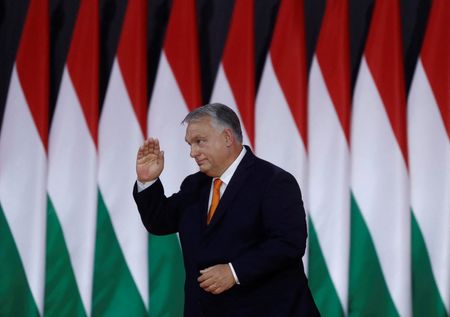
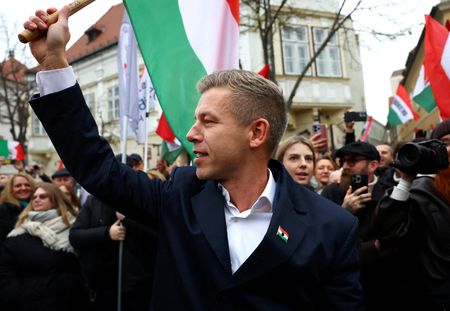
Orban's centre-right rival Peter Magyar is threatening to unseat him in the election that is likely to take place in April. The prime minister has launched a raft of voter-pleasing measures in recent months that S&P Global estimates are worth some 2% of economic output.
The 21 Research Centre poll showed the Tisza party was backed by 47% of decided voters compared with 40% for Fidesz. The gap narrowed from 10 percentage points in October, the poll showed. The far-right Mi Hazank (Our Homeland) party polled at 6% in November, which would represent enough votes to give it seats in parliament.
"We think that the welfare measures are having an impact," 21 Research Centre Director Daniel Rona said, noting in particular Orban's moves to help pensioners.
He said support for Fidesz has increased the most among people older than 65, but even so, the poll gains were within the margin of error and upcoming surveys would show whether the improvement is lasting.
While the Median survey last week also registered a narrowing gap between the two parties and fewer people hoping for a change in government, it said 60% of those polled believed the country, mired in stagnation for a third year, was on the wrong track.
Hungarian think tank GKI's consumer confidence index retreated in November from a 14-month-high seen in October but was still above its mid-year levels.
The European Commission's monthly survey also showed slightly weaker confidence among Hungarian consumers in November, but also with a reading that was off summer lows.
Orban has stepped up his pre-election campaign since September, launching a subsidised mortgage scheme for first-home buyers, tax cuts for families and a pension top-up to be paid in February, shortly before the election.
He has also secured a one-year exemption from U.S. sanctions on Russian energy from his ally, U.S. President Donald Trump, staving off a surge in energy prices, which would have hit Hungary's import-reliant economy hard.
(Reporting by Krisztina Than and Gergely SzakacsEditing by Frances Kerry)