
By Bruna Cabral
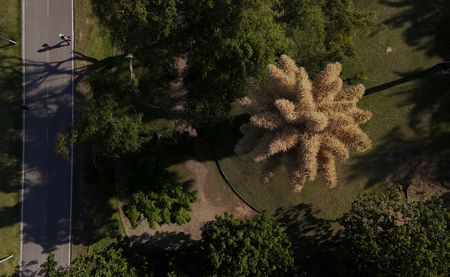
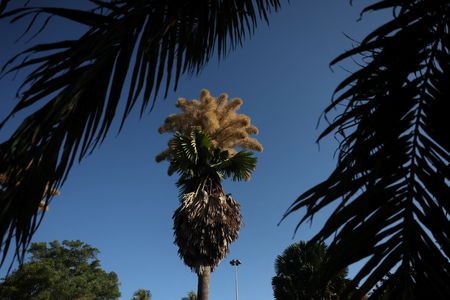
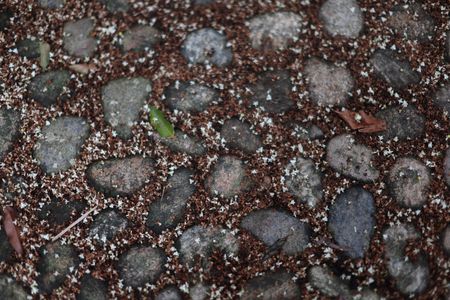
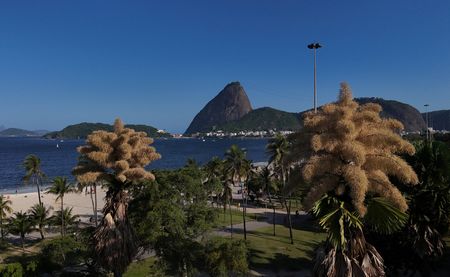
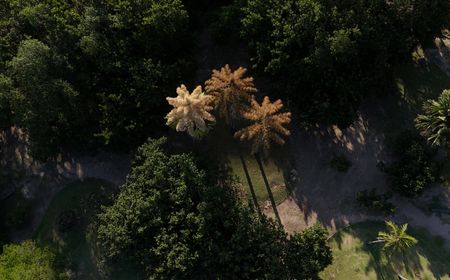
RIO DE JANEIRO, Dec 2 (Reuters) - A golden cascade of Talipot tree blossoms has captivated Rio de Janeiro as spring draws to a close, marking the first and last bloom of these palm trees decades after they were brought from South Asia by renowned landscape architect Roberto Burle Marx.
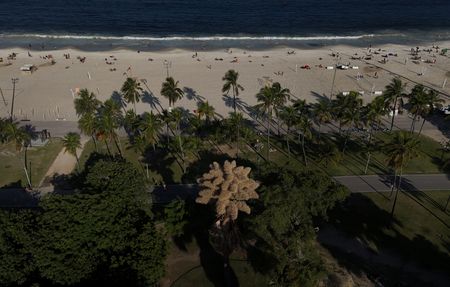
Native to India and Sri Lanka, the palm tree arrived in Brazil in the 1960s as Burle Marx was constructing the park of Aterro do Flamengo, where several of the trees were planted. Some of the trees also ended up at Rio's Botanical Garden.
The Talipot can exceed 20 meters (65.6 feet) in height, and takes between 30 and 80 years to bloom. About a year after flowering, the plant dies naturally, said Thais Hidalgo, the head of curatorship of the living collection at the Botanical Garden.
"This palm tree invests all its energy in this single reproductive cycle to produce thousands of fruits," she said. "After that, its leaves dry up."
There are three Talipot units in the Botanical Garden, but only two are in bloom. The other was planted just a year ago, so it will be a while before the phenomenon occurs again. The last flowering of a Talipot there was in 2010.
According to Hidalgo, the group of palm trees at Flamengo Park is larger, but not all of them are flowering. Environmental conditions can affect the plant's maturation, she added.
The death of the palm tree, however, is not really the end. At the Botanical Garden, Talipot trees are cut at the base and give rise to new seedlings.
(Reporting by Bruna Cabral; Writing by Fernando Cardoso; Editing by Bill Berkrot)