
By Joshua McElwee and Catherine Cartier
BEIRUT, Dec 2 (Reuters) - Pope Leo bade farewell to Lebanon on Tuesday with a fervent appeal to leaders across the Middle East to listen to their people's cries for peace and to change course away from the "horror of war".
The first U.S. pope wrapped up his first overseas trip as Catholic leader by addressing 150,000 people at a Mass on Beirut's historic waterfront, where he pleaded for Lebanon to address years of conflict, political crises and economic misery.
Leo said the region as a whole needed new approaches to overcome political, social and religious divisions.
"The path of mutual hostility and destruction in the horror of war has been travelled too long, with the deplorable results that are before everyone's eyes," Leo said. "We need to change course. We need to educate our hearts for peace!"
'MAY THE ATTACKS CEASE'
Leo has been visiting Lebanon for three days on the second leg of an overseas trip that started in Turkey, in which he has pleaded for peace in the Middle East and warned that humanity's future was at risk from the world's proliferating conflicts.
The pope, a relative unknown on the world stage before his election to the papacy in May, has been closely watched as he made his first speeches overseas and interacted for the first time with people outside mainly Catholic Italy.
In Lebanon, he urged the heads of religious sects to unite to heal the country and pressed political leaders to persevere with peace efforts after last year's devastating war between Israel and Iran-backed Hezbollah, and continued Israeli strikes.
He also asked the international community "to spare no effort in promoting processes of dialogue and reconciliation" and asked those with "political and social authority" to "listen to the cry of your peoples who are calling for peace".
In remarks at Beirut's airport moments before taking off for Rome, Leo made his first apparent reference to Israeli strikes, saying he had been unable to visit Lebanon's south because it is "currently experiencing a state of conflict and uncertainty".
"May the attacks and hostilities cease," he pleaded. "We must recognise that armed struggle brings no benefit."
Lebanese President Joseph Aoun asked Leo to keep Lebanon in his prayers, saying: "We have heard your message. And we will continue to embody it."
'PAIN AFTER PAIN'
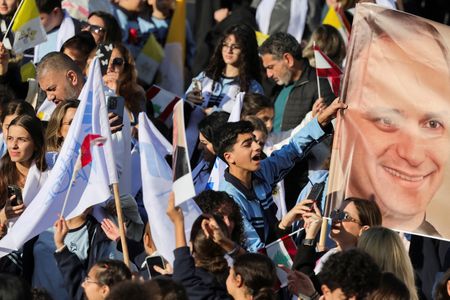
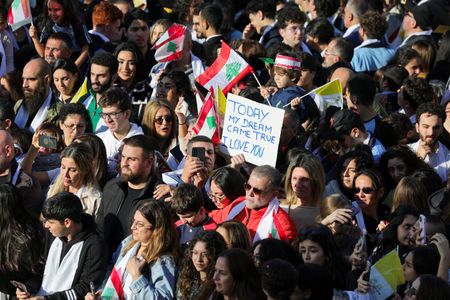
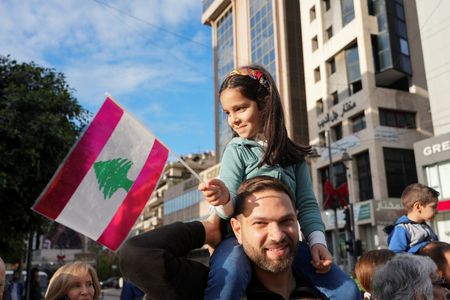
Crowds had gathered at the waterfront hours before the start of Tuesday's Mass. They waved Vatican and Lebanese flags as Leo toured in an enclosed popemobile, offering blessings as some in the crowd used umbrellas to guard against a strong Mediterranean sun.
Maroun al-Mallah, a 21-year-old student of landscape engineering, arrived at the site of Leo's Mass before dawn to volunteer and said the visit could be a reset for Lebanon.
"It was lovely to know there was a sign of hope coming back to Lebanon," Mallah told Reuters.
"Even in university, we just think what could come next. It's just pain after pain after pain ... especially after the third biggest explosion happened" at the port, he said.
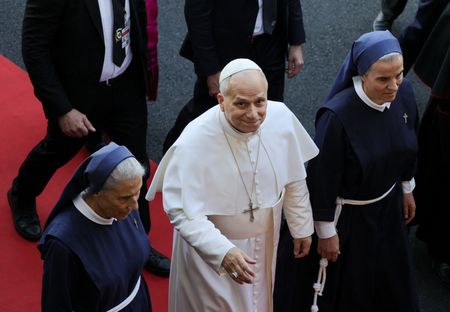
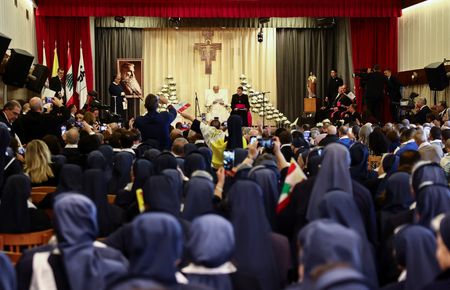
Earlier on Tuesday, Leo visited a psychiatric hospital run by Franciscan nuns and prayed near rubble at the Beirut port, where a 2020 chemical explosion shredded parts of Beirut.
The blast killed more than 200 people and caused billions of dollars in damage, but an investigation into the cause has been stymied and no one has been held to account.
Leo laid a wreath of flowers at a memorial there and greeted about 60 blast survivors and relatives of the victims from different religions holding photos of their lost loved ones.
He gave each a rosary in a pouch bearing his coat of arms. One woman sobbed as she greeted Leo and asked if she could give him a hug. He nodded, and they embraced.
Cecile Roukoz, who lost her brother in the blast, said Leo "will raise his voice for justice, and we need justice for all the victims".
Lebanon, which has the largest proportion of Christians in the Middle East, has been rocked by the spillover of the Gaza conflict as Israel and Lebanese armed group Hezbollah went to war, culminating in a devastating Israeli offensive.
The country, which hosts 1 million Syrian and Palestinian refugees, is also struggling to overcome a severe economic crisis after decades of profligate spending sent the economy into a tailspin in late 2019.
(Reporting by Joshua McElwee and Catherine Cartier; Additional reporting by Maya Gebeily; Editing by Clarence Fernandez and Alex Richardson)