
By Catarina Demony and Marissa Davison
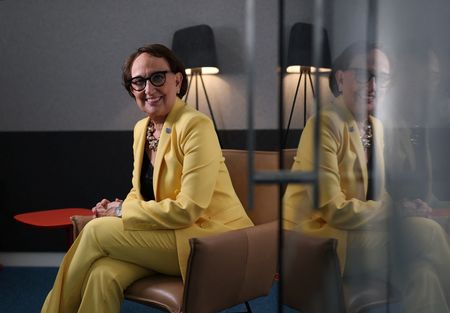
LONDON, Dec 3 (Reuters) - Rebeca Grynspan, Costa Rica's former vice president and a frontrunner to become the next United Nations secretary-general, said that if equality triumphs over discrimination, the world body will finally see its first woman lead it.
The process to elect the next U.N. chief formally kicked off last week as member states were asked to nominate candidates to take over the role from Antonio Guterres of Portugal from January 1, 2027.
Despite the U.N.'s 80-year history as an international agency for peace and cooperation, the secretary-general role has never been held by a woman, a reality Grynspan says defies explanation given how many women have the merit and credentials to lead.
Publicly declared candidates for the role include Grynspan, who currently serves as secretary-general of the U.N. Conference on Trade and Development, Chile's former President Michelle Bachelet, and Argentine diplomat Rafael Grossi.
"We don't need special treatment. What we are really asking for is no discrimination," Grynspan, 69, told Reuters in an interview in London. "If equality will prevail, we will be able to get there. That's the only thing that we are asking: equal treatment."
Calls have been growing for a woman to assume the role, and the next secretary-general will likely come from Latin America as the position traditionally rotates among regions. Latin America, along with the Caribbean, is next on the list.
Grynspan said the U.N. must become more inclusive, pointing out that when it was founded in the aftermath of World War Two, it had 51 member states, whereas today there are 193, most of which had no role in shaping the institution's original 1945 architecture.
"Those voices have to have wider space to be heard," Grynspan said, adding that granting permanent Security Council seats to Africa and Latin American nations would be a welcome reform.
U.N. SHOULD EMBRACE REFORM, GRYNSPAN SAYS
Should Grynspan be elected, she would assume leadership of the U.N. during Donald Trump's tenure as president of the United States.
Trump has maintained the same wary stance on multilateralism that was a hallmark of his first term from 2017 to 2021 and accused the world body of failing to help him broker peace in various conflicts. He describes the U.N. as having "great potential" but says it has to get its "act together".
U.N. leadership has pushed back against Trump's remarks saying it works to implement reforms and that U.S. support for its institutions has saved lives.
Grynspan argued that Trump's critiques could be "constructive" and not "destructive," emphasising that the U.N. should strive for improvement: "The U.N. has to embrace reform, not be defensive about reform."
When asked whether the U.S. president's criticism of the U.N. had merit, Grynspan said it was important to acknowledge a "weakening of trust" in the organisation and to work toward restoring confidence in an institution she described as crucial for global stability.
The U.N. has helped create a world with less poverty and lower maternal and infant mortality rates, among other achievements, she added.
"Institutions have to be able to look at themselves and... admit that they don't do everything right," she said. "What we don't want is to throw away all the experience and infrastructure the U.N. has built these 80 years that has served the world pretty well."
(Reporting by Catarina Demony, Marissa Davison and Mark Bendeich; Editing by Aurora Ellis)