
By Anne Kauranen
NIINISALO, Finland, Dec 9 (Reuters) - Finland has acquired hundreds of drone jammers and detectors, its military said on Tuesday, as countries on NATO's eastern flank strengthen their defences following Russia's invasion of Ukraine.
Drones have been widely used in Ukraine since Russia invaded in 2022, but the rush to build counter-drone capabilities in NATO has intensified since about 20 suspected Russian drones entered Polish airspace in September and were shot down.
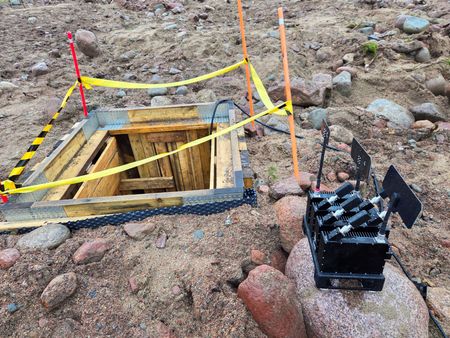
Finland's Defence Forces have acquired hundreds of SkyWiper Omni Max jammers made by Lithuania-based NT Service, Colonel Mano-Mikael Nokelainen, Air Defence Inspector for Finland, told Reuters at a military base in Niinisalo in southwestern Finland.
The jammers, which create a protective dome spanning hundreds of metres to block the control, video and navigation signals of drones, will be deployed around critical infrastructure such as military bases, he said.
DRONE DETECTORS AND RIFLE SIGHTS
"It is very important for the troops' self‑protection. In other words, it makes it possible to prevent drones from flying over the troops," said Nokelainen, whose country borders Russia and joined the NATO military alliance in 2023.
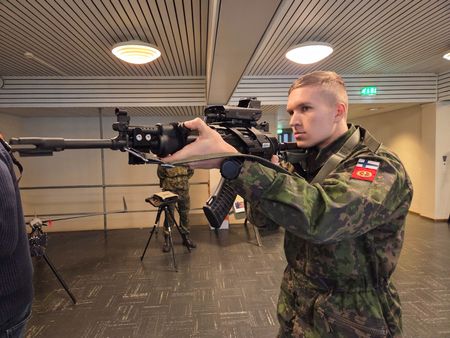
In addition to jammers, the military has acquired hand-held Airfence drone detectors made by Finnish company Sensofusion and Smash add-on rifle sights by Israel-based Smartshooter that facilitate the targeting and shooting down of drones.
The new equipment is intended to counter small reconnaissance drones, Nokelainen said, declining to share details about Finland's capability to counter larger drones.
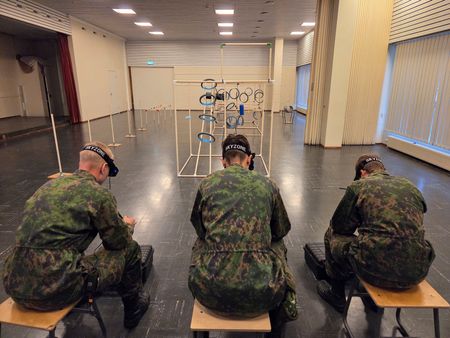
Finland has a fleet of nearly 1,000 First-Person View (FPV) reconnaissance drones - some of them made in the United States and some by Finland's Insta - for practice purposes and will train up to 500 new drone pilots annually, said Lieutenant General Pasi Valimaki, Commander of the Finnish Army.
The military plans to order more drones of different sizes and types as well as counter-drone equipment next year, but Valimaki said it made no sense to stockpile too many devices that could soon become obsolete because of rapid technological developments in the field.
"We must optimise the number of procurements, that is, the volume, to match the training mission we have. Then we must build production capacity for crisis conditions," he said.
THE TRANSFORMED NATURE OF MODERN WARFARE
The use of drones has helped transform the nature of modern warfare, with remotely piloted unmanned aerial vehicles (UAVs) able to swiftly spot and neutralise targets.
Drone flights, mostly of unknown origin, have also been disrupting Europe's airspace in the past few months.
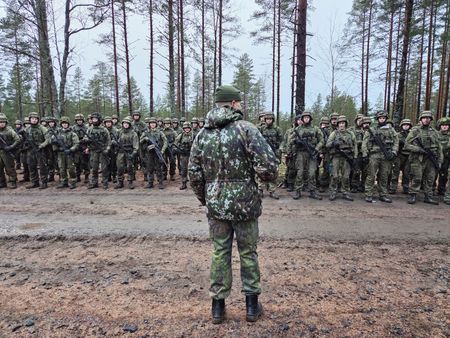
Mikael Vihera, one of dozens of conscripts who participated in a drill at the base in Niinisalo that included hiding from enemy drones in a forest, said drones had made survival more difficult for everyone on the battlefield.
"If a drone spots even just one combatant, it might reveal the whereabouts of the whole grouping," he said.
(Editing by Timothy Heritage)