


By Harold Isaac and Sarah Morland
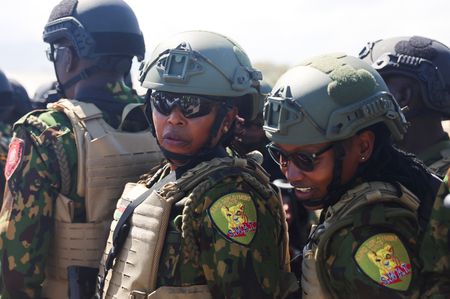
PORT-AU-PRINCE, Dec 8 (Reuters) - A new contingent of 230 Kenyan police arrived in Haiti on Monday, Haiti's national police said, marking the first foreign deployment since the U.N. Security Council approved expanding an existing gang-fighting force in the Caribbean island.
This marks the first deployment since the last time the force was bolstered in February this year, force spokesperson Jack Ombaka told Reuters, adding it now numbered 980 personnel.
The mission is mandated to fight gangs, armed with guns largely shipped in from the United States, that have grown their influence over most of the capital and expanded in central Haiti over recent years, devastating its economy.
Broadly united behind an alliance known as Viv Ansanm, Haiti's gangs are accused of mass killings, gang rapes, extortion and arson, in an extensive conflict that has forced some 1.4 million people from their homes.
The U.N. Security Council at the end of September approved converting the existing mission into a larger "Gang Suppression Force", as the deployment hovered below 1,000 personnel - well short of the 2,500 it had hoped for.
The new structure is authorized to deploy up to 5,500 personnel, but contributions have been slow to materialize. As with the prior model, these rely on nations' voluntary commitments.
Kenya, which was appointed to lead the initial mission, is by far the largest contributor, though Jamaica, the Bahamas, Belize, Guatemala and El Salvador have also sent personnel.
The U.S. has said it has paid over a billion dollars in support for the force - including logistics, meals, sleeping arrangements, vehicle maintenance and medical allocations - but said it is no longer willing to bear the brunt of the costs.
The U.S. has sent just $15 million to a dedicated U.N. trust fund set up to provide for the mission, second to Canada which paid some $63 million. The fund has received no donations since August this year, according to U.N. data.
With $113 million, the fund comes well short of the $800 million the force was initially estimated to require each year.
(Reporting by Harold Isaac in Port-au-Prince and Sarah Morland in Mexico City; Editing by Sam Holmes)