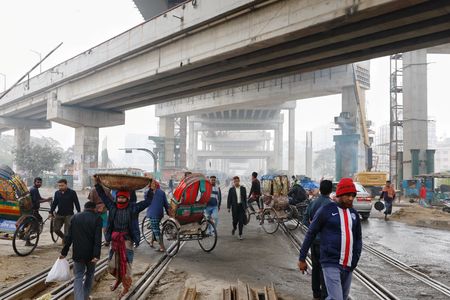

DHAKA, Dec 11 (Reuters) - Bangladesh is set to hold a national election in February, its first since a student-led uprising toppled long-time leader Sheikh Hasina in August 2024. Her Awami League, the South Asian nation’s largest party, has been barred from contesting.
Here are the main political parties and issues shaping the vote in the mainly Muslim nation of about 173 million:
POLITICAL PARTIES
Bangladesh Nationalist Party (BNP): Led by former Prime Minister Khaleda Zia, the BNP is widely seen as the frontrunner. A December poll by the U.S.-based International Republican Institute suggested it could win the most seats.
Founded in 1978 by Zia’s late husband, former President Ziaur Rahman, the party says it stands for Bangladeshi nationalism, economic liberalism and anti-corruption reforms.
Its campaign faces hurdles from Khaleda’s poor health and the absence of her son Tarique Rahman, the acting chief, who is in exile in London. Rahman has vowed to return before the vote.
Jamaat-e-Islami: The Islamist party, banned under Hasina, has re-emerged after the uprising and is expected to finish second.
Led by Shafiqur Rahman, Jamaat advocates Islamic governance under sharia law but seeks to broaden its appeal beyond its conservative base.
It promises a “mafia-free society” and anti-corruption measures. Jamaat previously governed in coalition with the BNP between 2001 and 2006.
National Citizen Party (NCP): Formed by student leaders after the uprising, the NCP has struggled to convert street power into electoral strength due to weak organisation and limited funds. Polls show it trailing far behind BNP and Jamaat.
Its 24-point manifesto calls for a new constitution, judicial reform, free media, universal healthcare and education, and climate resilience. It is led by 27-year-old Nahid Islam, a prominent face in the anti-government protests.
KEY ISSUES
* Restoring democracy after deadly protests that installedan unelected interim government under Nobel laureate MuhammadYunus. * Holding a national referendum on the “July Charter,” whichproposes more representation for women in parliament, termlimits for prime ministers, stronger presidential powers,expanded fundamental rights and judicial independence. * Reviving economic stability after disruptions battered theexport-driven garment industry. * Repairing ties with India, strained by New Delhi’s closeassociation with Hasina, who has sheltered in the Indian capitalsince fleeing Dhaka. The rift has opened space for China todeepen engagement with Bangladesh. * Tackling corruption, widely seen as endemic in governance. * Judicial independence, amid calls to overhaul courtsaccused of politicisation under previous governments. * Freedom of the press, after years of media crackdowns andcensorship.
(Reporting by Krishna N. Das; Editing by Clarence Fernandez)