
By Orathai Sriring and Panarat Thepgumpanat
BANGKOK/PHNOM PENH, Dec 11 (Reuters) - Thailand and Cambodia held talks on Thursday to open a border crossing as their conflict extended into a fourth day, with both countries still waiting to hear from U.S. President Donald Trump, who says he believes he can put a stop to the fighting.
The two Southeast Asian neighbours were locked in negotiations to open up the Khlong Luek crossing and allow Thai workers in the Cambodian city of Poipet to return home, a local district chief told Reuters.
Hundreds of Cambodian workers also gathered on the Thai side of the crossing in a bid to leave, but the official said it was unlikely to reopen on Thursday.
On Wednesday, clashes at more than a dozen locations along the 817-km (508-mile) Thai-Cambodian border saw some of the most intense fighting since a five-day battle in July, which was their worst clash in recent history.
In July, Trump stopped the fighting with calls to both leaders in which he threatened to halt trade talks unless they ended the conflict. Trump says he expects to speak with the countries' leaders on Thursday.
"I think I can get them to stop fighting," Trump told reporters on Wednesday. "I think I'm scheduled to speak to them tomorrow."
THAI PM ANUTIN TO 'EXPLAIN AND CLARIFY' TO TRUMP
However, Thailand has reacted more warily this time to overtures from Trump and Malaysian Prime Minister Anwar Ibrahim, who helped broker the July deal, which resulted in an extended ceasefire signed in October. Thailand insists the matter is for the two countries to resolve.
Thai Prime Minister Anutin Charnvirakul said on Thursday he would "explain and clarify" the situation if Trump called.
"He will need to hear the details directly from me if he contacts me," he told reporters. "I believe the foreign minister will already be providing information at the diplomatic level."
Thailand and Cambodia have blamed each other for the latest clashes that started this week, and have traded accusations that civilians were being targeted in artillery and rocket attacks.
"Right now, no one wants conflict, especially with neighboring countries," Anutin said. "But Thailand is very confident that it has been invaded. Therefore, it is necessary to safeguard the country’s independence and sovereignty."
CAMBODIA ACCUSES THAILAND OF 'BRUTAL ACTS'
Cambodia's Interior Ministry said late on Wednesday that homes, schools, roads, pagodas and ancient temples had been damaged by "Thailand's intensified shelling and F-16 air strikes targeting villages and civilian population centres up to 30 km inside Cambodian territory".
On Thursday, Cambodia's defence ministry again accused Thailand of committing "brutal acts of aggression" against civilian targets. Thailand denies that it targets civilian infrastructure.
The clashes have already taken a heavy toll on civilians, with 11 people killed in Cambodia, including an infant, and 74 people wounded, defence ministry spokesperson Maly Socheata said.
Nine Thai soldiers have been killed in the fighting and more than 120 were wounded, the Thai army said. Hundreds of thousands of people have been evacuated from border areas in both countries.
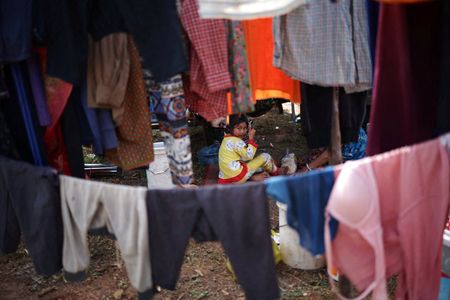
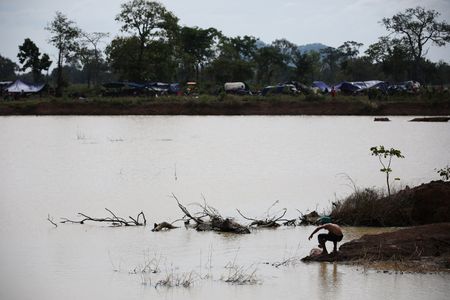
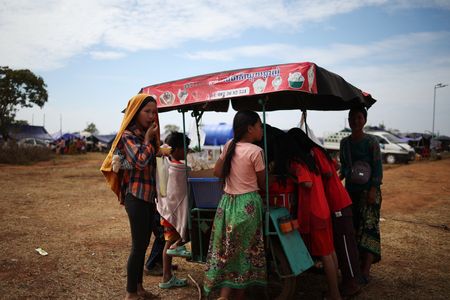
Evacuees taking refuge in a local temple in Cambodia's Srei Snam also expressed concern about mounting supply shortages.
"It's really hard to stay here like this," said Chay Rey, 54, a worker in a casino that was breached by Thai soldiers at the start of the conflict.
"No rice, food, money ... There's no drinking water," she said.
(Reporting by Reuters Staff, Panarat Thepgumpanat, Orathai Sriring and Devjyot Ghoshal in Bangkok, Thomas Suen and Chantha Lach in Srei Snam; Writing by John Mair and David Stanway; Editing by Michael Perry and Toby Chopra)