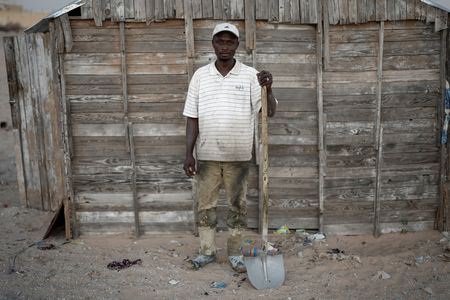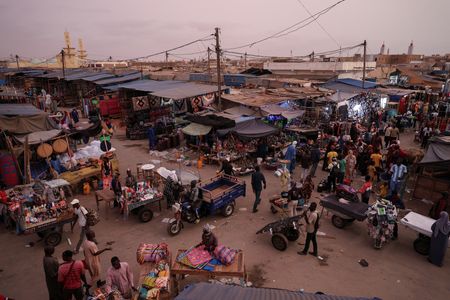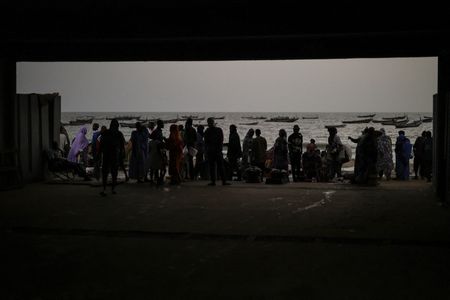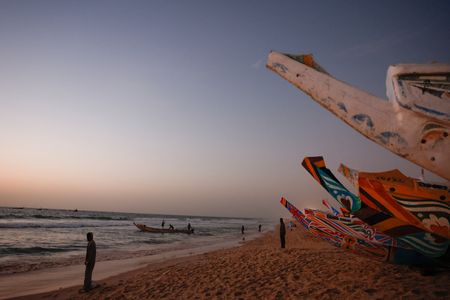

NOUAKCHOTT, Dec 18 (Reuters) - Moktar Diallo left Mali in 2015, dreaming of reaching Europe by boat from Mauritania to Spain's Canary Islands.
A decade later, Diallo is stuck working long hours making bricks in Mauritania's coastal capital Nouakchott, and trying to dodge a police crackdown that has reduced the flow of irregular dinghies making the around 600-mile (970 km) crossing, which can take up to eight days.
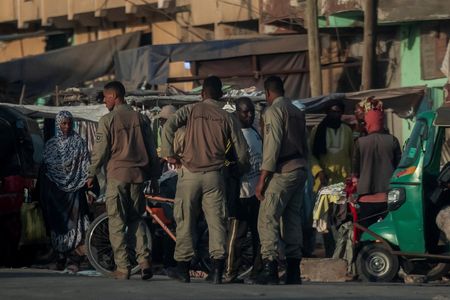
Migrants and human rights groups report a significant rise in police activity in Mauritania after the West African country signed a pact with the European Union early last year aimed at curbing irregular migration.
Mauritanian security forces have intercepted about 13,500 boats headed for the Canaries since the start of 2024 and arrivals on the archipelago were down 59% in 2025 through to October from a year earlier, Spain's Interior Ministry said.
Meanwhile, expulsions from Mauritania almost doubled to 28,125 people in the first six months of 2025 compared to all of 2024, according to information provided to Human Rights Watch by the Mauritanian government.
Diallo said a police crackdown began after Ramadan in late March this year. There are no boats leaving now, he said, and many people he knows have been rounded up and sent back to Mali.
"Since the police started turning people back, everything has gone wrong," the 42-year-old said.
Human rights groups say many migrants are being deported without due process, deposited with little money at the Malian or Senegalese borders where transport links are scarce.
Mauritanian authorities did not respond to a request for comment.
EU HAS STRUCK DEALS WITH TRANSIT COUNTRIES
The crackdown follows three visits by Spanish Prime Minister Pedro Sanchez to Nouakchott in the past two years after arrivals to the Canaries from West Africa reached a record 46,843 in 2024 and Mauritania became the main point of departure.
The number of boats arriving from Mauritania in the year through to December 16 was down 61% to 133 from the same period last year, the Red Cross said.
The pact with Mauritania is another example, along with deals with Tunisia and Egypt, of a strategy of policing European borders from transit countries.
In exchange, Mauritania received a payment of 210 million euros ($247 million) for managing migration, humanitarian aid for refugees and for boosting employment and entrepreneurship, the Commission said. It was the largest yet of financial contributions dating back two decades, when the EU and Mauritania first began cooperating on migration.
MALIAN MIGRANT WORKS AT NIGHT, SHARES A HUT WITH OTHERS
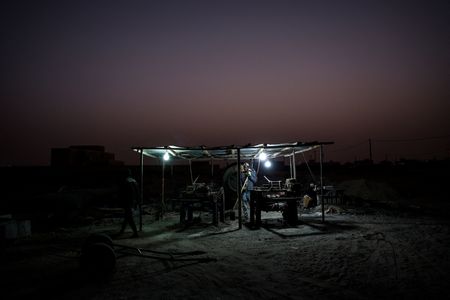
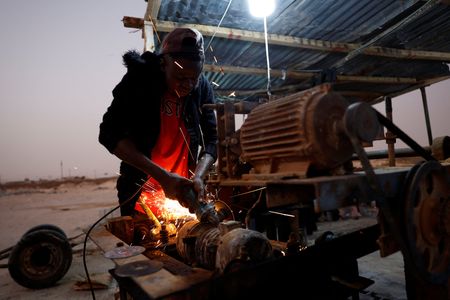
Diallo works 15 days at a time on a site on Nouakchott's outskirts. By day he and three other men sleep in a wooden hut with a corrugated iron roof on beds made from the bricks they make at night to avoid the stifling heat.
With police on the prowl, he usually only visits his wife and three children in the centre when escorted there by his Mauritanian boss, he said.
He still dreams of Europe but a place on a small boat to the Canaries costs about $2,700 and he earns just $5-$7 a day. Returning to Mali isn't an option either, he said.
"Here we can manage to find a little money. Over there, there are wars and no jobs," he said.
Mali's military-led government is battling an al Qaeda-linked jihadist group known as Jama'at Nusrat al-Islam wal-Muslimin, and some observers fear it might take over the country.
Mauritania hosts about 500,000 Malians, who due to the conflict are now the largest migrant group, according to Mohamed Lemine Khattary, director of the Atlas-Sahel Observatory of Migration.
EU FUNDING BOLSTERS MAURITANIAN SECURITY FORCES
Lauren Seibert, a researcher at Human Rights Watch, said much of the EU funding has gone towards bolstering the crackdown on migrants.
"When you look the other way and ignore the rights violations by those forces, well, that is essentially paying these countries to do the dirty work," she said.
A report she authored in August on migrants registered more than 70 cases of human rights violations, including beatings, torture and rape by Mauritanian forces.
Mauritanian authorities did not respond to a request for comment and Reuters could not independently verify the claims.
Asked about the allegations, the European Commission said
safeguarding the protection and human rights of migrants, refugees and asylum seekers was the focus of all EU migrant programmes.
The Commission monitors its programmes through reports from partners and on-the-spot verification missions, it said.
Spain has 40 police and civil guard officers deployed in Mauritania equipped with offshore patrol boats, a helicopter, off-road vehicles, a surveillance plane and an ocean-going vessel, Spain's Interior Ministry said in a statement.
Spanish security forces have always operated "with full respect for human rights," it added.
ONLY A MATTER OF TIME BEFORE NEW ROUTES EMERGE
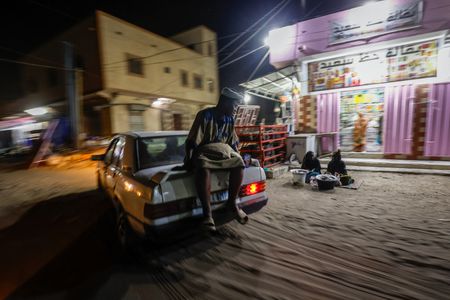
Malian Moussa Kolongo said he's barely worked as an auto-rickshaw taxi driver since police began cracking down on migrants.
He had hoped to earn money in Mauritania to pay for a place on a boat to Europe, but he now finds himself trapped there, unable to afford either continuing his journey or returning home.
"They are out on the streets every day, they stop everyone, even refugees," Kolongo, 38, said of the police.
With Mauritania crossings all but halted, Hassan Ould Moctar, a lecturer in the anthropology of migration at SOAS University of London, said it's only a matter of time before potentially more lethal routes emerge.
Already there are reports of boats departing from as far afield as The Gambia and Guinea, south of Mauritania and Senegal, he said.
Just seven boats reached the Canary Islands from Mauritania in the last six months, while 21 arrived from The Gambia and Guinea, according to Red Cross figures.
($1 = 0.8504 euros)
(Reporting by Juan Medina, Charlie Devereux and Antoine Demaison; additional reporting by Joan Faus, Corina Pons, Borja Suarez; writing by Charlie Devereux; editing by Alexandra Hudson)