By Simon Lewis
WASHINGTON, Dec 3 (Reuters) - Rwanda’s foreign minister said on Wednesday he hoped an accord set to be signed by U.S. President Donald Trump and the presidents of Rwanda and Democratic Republic of Congo on Thursday would be a step toward peace, even after accusing Congo’s army of violating earlier peace deals in recent days.
The Congolese army and Rwanda-backed M23 rebels on Tuesday accused each other of violating a ceasefire and trying to sabotage the peace agreement in the latest skirmishes in eastern DRC, highlighting the fraught situation on the ground even as Trump has claimed to have ended the war.
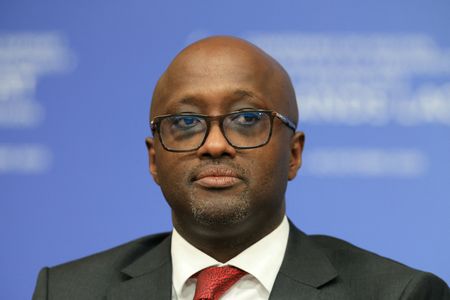
Rwandan Foreign Minister Olivier Nduhungirehe, in an interview with Reuters in Washington, said there was progress on the ground, despite the fighting. "Peace is a process.… There is a kind of stability on positions. There's no more territory expansion,” he said.
The so-called Washington Accords for Peace and Prosperity to be signed on Thursday come after a series of pacts that the Trump administration has brokered between the two countries, including an economic integration framework aimed at drawing billions of dollars of Western investment to a region rich in tantalum, gold, cobalt, copper, lithium and other minerals.
"The U.S., of course, has brought on the table an ambitious agreement, and we hope that parties, especially Kinshasa, will understand that it's an opportunity to seize and end this conflict once and for all,” Nduhungirehe said, crediting Trump for bringing an economic “incentive” for peace.
Rwanda, which denies backing M23, is not a party to talks in Qatar that produced a framework agreement in November for a peace deal between DRC and the rebels.
Nduhungirehe accused the Congolese army of using fighter jets and attack drones against the M23 as well as civilian communities.
He described Rwanda’s military presence inside DRC as "defensive measures," and said that would only be withdrawn when Congolese forces “neutralize” the Democratic Forces for the Liberation of Rwanda, a group formed from the remnants of the former Rwandan government that fled after the 1994 genocide, when 800,000 people - one tenth of Rwanda's population - were killed in 100 days of slaughter.
“We hope that everything will go as planned, but as of now, we are yet to see any beginning of operation, operations against the FDLR, or any process that can give us trust that the DRC is of good faith,” he said.
DRC’s Minister of Communications and Media Patrick Muyaya, at a news conference in Washington, said the DRC had begun an awareness campaign that will precede disarming FDLR fighters.
Muyaya blamed M23 for recent fighting and said it was "proof that Rwanda doesn’t want peace," but said he hoped Trump's involvement could help turn peace agreements on paper into progress on the ground.
“Since the signature of this agreement we are doing our best to make sure we did our part," he said. “Peace for us means withdrawal of Rwandan troops, means stop(ping) any kind of support for M23, and once we’ve finished with this, we can start talking… about development, about integration.”
(Reporting by Simon Lewis; editing by Diane Craft)