By Xinghui Kok and Claire Fu
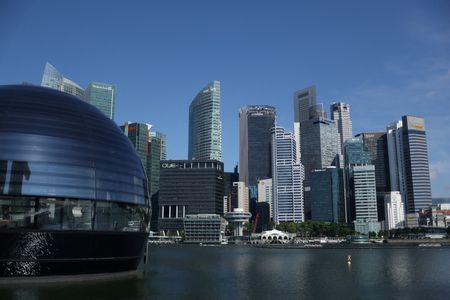
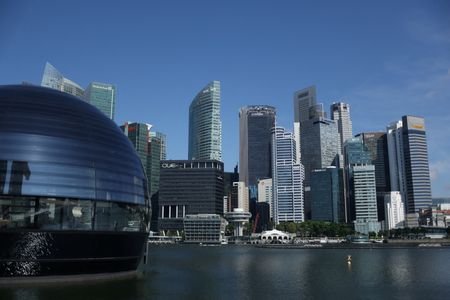
SINGAPORE, Dec 4 (Reuters) - Faced with growing scrutiny by authorities at home and in Singapore, mainland Chinese living in the city-state are being more discreet about their wealth, in a shift that is hitting sales of luxury goods from Bentleys to private jets.
Singapore, where some 75% of the resident population is ethnically Chinese, has seen massive inflows of mainland Chinese wealth over the last few years due to the island's political stability, tax-friendly environment, and cultural affinity.
The COVID pandemic and the subsequent economic and market turmoil in China brought even more wealth into the city, boosting demand for high-end property, luxury cars and designer fashion.
But a S$3 billion money laundering scandal in 2023 and heightened scrutiny of their assets by authorities in Singapore and in China have prompted the super-rich to be more discreet about their spending.
Singapore, for example, has imposed strict know-your-customer requirements on industries from banks to property and golf clubs, while Beijing, according to media reports, has started to crack down on citizens' overseas income.
The move underlines how regulatory pressure is reshaping Singapore's luxury economy amid concerns about growing income inequality even as overall wealth inflows into the city-state remain robust.
FUNDING SOURCE
Lee Lee Langdale, founder of Singapore golf membership brokerage Singolf, said her firm had seen a sharp drop in enquiries from Chinese clients since the 2023 money laundering scandal.
"Clubs investigate sources of funding for Chinese buyers much more extensively than they did before, and I saw transactions that failed to complete, because the clubs were not satisfied regarding the funding (source)," she said.
Data tracked by Singolf shows membership fees for foreigners at Sentosa Golf Club peaking at S$950,000 in 2023 and falling to S$660,000 this year, while at the Singapore Island Country Club it is down from S$800,000 in 2023 to S$470,000 this year.
Ian Roberts, general manager at the Singapore Island Country Club, the island's most exclusive club, said it had seen a decline in foreign membership transactions since 2023, but was unable to comment on pricing as it did not sell foreign memberships directly to individuals. The memberships are sold through brokerages.
Sentosa Golf Club declined to comment.
Similarly, Bentley sold 19 cars in the first ten months of this year, compared to a peak of 103 in 2021, according to government data. Rolls-Royce sold a dismal 13 cars in the first ten months of 2025, compared to 95 in 2023 and 23 in 2024.
Sim Bock Eng, a partner in the private wealth practice at law firm WongPartnership, said she sees fewer Chinese clients wanting a private jet these days, compared to a few years ago.
"In 2021, almost every family wanted to buy their own family jets. Recently, (I) haven't heard of that much."
Instead, wealthy Chinese are channelling their money into art, wine and private clubs like the Auspicious Club, where, according to the club, membership costs upwards of $138,000, ensuring exclusivity and shelter from prying eyes.
"What we are seeing now is a more discerning wave of Chinese wealth," said Kevin Teng, chief executive of wealth management firm WRISE Group.
Certainly, the super-rich are still finding a home for their wealth in Singapore.
The number of family offices, which handle financial matters such as investments and taxation for high net-worth individuals, almost tripled to more than 2,000 in Singapore at the end of 2024 from 700 in 2021, government data showed.
Singapore's assets under management hit an all-time high of more than S$6 trillion last year, according to the central bank data, up from S$4.7 trillion in 2020.
While the central bank does not break down assets based on inflows by country, local and foreign wealth managers in the city-state have been bolstering their headcount to cater to the growing demand from mainland Chinese.
FROM FLAMBOYANCE TO LOW-KEY
Acker Wines, which auctions expensive vintages including Bordeaux and Chambertin, found Chinese collectors were "very consistent in their pursuit of fine and rare wine — both in quality and quantity," said its chairman John Kapon.
"With every sale, we see continued growth in engagement from Chinese collectors," Kapon said, after hosting an auction in October that had a line-up worth an estimated S$5 million.
On a Tuesday night in September, Zeng Guo He, a Singaporean collector and dealer specialising in Chinese art, had dinner with eight Chinese businessmen. Some of his guests were local while others had come from China to see his latest exhibition.
In a private room covering at least 1,000 square feet, the men enjoyed decades-old pu'er tea, played cards, and had waiting staff plate their dinner and serve vintage French wine.
Zeng, who offers consultancy services to wealthy Chinese looking to buy art, said he noticed more rich Chinese relocating to Singapore in the last three years, but their behaviour was different from earlier arrivals.
"They might have been more flamboyant with their wealth in the past, but they tend to be more low-key now."
The new discretion is welcome for Singapore's political leaders who have long grappled with issues of immigration, especially when the cost of living is high and the local population worries about job security.
Only 60% of Singapore's record 6.11 million residents are citizens, with 1.9 million foreigners on work permits and visas and a further 540,000 with permanent residency, leaving room for friction over income inequality.
Tan Ern Ser, a sociology professor at the National University of Singapore, said when showing off wealth was associated with migrants it could reinforce prejudices about those coming from certain countries.
In a Chatham House Dialogue in October, Senior Minister and former Prime Minister Lee Hsien Loong said while wealthy foreigners were welcome in Singapore they had "to keep the bling down."
"Do not go around popping champagne which is $20,000 a bottle with sparklers, and do not zoom your Ferrari or Lotus or whatever down the middle of the road in the middle of the night just to let everybody know that you have arrived."
(Reporting by Xinghui Kok and Claire Fu; Editing by Sumeet Chatterjee and Kate Mayberry)