By Alexander Ratz
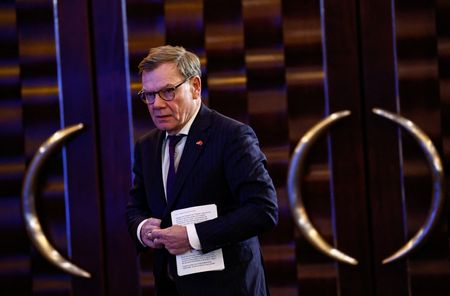
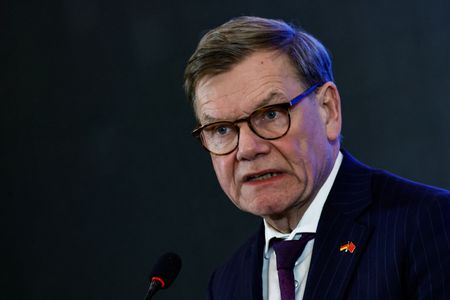
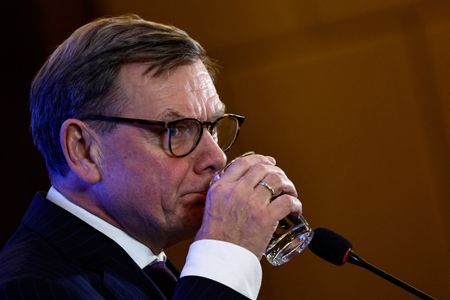
BEIJING, Dec 8 (Reuters) - German Foreign Minister Johann Wadephul appealed on Monday for an end to the uncertainty that has hit vital deliveries of Chinese semiconductors and rare earths to European manufacturers.
Wadephul's first visit to China came at a turbulent time for European industry, whose dependence on Chinese suppliers of strategic chips and rare earths has been starkly exposed by export restrictions from Beijing as trade tensions escalated worldwide.
"In all of these areas there has been uncertainty, and that needs to be eliminated," Wadephul said. He was accompanied in China by a small business delegation including Hildegard Mueller, head of the German VDA car industry association.
Wadephul, who was forced to postpone a planned visit last month after Beijing agreed to only one of the meetings his office had requested, said talks had been open and intensive and his trip would open the way for a visit by Chancellor Friedrich Merz early next year.
But he said "quite a lot of work" was still needed to persuade Beijing to grant new rare earth licences to German firms, indicating that German companies had not been among those granted a first batch of licences announced last week.
Chinese export controls on 17 minerals used in areas as varied as autos, consumer electronics and defence have caused months of disruption since their introduction in April due to the U.S.-China trade war. Beijing also slapped restrictions on some semiconductors widely used in the car industry after the Dutch government's decision to seize control of Chinese-owned chipmaker Nexperia.
China's Minister of Commerce, Wang Wentao, said China "values German concerns" over issues including export controls and chips but said "the most urgent task" was for the Dutch government to stop "improper administrative interference and stabilize the semiconductor supply chain".
Relations between Europe and China were already strained by China's growing trade surplus, which French President Emmanuel Macron, who visited China last week, said had become "unsustainable".
TAIWAN
During the visit, Wadephul met Chinese Foreign Minister Wang Yi, who repeated China's position on Taiwan and said its "One China" policy was an important political foundation for relations.
China views democratically governed Taiwan as its territory and the "One-China" principle as meaning both sides of the Taiwan Strait belong to one country - assertions that Taipei's government rejects.
The German foreign ministry said Wadephul would address European security interests, notably Russia's invasion of Ukraine in his meeting with Wang, but there was no indication from the Chinese side of any change in its stance.
"China supports all efforts conducive to peace and will continue to play a constructive role in this regard," Wang said, according to a statement from the foreign ministry.
Berlin has sought to balance toughening its stance with Beijing over trade disputes and geopolitical conflicts, in line with European partners, while trying to avoid damaging its fundamental relationship with its top trade partner.
Last month it established a committee of experts to advise parliament on "security-relevant trade relations" with China, part of a push to reduce reliance on China as a supplier of key materials and customer for Germany's industrial exports.
(Reporting by Alexander Ratz, Beijing Newsroom; Writing by Sarah Marsh and James MackenzieAdditional reporting by Christoph Steitz; Editing by Toby Chopra, Gareth Jones and Andrew Heavens)