By Ece Toksabay
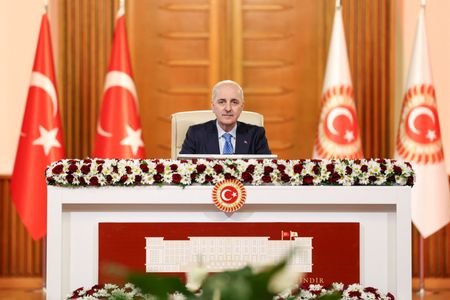
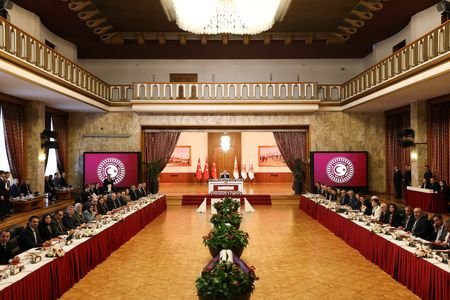
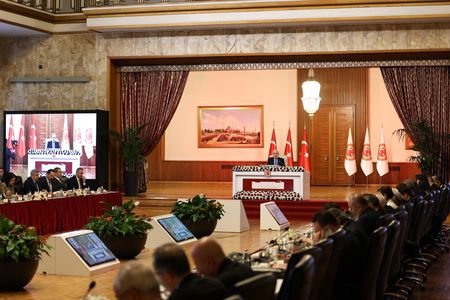
ANKARA, Feb 18 (Reuters) - A Turkish parliamentary commission voted overwhelmingly on Wednesday to approve a report envisaging legal reforms alongside the militant Kurdistan Workers Party's (PKK) disarmament, advancing a peace process meant to end decades of conflict.
The vote shifts the peace process to the legislative theatre, as President Tayyip Erdogan, Turkey's leader of more than two decades, bids to end a conflict that has killed more than 40,000 people, sown deep discord at home and spread violence across borders into Iraq and Syria.
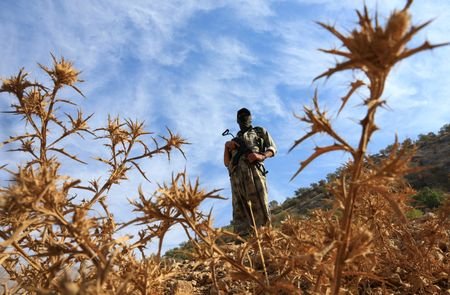
The PKK - designated a terrorist organisation by Turkey, the United States and European Union - halted attacks last year and said it would disarm and disband, calling on Ankara to take steps to let its members participate in politics.
The roughly 60-page report proposes a roadmap for the parliament to enact laws, including a conditional legal framework that urges the judiciary to review legislation and comply with European Court of Human Rights and Constitutional Court rulings.
PRO-KURDISH PARTY CALLS FOR RAPID IMPLEMENTATION
The pro-Kurdish DEM Party, which has been closely involved in the process and held several meetings with PKK leader Abdullah Ocalan in prison, objected to the report's presentation of the Kurdish issue as a terrorism problem but generally welcomed the report and called for rapid implementation.
“We believe legal regulations must be enacted quickly,” senior DEM lawmaker Gulistan Kilic Kocyigit told Reuters. Parts of the report offered “a very important roadmap for the advancement of this process," she said.
Erdogan signaled that the legislative process would begin straight away.
“Now, discussions will begin in our parliament regarding the legal aspects of the process,” he said.
RECOMMENDS NO PERCEPTION OF AMNESTY
The report was approved by 47 of the commission's 50 lawmakers. Its stated core objectives are a “terrorism-free Turkey” and strengthening democracy, and it cites an agreement among political parties that reforms and disarmament should advance reciprocally and in parallel.
The section on legal reforms ties implementation to verified PKK disarmament, envisaging a separate and temporary legal framework and a special executive appointment to oversee implementation.
"The law should aim to reintegrate individuals who reject weapons and violence into society,” the report said, even as legal regulations "should not create a perception of impunity and amnesty in society."
Amnesty for PKK members is unpopular among Turks, polls show.
A chapter on democratisation proposals includes a recommendation to comply with ECHR and Constitutional Court rulings. It also calls for clearer anti-terrorism law definitions to exclude non-violent acts, and for expanded freedoms of expression, press and assembly.
The PKK has symbolically burned some weapons and announced it was withdrawing any remaining fighters from Turkey as a first step towards their legal reintegration into society, heeding a call from the movement's leader Ocalan.
(Reporting by Ece Toksabay; Writing by Daren Butler; Editing by Jonathan Spicer, Philippa Fletcher and Ros Russell)