By Lucinda Elliott and Cassandra Garrison
Feb 19 (Reuters) - Jose Balcazar, a left‑wing lawmaker who has faced backlash over comments about child marriage, became Peru’s new leader after Congress elected him to serve as interim president following the removal of Jose Jeri.
The 83-year-old Balcazar, of the Peru Libre party, assumes the presidency at a moment of deep political volatility and public distrust. He will serve on an interim basis until the winning candidate of general elections on April 12 and an expected runoff vote in June, takes office on July 28.
Peru’s Congress on Tuesday voted to remove interim President Jeri after just four months in office following a scandal over undisclosed meetings with a Chinese businessman. Balcazar was among the lawmakers who supported his removal.
Balcazar, a lawyer and former judge, drew criticism for remarks made during a debate on legislation banning child marriage in 2023, asserting that sexual relations among minors were routine, citing examples involving students and teachers. The comments prompted swift condemnation from rights organizations and government authorities.
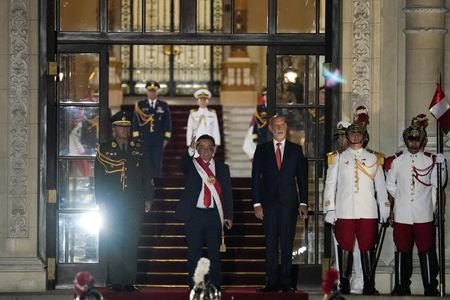
Balcazar was sworn in by Congress on Wednesday evening as interim president, also serving as head of Congress, after garnering enough support to defeat three other nominees, including center-right legislator Maria del Carmen Alva.
"We are going to work to make the elections cleaner and to have new representatives," Balcazar said after the ceremony.
Born in Nanchoc, in Peru’s northern Cajamarca region, Balcazar holds a doctorate in law and political science. He worked for decades as a university lecturer and served as a superior court judge in Lambayeque, later holding a provisional post on Peru’s Supreme Court.
Elected to Congress in 2021 representing Lambayeque, Balcazar led the special commission charged with selecting magistrates to the Constitutional Court and served in senior roles on justice and education-related committees.
Balcazar has faced both ethical and legal scrutiny. He is under investigation by prosecutors for alleged influence peddling and was permanently expelled from the Lambayeque Bar Association in 2024 for the presumed misappropriation of funds. Balcazar has denied the accusations.
As interim president, Balcazar faces a narrow but critical mandate: maintain political stability, oversee an election marked by high voter indecision and fragmentation, and manage a peaceful transfer of power in July.
As Peru braces for yet another transition, Balcazar’s brief stewardship will test whether the country’s political system can avoid sliding deeper into crisis.
(Reporting by Lucinda Elliott and Cassandra Garrison; additonal reporting by Natalia Siniawski; Editing by Sharon Singleton)