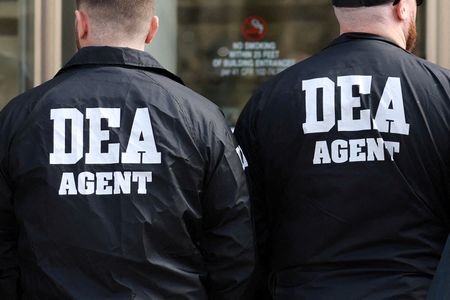
Feb 24 (Reuters) - Bolivia has resumed operational cooperation with the U.S. Drug Enforcement Administration after a 17-year absence, in a move that the government says is part of a broader, multinational strategy to combat organized crime.
The DEA’s return marks a significant security realignment with the United States, as centrist President Rodrigo Paz reopens diplomatic channels with Washington after nearly two decades of strained ties.
Interior Minister Marco Oviedo confirmed that DEA officials were once again working with Bolivian authorities, undoing the 2008 expulsion ordered by then-president Evo Morales, whose leftist administration ended joint anti-narcotics operations.
Oviedo said the renewed collaboration reflects the government’s focus on tightening border surveillance and dismantling trafficking networks.
“The DEA is in Bolivia," Oviedo told local media on Monday. "Just as the DEA is now present, we also have cooperation from European intelligence and police bodies... We want neighboring countries’ anti-narcotics agencies onboard as well.”
Bolivia, a major cocaine producer and key transit hub for traffickers, has become strategically important for U.S. counter-narcotics efforts as global cocaine production and seizures reach record highs.
Although coca leaves in Bolivia are rooted in Andean tradition and legally cultivated for ceremonial and medicinal use, the crop has expanded in recent years, United Nations data show, drawing renewed concern from international partners.
Bolivia's foreign minister said the specific areas of cooperation and the operational limits under which the DEA will function were still being finalized. A full agreement outlining the scope of the agency's activities is expected in the coming months.
Foreign Minister Fernando Aramayo has previously said Bolivia needed outside support to confront increasingly sophisticated criminal networks — including the use of cryptocurrency assets for money laundering and the moving of illicit funds. He said the government was working to modernize its tools to detect digital transactions linked to cocaine trafficking.
(Reporting by Daniel Ramos in La Paz; Writing by Lucinda Elliott; Editing by Bill Berkrot)