DUBLIN, Feb 25 (Reuters) - Ireland plans to boost radar and subsea surveillance capabilities and increase cooperation with NATO members amid growing hybrid threats in the North Atlantic, the country said in its first maritime security strategy on Wednesday.
Ireland, which is neutral and has the EU's lowest level of defence spending, has been criticised for its lack of capability to monitor and defend territorial waters that the strategy says cover a "nexus of major transatlantic data cables and critical energy interconnectors".
The publication comes amid growing concerns about the threats posed by Russia's "shadow fleet" of vessels that may be being used also for espionage and sabotage, the document said. Russia has denied such accusations.
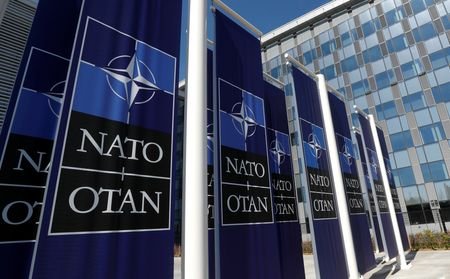
The Department of Defence strategy calls for closer cooperation with NATO members Britain and France and says Ireland should look to participate in activities with the Joint Expeditionary Force grouping of 10 North Atlantic NATO member states.
It described such moves as "vitally important".
Cooperation with NATO or the European Union's military powers is highly sensitive in Ireland due to broad support for the country's military neutrality, but the government has said it has no choice but to act.
"If anything happened to gas connectors with Britain, we wouldn't have an economy in 10 days," Prime Minister Micheal Martin said in parliament when challenged by the opposition on the plans to cooperate with NATO member states.
The strategy says Ireland will look to deal with "critical gaps" in the country's monitoring ability with the development of new radar, towed sonar and sonobuoy capability over the next two years. It will look at space-based technologies and look to cooperate more closely with EU data-sharing programmes.
It also calls for the increased use of new technologies such as uncrewed vessels and maritime drones.
Ireland spent around 0.2% of its gross domestic product on defence in 2023, the lowest level in the European Union, and far below the average that year of 1.3%, according to the last comparison published by the EU's statistics service.
While the government says its 1.5 billion euro budget for 2026 is one-third higher than four years ago, it has not announced plans to bring spending significantly closer to the EU average.
(Writing by Conor Humphries;Editing by Alison Williams)

