(Refile to update byline)
By Hilde Verweij and Charlotte Van Campenhout
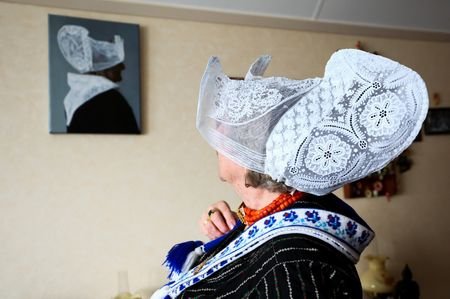
VOLENDAM, Netherlands, March 13 (Reuters) - The Volendam women's costume, with its high pointed bonnet (hul), is one of the most recognisable forms of traditional Dutch dress, appearing often on postcards from the Netherlands.
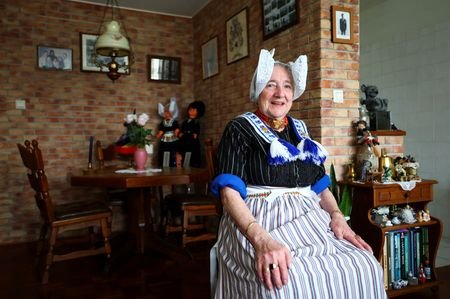
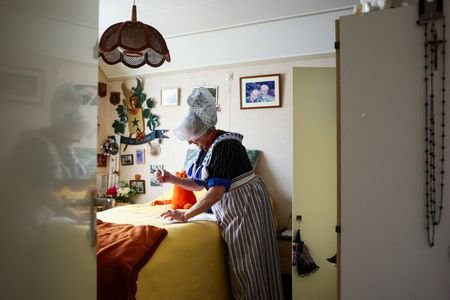
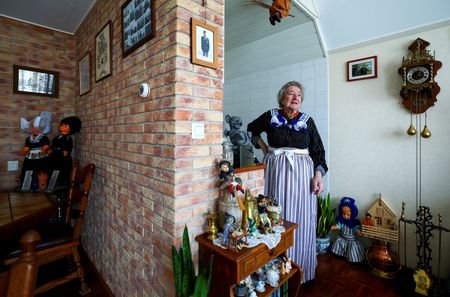
But outside the tourist industry, no one publicly wears it in daily life anymore - except Annie In de Betouw-Kwakman, 85.
In the Netherlands, clothing used to be linked to a person's place of origin.
"Almost every Dutch village used to have their own look," said fashion historian Birthe Weijkamp. "You could recognise where someone was coming from, what village they belonged to. So it was very much about identity, about belonging somewhere."
In Volendam, a village 22 kilometres north of Amsterdam, nearly everyone dressed like Annie until the mid-twentieth century, said Simone Kwakman-Brinkkemper, a specialist in Volendam's traditional dress.
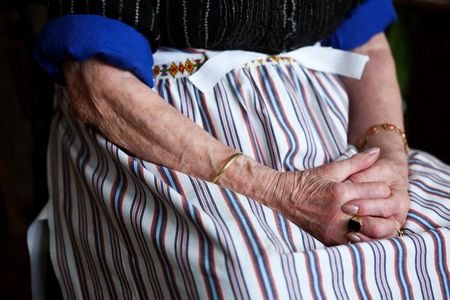
The daily outfit includes a black jacket (jak), a short scarf (dasje), an apron (bontje), a long skirt, a tight red coral beaded necklace and black slip‑on shoes (muilen).
But as people began working outside the village, the clothes, which are handmade and require great skill to create, became impractical. Annie quickly watched her friends and sisters switch to modern dress.
In Volendam, the only other person who wears the daily attire is another older woman who no longer goes outdoors.
When Annie had school-aged children, she briefly tried to modernise for them, as they said classmates were making fun of her attire. She bought a dress, but quickly abandoned it.
"The neighbour said, 'What are you wearing? You look like a candy cane,'" she said. "I'm colour‑blind ... I looked like a fool."
Annie said she is proud of her traditional clothes and it pains her that the tradition will disappear when she does.
"Everyone is different, and everyone finds something else beautiful or comfortable. For me, this is freedom," she said.
(Reporting by Charlotte Van Campenhout and Hilde Verweij; Editing by Makini Brice)