By Daniela Desantis and Lucinda Elliott
ASUNCION, March 14 (Reuters) - When Paraguayan opposition lawmaker Leidy Galeano returned from an all-expenses-paid tour of six Chinese cities late last year, she was convinced Paraguay risked missing out on major economic gains by sticking with longtime ally Taiwan over Beijing - a message participants on the trip heard repeatedly from Chinese officials.
"Everything I saw there, I wanted for my country," said Galeano, a member of the newly-formed Yo Creo party whose senior figures have spoken favorably about China.
This trip and others like it, which people familiar with the visits said were at the invitation of the Chinese consulate in Sao Paulo, offered lavish banquets, stays at luxury hotels and tours of the Great Wall, part of what Paraguayan lawmakers said they saw as a coordinated effort to draw the country away from democratically governed Taiwan, which Beijing claims as its own territory.
With just 6.4 million people, landlocked Paraguay is a tiny player on the world stage. But it is Taiwan’s last diplomatic ally in South America. A switch by Paraguay, one of 12 countries in the world that still recognize Taiwan, would give Beijing a symbolic win in its campaign to isolate Taipei. Its efforts are also a sign of China's intent to cement its influence in Latin America, where U.S. President Donald Trump too is determined to be the pre-eminent superpower.
With more than two years left in his term, President Santiago Pena's government has little incentive to shift a Taiwan policy that has long anchored its foreign relations. Beyond that, analysts say the outlook is less clear, with succession battles potentially splintering the ruling Colorado Party or pushing them into alliances with opposition groups historically more open to recognizing Beijing.
Pena has publicly reaffirmed support for Taipei. “All the Latin American countries that switched from Taiwan to China and fell into the arms of the promise of the Chinese dream - every single one of them is worse off than Paraguay,” he said in December on his podcast. Paraguay's presidency did not respond to a request for comment.
The foreign ministry said in a statement Paraguay's relations with Taiwan "are founded on principles and values of freedom, democracy, human rights, and the rule of law."
PARAGUAY IS BEING COURTED BY BOTH SIDES
China's growing engagement is colliding with stepped‑up efforts by Taipei and Washington to hold the line. Paraguay signed a defense pact with the U.S. in January, joined Trump's “Board of Peace,” and participated in a White House critical minerals summit earlier this year. Washington also lifted sanctions on former President Horacio Cartes, who was previously targeted over alleged corruption and is a mentor to Pena, whose term ends in 2028.
Interviews with half a dozen participants- including three lawmakers and three journalists who joined the trips - and a Reuters review of travel itineraries show the charm offensive by China in Paraguay has picked up in the past year. A Reuters tally shows at least 19 Paraguayan lawmakers, five journalists and a rising opposition presidential contender have visited China since late 2023, with a sharp acceleration last year and more trips planned for March.
China's foreign ministry, in a written response to Reuters, said “siding with Taiwan authorities holds no future,” and that a growing number of Paraguayans across different sectors now believe establishing diplomatic ties with Beijing would serve the “fundamental and long‑term interests” of both countries, according to the statement. It denied any lobbying effort, saying people‑to‑people exchanges were a “two‑way effort” that “do not require anyone to lobby for them.”
Taiwan's foreign ministry, in a statement to Reuters, said Beijing was attempting to “poach” its allies and that it was "actively working to maintain ties with all of Taiwan's diplomatic partners."
A spokesperson for the U.S. embassy in Asuncion told Reuters that Washington hoped Paraguayans on official Chinese-guided tours “understand the degree of information manipulation” inherent in them.
Beijing’s outreach to Paraguay follows a pattern seen across the region. Panama, the Dominican Republic, El Salvador, Nicaragua and more recently Honduras all switched recognition after sustained Chinese lobbying and promises of trade and infrastructure.
LAWMAKERS TOURED TECH AND HEALTHCARE FACILITIES
Paraguayan opposition lawmaker Roya Torres said Chinese officials used her trip in October 2025 to showcase advanced healthcare services and technology, taking her through treatment centers and high‑speed rail stations while hinting that trade and investment could flow faster if Paraguay switched recognition to Beijing. The healthcare visits struck her most powerfully, she said.
The contrast with home, she said, deepened her fear that Paraguay was "running out of time" - a message Chinese officials delivered to her repeatedly - and risked being left behind in both cutting‑edge medical equipment and access to China’s market if it maintained ties with Taipei.
Paraguay, long counted among South America’s poorer countries, has seen a burst of growth in recent years on the back of beef exports, manufacturing and construction. It secured investment‑grade status in 2024, but entrenched corruption and deep gaps in education and infrastructure spending continue to limit how far those gains spread.
Paraguayans on the trips said invitations were issued by the Chinese consulate in Sao Paulo, though Reuters was unable to independently verify the origin or who funded the trips. The Chinese foreign ministry did not confirm the origin in a response to Reuters.
On an October morning last year, Galeano, Torres and other lawmakers spent the night at Beijing’s luxurious Shangri‑La hotel before a packed day of touring the sprawling manufacturing powerhouse of Chongqing and meetings with local leaders, according to an itinerary seen by Reuters.
The lawmakers Reuters spoke to described the tours as a rare, unfiltered look at China’s technological ambition and political confidence.
Liberal Party Deputy Billy Vaesken, who spent 15 days in China in late 2024 alongside two ruling Colorado Party lawmakers, said he is now advocating deeper ties with Beijing.
“We must not miss our chance,” he said, pointing to potential Chinese investment in local infrastructure. Reuters requested interviews with at least half a dozen Colorado Party members, all of whom declined to comment on trips they made to China. Several other prominent opposition members who participated in visits also declined to discuss them.
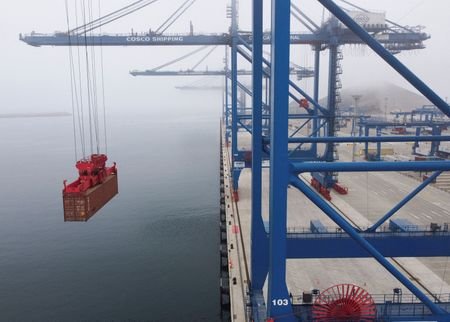
China’s multi-trillion-dollar Belt and Road Initiative (BRI) has carved out a growing footprint in South America, more recently with Peru’s Chancay mega-port, a logistics hub that cuts shipping times to Asia and is fast becoming Beijing's gateway to the region.
In Paraguay, the debate is increasingly economic. Its main exports are soy and beef, but it cannot sell directly to China because Beijing refuses to trade with countries that recognize Taipei. Instead, shipments move through Argentina and Brazil, cutting into profits. At the same time, Chinese goods are pouring into Paraguay, with imports topping $6 billion in 2025-a record, official data show.
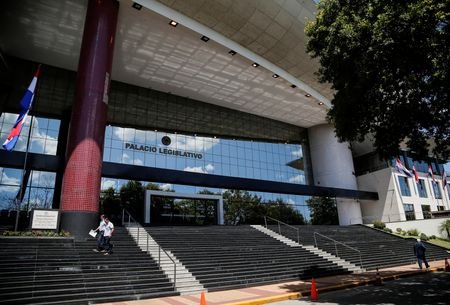
Taipei has helped fund projects including the parliament building and a new university campus under construction. But a report by local research center CADEP found Paraguay’s ties with Taiwan have delivered only modest economic gains. Public sentiment may also be shifting: a recent poll by consultancy Metro showed rising support for establishing relations with China. Metro declined to comment on who commissioned the survey.
Officials at Taiwan’s embassy in Asuncion said they too are actively lobbying to counter China through TV appearances and inviting lawmakers from the ruling Colorado Party to Taiwan.
Still, Beijing's approach appears to be gaining traction with some.
“More people in parliament are already looking toward mainland China,” said lawmaker Vaesken, who plans to return to China this year. “Before long, Taiwan will end up like Hong Kong—it will become part of China, be annexed, and Paraguayans will be left with nothing.”
(Reporting by Daniela Desantis and Lucinda Elliott. Additional reporting by Eli Moreno in Panama City, Sofia Menchu in Guatemala City and Beijing Newsroom. Editing by Cassandra Garrison and Claudia Parsons)