By Michel Rose, Juliette Jabkhiro and Ingrid Melander
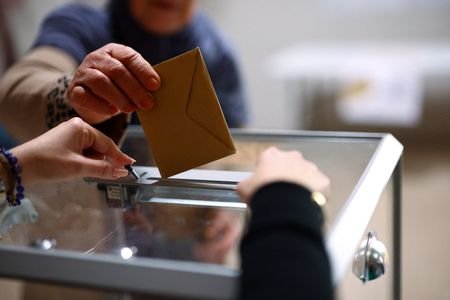
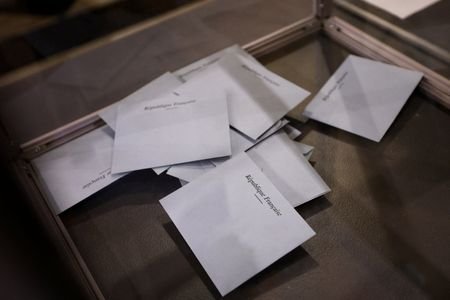
PARIS/MARSEILLE, March 22 (Reuters) - France's far-right National Rally (RN) failed to win control of any major city in Sunday's nationwide municipal election, a setback that gave hope to embattled mainstream parties ahead of next year's presidential election.
Marine Le Pen's nationalist eurosceptic party lost out in big target cities including Marseille and Toulon, although an ally, Eric Ciotti, who heads his own staunchly conservative UDR party, won in Nice, France's fifth-largest city.
The municipal votes were a test of both the depth of the far right's support base a year ahead of presidential elections to replace centrist Emmanuel Macron, and the resilience of mainstream parties in a fragmented political landscape.
Opinion polls project both Le Pen and her young protege Jordan Bardella would perform strongly in the 2027 race. Le Pen is awaiting a ruling in her appeal against an embezzlement conviction before deciding whether she will run for a fourth time.
The 35,000 separate municipal ballots typically focus on local issues and their outcome does not offer a neat forecast of who will succeed Macron.
But they show trends in popularity and in the type of alliances that can be struck in an increasingly fragmented political landscape, and senior politicians from all parties were quick to claim Sunday's outcome was good news for them.
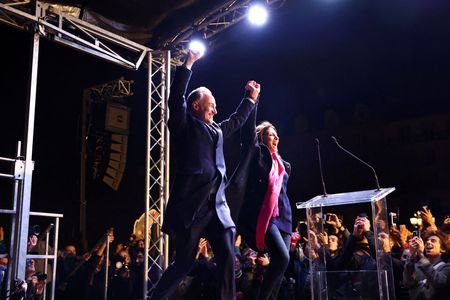
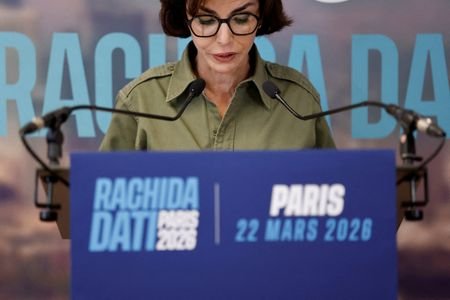
In Paris, Socialist Party candidate Emmanuel Gregoire fended off a challenge from conservative former minister Rachida Dati and ensured the French capital remains in left-wing hands.
NEXT STEP: THE PRESIDENTIAL ELECTION
Senior RN officials rejected suggestions the party's defeat in Toulon showed it had hit a "glass ceiling" ahead of the presidential election, saying it had won dozens of local constituencies where it previously had no presence.
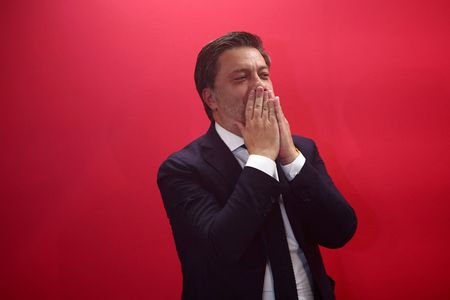
"The National Rally and its candidates have achieved tonight, in this municipal election, the biggest breakthrough in its entire history," RN chief Bardella said.
His anti-immigration party held onto the southern city of Perpignan and won in other towns such as Menton and Carcassonne, also in the south.
But the RN's failure to win larger cities, and in particular in Marseille, its most coveted prize, may show limits to its growing popularity.
Meanwhile, with wins in Paris and Marseille, the Socialist Party, long weakened nationally, saw reasons for hope.
"Paris will be the heart of the resistance" to any union of the mainstream right and far-right, Socialist winner Gregoire said after he crossed Paris on a bicycle - a nod to the left's green policies in the French capital.
Senior politicians on the mainstream right said the municipal elections showed they needed to be united to win - especially in next year's presidential election.
Former Prime Minister Edouard Philippe was re-elected mayor in his port city of Le Havre, in a boost to his hopes of running for president in 2027.
Philippe, a centre-right politician who served as prime minister under the centrist Macron, said "there were reasons to be hopeful" in the values of France and that the extremes can be beaten.
MARSEILLE, PARIS
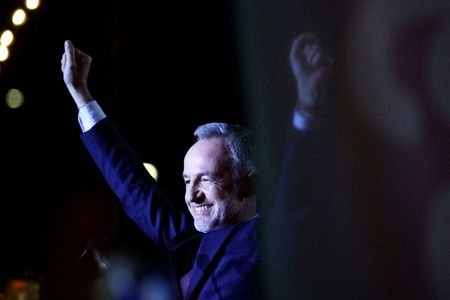
In the second-biggest city Marseille, the incumbent, Socialist Mayor Benoit Payan, was re-elected with 54% of the votes. He had been neck-and-neck with the RN in the first round, and was boosted after his hard-left rival pulled out of the run-off to prevent a far-right victory.
"This city, which some believed lost, showed its most beautiful face, showed that it was capable of resisting," said Payan.
The Socialist Party said it had also beaten Francois Bayrou, a centre-right former prime minister of Macron, in the city of Pau.
The hard-left France Unbowed (LFI) won in the northern city of Roubaix, a city of nearly 100,000 and in the Saint-Denis suburb of Paris. The party put forward its highest number of candidates in local elections.
"Traditional parties are losing ground," Manuel Bompard, of LFI, said.
(Additional reporting by Juliette Jabkhiro in Marseille, Gianluca Lo Nostro, Sudip Kar-Gupta, Inti Landauro, Elizabeth Pineau, Gus Trompiz and John Irish in Paris; Writing by Ingrid Melander; Editing by Peter Graff, Diane Craft and Toby Chopra)