By Marianna Parraga and Nathan Crooks
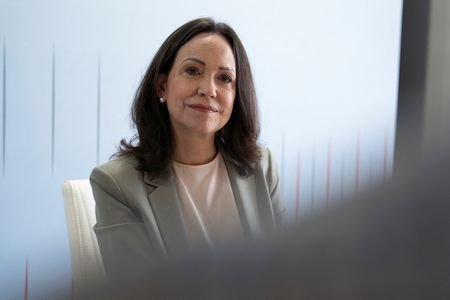
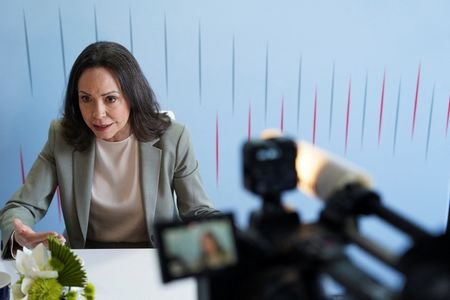
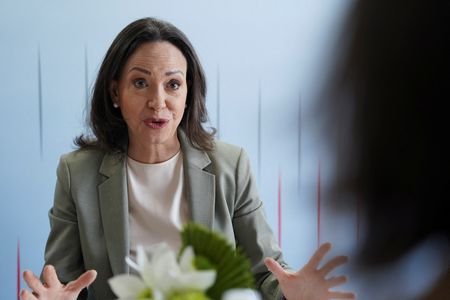
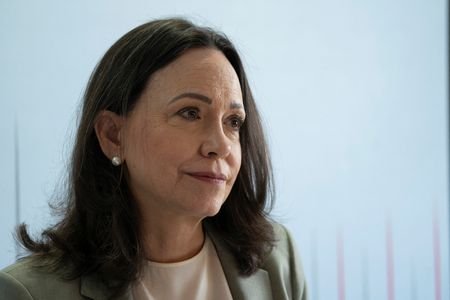
HOUSTON, March 24 (Reuters) - Venezuela opposition leader Maria Corina Machado told Reuters on Tuesday that early interest in Venezuela's oil sector is positive but she called for more transparency and contract security, including a new oil law, to further increase crude and gas output in the South American country.
In January, Venezuela's National Assembly approved a sweeping reform of the country's main oil law after the U.S. capture of President Nicolas Maduro this year. The new law grants foreign producers autonomy to operate and export the OPEC country's oil, yet many companies have said more changes are needed to reach U.S. President Donald Trump's goal of attracting $100 billion in investment.
"I'm here to attract attention to Venezuela, not delay it," she said in an interview before her Tuesday afternoon speech at the CERAWeek energy conference in Houston.
Machado said Venezuela could eventually produce as much as 5 million barrels of oil a day, with $150 billion in investment needed. Investors, however, need rule of law, independent institutions and respect for contracts in Venezuela in the long term, which Machado says would be granted by a new government once the country holds a presidential election.
In the meantime, she said, Washington's supervision of oil revenue is needed to prevent corruption or wrongdoing. Since January, the U.S. has been controlling oil proceeds through bank accounts handled by the Treasury Department, and the Venezuelan administration of interim President Delcy Rodriguez is working to restore output to the 1.2 million bpd it was producing before a strict U.S. oil blockade was implemented to pressure Maduro.
INVESTMENT SECURITY
Machado, asked if investors should speak to her or the Rodriguez administration, said it depends on whether investors “want to refer to the past, or to the future, and then you make up your mind.” She said elections would come soon, and she is committed to and supportive of the strategy put in place by the U.S. administration.
Asked if interested investors should return right now or wait, she said they “should be preparing, and looking for opportunities."
Rodriguez has said that the country has sufficient protections to attract investment.
“You have guarantees, you have legal certainty, political security, stability and peace of mind so your investments can be developed fully - not only in the hydrocarbons sector, where there are many opportunities, but also in the mining sector,” Rodriguez told visiting investors at an event at the presidential palace in Caracas.
Machado, a Nobel Peace Prize winner, said early interest in Venezuela's energy industry could facilitate further investment. An ongoing review of oil contracts, particularly of those signed under Maduro, also could provide trust, she added.
Machado sees Venezuela's state-run oil company PDVSA, which currently controls all joint ventures in the country, eventually being reduced in size before transferring operations to the private sector. However, she wants Houston-based oil refiner Citgo Petroleum - owned by PDVSA - to remain in Venezuela's hands as a strategic asset.
"Losing Citgo would be damaging to Venezuela and an error for U.S. energy security," she said.
An auction of Citgo's parent company was completed last year but is now waiting for the final green light from the U.S. Treasury. Speaking about the process, Machado used a baseball analogy.
"Until the last out, in the last inning, there's a possibility," she said.
(Reporting by Marianna Parraga and Nathan Crooks in Houston; Editing by Nathan Crooks and David Gregorio)