By Andrew Osborn
MOSCOW, April 2 (Reuters) - Students across Russia are being offered large financial incentives to join drone units fighting in Ukraine as operators and engineers, while companies in Russia's central Ryazan region have been given quotas to sign up workers for the army, documents show.
The recruitment effort, which comes as Russian forces continue to grind forwards on the battlefield in Ukraine and as U.S.-brokered peace talks are on ice due to the Iran war, suggests Moscow is diversifying its push to replenish its army's ranks in what is the fifth year of its war.
But it is not part of a general mobilisation drive, something the Kremlin said this week was not on the agenda. Nor, say top officials, is Russia running short of recruits despite Ukrainian claims - dismissed by Moscow - that Kyiv is eliminating Russian troops faster than they can be recruited.
Dmitry Medvedev, deputy chairman of the Security Council, told state media on Friday that Russia's recruitment system, which offers substantial financial packages to volunteers, continues to deliver. More than 400,000 people had signed up last year and over 80,000 so far this year, he said.
Kremlin spokesman Dmitry Peskov said on Thursday he had not seen official documents concerning student recruitment and corporate recruitment quotas in Ryazan, but confirmed that students were being encouraged to join Russia's drone forces, a new division of the armed forces set up at the end of last year at the behest of President Vladimir Putin.
The recruitment offer applies equally to everyone - workers, students and the unemployed, Peskov told reporters. "This is a completely open offer, an offer to join a new type of unit."
RUSSIA SEEKS HIGHLY SKILLED DRONE OPERATIVES
Russia's move to target students - a process critics say has sometimes been accompanied by undue pressure - suggests that Moscow is keen to pour more skilled human resources into its drone forces which - like those of Ukraine - play an increasingly pivotal role in what has long become a war of attrition.
Drone operators from both sides typically work some distance from the front line but are regarded as high-value targets who are hunted down and killed if their positions are revealed.
The Far Eastern Federal University in Vladivostok is promising students who sign up for a minimum of one year extendable academic leave and a guaranteed exemption from any education fees on their return, plus free accommodation and grants. It is also pledging to cover the costs of any military equipment and weaponry needed.
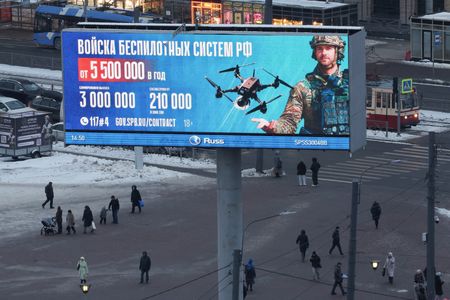
That is on top of what, by local standards, is a substantial financial package: a first-year salary from 5.5 million roubles ($68,433), a one-off payment of 2.5 million roubles after free training, a monthly allowance of 240,000 roubles, and a one-off payment of 200,000 roubles from the university.
"This is not only an opportunity to prove yourself, but also a unique platform for social and career advancement, backed by unprecedented support measures," the university said in a document published on March 19.
'THE NEW INDISPENSABLES'
The Moscow State University of Civil Engineering is offering similar incentives, telling students in a statement on its website that they have the chance to become drone operators, engineers or technical specialists.
The Russian State Hydrometeorological University in St Petersburg is also encouraging its students to sign up. Its offer, published on its website, shows a drone operator promising payments from 7 million roubles ($87,000) per year.
There have been unconfirmed media reports that universities have been given recruitment quotas to meet and leaks suggesting that students - especially those who have failed exams or are indebted - have sometimes faced undue pressure to sign up, such as being threatened with expulsion if they do not. Reuters was unable to independently confirm that and the Russian Defence Ministry and universities say signing up is entirely voluntary.
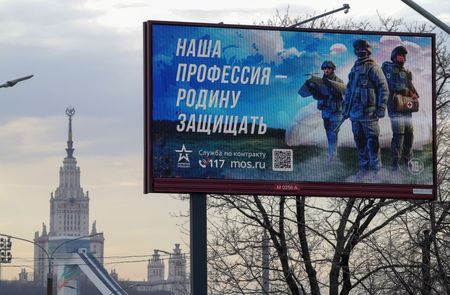
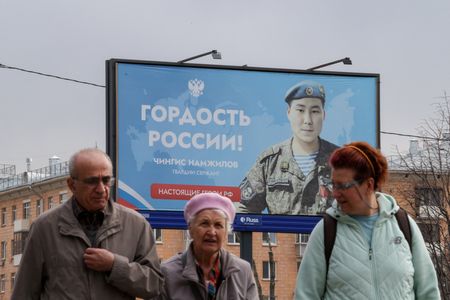
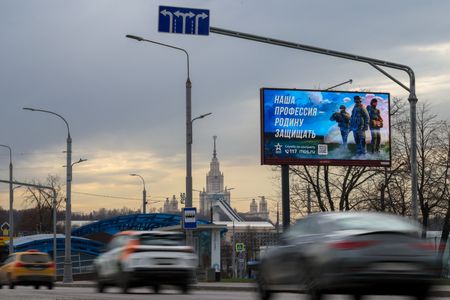
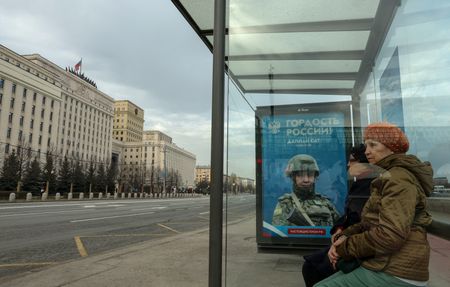
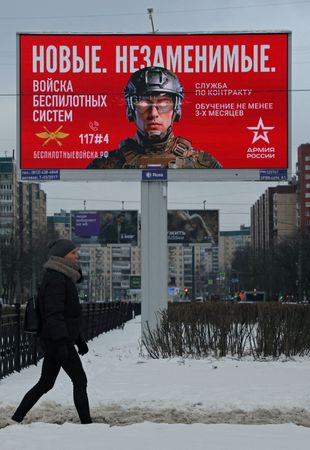
The drive to woo students coincides with a new billboard recruitment campaign which shows a young drone operator with glowing eyes in hi-tech glasses under the title "the new indispensables."
Meanwhile Pavel Malkov, the governor of the Ryazan region - which has a population of over 1 million - has ordered private and public companies to set recruitment quotas for workers to sign contracts with the army.
His orders, contained in a decree which was published on a government website and publicised by state media, said that companies with up to 300 workers should provide two army recruits, companies with up to 500 employees three recruits, and companies with more than 500 workers five recruits.
The decree did not say what punishment, if any, companies would face if they failed to meet the quotas.
($1 = 80.3705 roubles)
(Reporting by Andrew OsbornAdditional reporting by Dmitry Antonov in Moscow and John Irish in Paris Editing by Alexandra Hudson)