By Olivia Le Poidevin
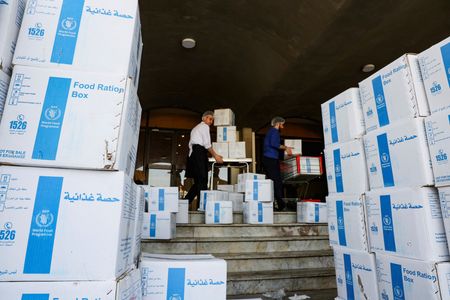
GENEVA, April 10 (Reuters) - Lebanon is facing a food security crisis due to Israel's offensive against militant group Hezbollah, which has disrupted supplies of goods and pushed up prices, the United Nations World Food Programme said on Friday.
A fragile two-day-old ceasefire has halted the campaign of U.S. and Israeli airstrikes on Iran, but it has not so far calmed the situation in Lebanon, where Israel began pounding the country, in particular the south, on March 2 after Hezbollah fired on it in support of its patron Iran.
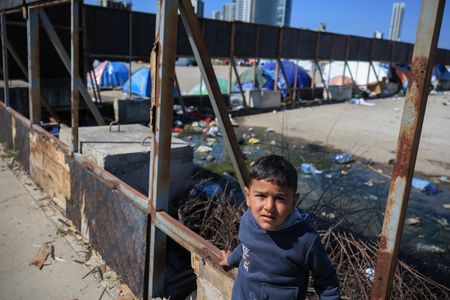
"What we're witnessing is not just a displacement crisis, it is rapidly becoming a food security crisis," said World Food Programme country director Allison Oman, speaking via video link from Beirut.
She warned that food was becoming increasingly unaffordable due to rising prices and demand among displaced families.
The Lebanese Ministry of Economy and Trade said in a statement that Lebanon's food stocks on a national level are sufficient for three to four months, and supply chains and import-export operations are functioning normally at ports and land crossings.
PRICE OF VEGETABLES HAS SOARED
However, the price of vegetables has soared by more than 20% and bread prices have increased by 17% since March 2, the WFP said.
"What we're now seeing is a very worrying combination: prices are rising, incomes are disrupted and demand is increasing as displacement continues for many families," Oman stated.
Lebanon faces a two-layered crisis, in which some markets have fully collapsed - especially in the south, where more than 80% of markets are no longer functioning - while those in Beirut are under increasing strain, Oman said.
While markets on a national level are broadly functioning, many traders in conflict-affected areas in southern parts of Lebanon are reporting less than one week of essential food stocks remaining, she added.
The trade ministry said that strategic reserves of food and fuel are available.
Delivering food aid into hard-to-reach areas in the south was also becoming increasingly difficult.
While the Qasmiyeh bridge, which was previously struck, is now operational, movement remains challenging. Ten WFP convoys have reached the south to provide aid to some of the estimated 50,000 to 150,000 in need of humanitarian support in that part of the country.
"This escalation is pushing vulnerable communities even closer to the edge," said Oman, adding that about 900,000 people across Lebanon were already facing food insecurity before the latest escalation and that number was set to rise.
(Reporting by Olivia Le Poidevin, Editing by Miranda Murray, Alex Richardson and Sharon Singleton)