By Gram Slattery and Humeyra Pamuk
WASHINGTON, April 16 (Reuters) - U.S. officials have informed some European counterparts that some previously contracted weapons deliveries are likely to be delayed as the Iran war continues to draw on weapons stocks, five sources familiar with the matter said.
The delays underline the degree to which the war against Iran, which began with U.S.-Israeli air strikes on February 28, has begun to stretch U.S. supplies of some critical weaponry and ammunition.
The sources, who spoke on condition of anonymity as the communications were not public, said several European countries will be affected, including in the Baltic region and in Scandinavia.
Some of the weapons in question were purchased by European countries under the Foreign Military Sales program, or FMS, but have not yet been delivered, the sources added. Those deliveries will likely be delayed, U.S. officials told European officials in bilateral messages in recent days, the sources said.
On Friday, the defence ministries of Estonia and Lithuania told Reuters the U.S. has informed their countries of possible delays in the delivery of U.S. military equipment because of the Iran war.
The White House and the State Department referred queries to the Pentagon.
"America’s military is the most powerful in the world, and we will ensure that U.S. forces and those of our allies and partners have what they need to fight and win," a Pentagon spokesperson said. "For operational security reasons, we will not comment on any specific allied or partner requirements or ongoing efforts to support them."
European officials complain the delays are putting them in a difficult position.
Under the FMS program, foreign countries purchase U.S.-made weapons with the logistical assistance and consent of the U.S. government. Washington has pushed European NATO partners to purchase more U.S.-made materiel under President Donald Trump, including through the FMS program, as part of a bid to shift the responsibility for Europe's conventional defense away from the U.S. and onto European partners.
But such weapons deliveries are often delayed, causing frustration in European capitals, where some officials are increasingly looking at weapons systems made within Europe.
U.S. officials say the weapons are needed for the war in the Middle East, and they fault European nations for not helping the U.S. and Israel open the Strait of Hormuz.
Even before the Iran war, the U.S. had already drawn down billions of dollars' worth of weapons stockpiles, including artillery systems, ammunition and anti-tank missiles since Russia invaded Ukraine in 2022 and Israel began military operations in Gaza in late 2023.
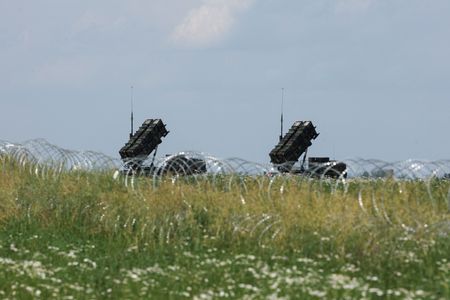
Since the start of the Iran campaign, Tehran has fired hundreds of ballistic missiles and drones at Gulf countries. Most have been intercepted, including with the PAC-3 Patriot missile interceptors that, for example, Ukraine relies on to defend its energy and military infrastructure from ballistic missiles.
The sources spoke on the condition that the names of some of the countries affected be withheld. Some share a border with Russia and, as such, the cadence of weapons deliveries can be considered sensitive defense information.
The delayed weaponry includes various kinds of ammunition, including munitions that can be used for both offensive and defensive purposes, the sources said.
(Reporting by Gram Slattery and Humeyra Pamuk; Editing by Don Durfee, Chizu Nomiyama and Nia Williams)

