By Tim Kelly
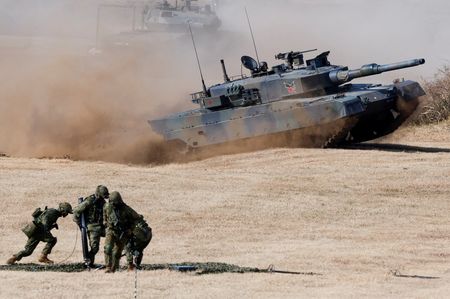
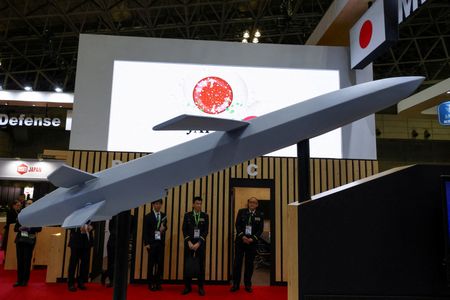
TOKYO, April 21 (Reuters) - Japan on Tuesday unveiled its biggest overhaul of defence export rules in decades, scrapping restrictions on overseas arms sales and opening the way for exports of warships, missiles and other weapons.
The move aimed at strengthening Japan's defence industrial base marks another step away from the pacifist restraints that have shaped its postwar security policy. It has been made in tandem with efforts to deepen ties with other nations in Asia to counter China's growing regional influence.
Wars in Ukraine and the Middle East are also straining U.S. weapons production, expanding opportunities for Japan. At the same time, U.S. allies in Europe and Asia are looking to diversify suppliers as Washington's long-held security commitments look less certain under President Donald Trump.
"No single country can now protect its own peace and security alone, and partner countries that support each other in terms of defence equipment are necessary," Japanese Prime Minister Sanae Takaichi said in a post on X.
While countries such as the Philippines welcomed the change, China was not impressed.
"China is deeply concerned about this," foreign ministry spokesperson Guo Jiakun told a daily press conference, adding that Beijing "will remain highly vigilant and resolutely resist any reckless actions by Japan towards a new form of militarism."
Relations between Japan and China have been at a low ebb since Takaichi said in November that a Chinese attack on Taiwan threatening Japan's survival could trigger a military response.
PHILIPPINES, US AND GERMANY WELCOME THE SHIFT
The revision removes five export categories that had limited most military exports to rescue, transport, warning, surveillance and mine-sweeping equipment. Ministers and officials will instead assess the merits of each proposed sale.
Japan will keep in place three export principles that commit it to strict screening, controls on transfers to third countries and a ban on sales to countries involved in conflict. But in a presentation outlining the changes, the government said exceptions could be made when deemed necessary for national security.
Countries ranging from Poland to the Philippines are exploring procurement opportunities as they modernise their forces, Japanese officials and foreign diplomats have told Reuters. One of the first deals could be the export of used warships to Manila, two of the sources said.
Philippine Defence Secretary Gilberto Teodoro welcomed Japan's rule change, saying in a statement that it would provide access to defence "articles of the highest quality" that would "strengthen domestic resilience" and "contribute to regional stability through deterrence."
The Philippines, together with Japan's southwestern island chain, forms part of what military planners call the First Island Chain, a string of islands that hems in China's access from its coastal waters to the Western Pacific.
Manila and Tokyo signed an agreement in September making it easier for their forces to operate in each other's territory and in January eased rules for exchanging military supplies.
U.S. Ambassador to Japan, George Glass, heralded the export rule change in a post on X as a "historic step" to strengthen collective defence. Germany's envoy to Tokyo, Petra Sigmund, said it created opportunities for deeper cooperation "with the aim of enhancing global stability".
JAPAN ALSO BUILDING UP ITS OWN MILITARY
Tokyo hopes defence exports will shore up its industrial base by boosting production volumes, lowering per-unit costs and adding manufacturing capacity it could draw on in a military crisis.
Contractors such as Mitsubishi Heavy Industries can build advanced systems including submarines, fighter aircraft and missiles, but for decades have depended on small orders from a single customer, Japan's Self-Defense Forces.
Japan is pressing ahead with unprecedented efforts to bolster its military - buying missiles, stealth jets and drones it says are needed to deter any threat posed by China, including around its islands near Taiwan.
Beijing has said its intentions in East Asia and elsewhere are peaceful.
Tokyo is also developing a next-generation fighter jet with Britain and Italy for deployment in the mid-2030s, part of a strategy to share development costs and gain access to new technology.
Japan has steadily increased defence spending in recent years to 2% of GDP, and Takaichi's government is expected to announce further rises this year when it releases a new security strategy.
(Reporting by Tim Kelly; additional reporting by Mikhail Flores in Manila, John Geddie in Tokyo and the Beijing newsroom; Editing by Kate Mayberry and Edwina Gibbs)