By George Calin, Luiza Ilie and Jekaterina Golubkova
GALATI, Romania, May 29 (Reuters) - NATO accused Moscow on Friday of reckless behaviour and pledged to "defend every inch of Allied territory" after Romania said a Russian drone had crashed into an apartment block in the alliance member state during an attack on neighbouring Ukraine.
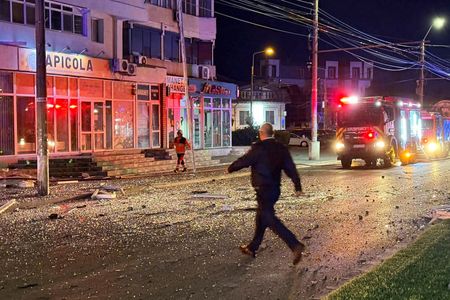
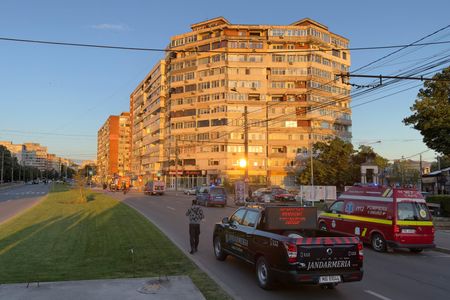
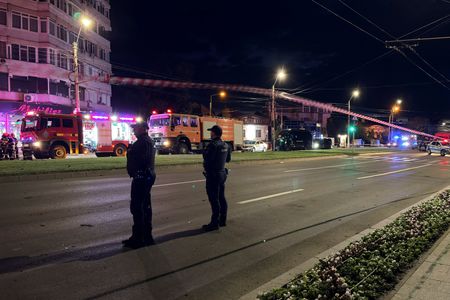
Romania's defence ministry said a woman and a child suffered minor injuries in Galati near the border with Ukraine overnight after radar tracked a Russian drone entering Romanian airspace.
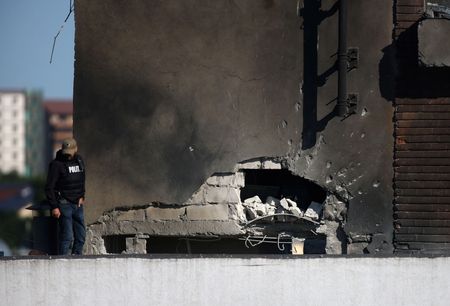
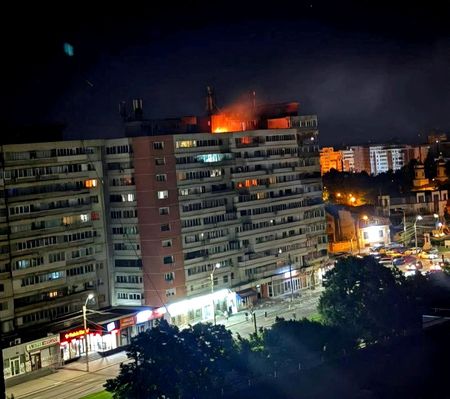
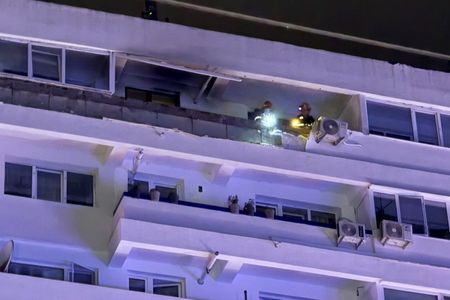
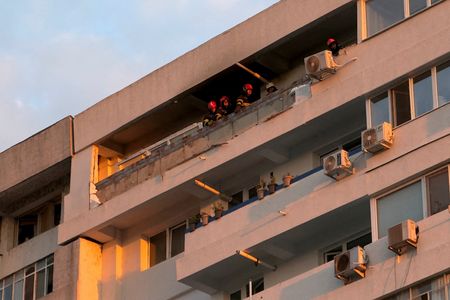
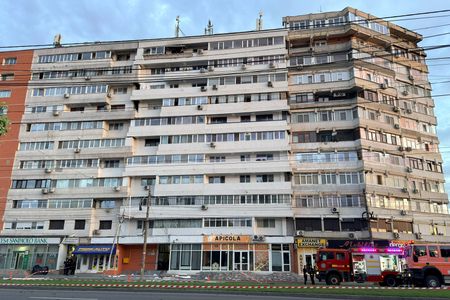
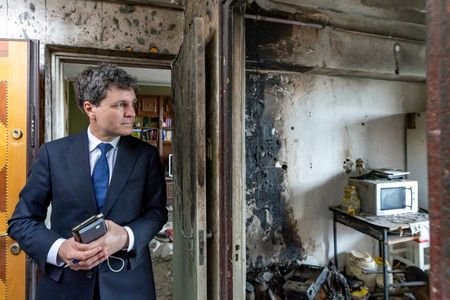
Photos from the scene showed charred and damaged brickwork on the roof of the 10-storey apartment block, which Romanian authorities said was hit by a drone that exploded on impact, tearing through a top-floor flat.
Russia's TASS news agency cited Kremlin spokesman Dmitry Peskov as saying President Vladimir Putin had been informed about the incident. Russian Foreign Ministry spokeswoman Maria Zakharova said all the accusations about Russian drones flying in Europe were unsubstantiated, RIA reported.
Separately, Dmitry Medvedev, deputy chair of Russia's powerful Security Council, warned European leaders that drones would continue to stray into their countries and prevent their populations from sleeping peacefully.
It was the first time a densely populated area in a NATO country had been hit causing injuries during Russia's war in Ukraine, and the incident is likely to increase tensions on the alliance's eastern flank as member states worry about the war spilling over their borders.
The U.S. ambassador to NATO, Matthew Whitaker, condemned the "reckless incursion" in a post on X and pledged the U.S. "will defend every inch of NATO territory."
The White House did not immediately respond to a request for comment.
"Russia’s reckless behaviour is a danger to us all," NATO Secretary General Mark Rutte said on X after speaking by phone to Romanian President Nicusor Dan, whose country is in both the North Atlantic Treaty Organization and the European Union.
"I affirmed that NATO stands ready to defend every inch of Allied territory," he said, without making any mention of triggering NATO's mutual defence clause. "We will continue to enhance our readiness to deter and defend against any threat, including from drones."
Dan said the Russian consulate in the southeastern city of Constanta would be closed and the consul expelled.
TASS quoted Zakharova as saying Moscow would respond swiftly to Bucharest's decision to close the consulate.
'NATO NEEDS TO DO SOMETHING'
The incident seemed certain to stoke worries that Russia could be testing NATO's resolve.
U.S. President Donald Trump has sown uncertainty about whether he would abide by the NATO charter's obligation to defend allies that are attacked, saying the U.S. would only do so for those that meet spending targets and suggesting he could withdraw from the alliance.
Still, several pro-NATO lawmakers from Trump's Republican Party slammed Russia over the incident. Representative Don Bacon suggested that U.S. Defense Secretary Pete Hegseth's decision to slash the number of U.S. troops deployed in Romania showed "weakness" that "incites Russian aggression."
Romania, which shares a 650-km (400-mile) land border with Ukraine, said Russian drones had breached its airspace 28 times since Moscow began attacking Ukrainian ports across the Danube River following its full-scale invasion of Ukraine in 2022.
Stephen Evelyn, a 44-year-old American citizen who lives in Galati, called it "another provocation by the Russians".
"I don't believe this was an accident; this has happened too many times for the Russians to be doing this by accident," he said. "Either that or they're highly incompetent at waging war, but NATO needs to do something about this."
There have been multiple airspace incursions into NATO airspace since Moscow invaded Ukraine, most notably when more than 20 Russian drones entered Poland's airspace on the night of September 9 to 10.
In recent weeks, Ukrainian drones have strayed into Baltic countries' airspace, sowing confusion and raising tensions with Russia.
Romania has asked NATO allies to deploy additional anti-drone capabilities to Romania, with official sources saying Bucharest needs low-altitude radars and interceptor drones. A NATO spokesperson said on Friday that "potential additional defensive measures are considered."
ROMANIA SCRAMBLED F-16 JETS
Local authorities in southern Ukraine said Izmail port in the Odesa region, across the border from Galati, had come under attack from drones early on Friday.
Ukrainian President Volodymyr Zelenskiy said Kyiv was ready to support Romania "in whatever way is necessary".
The Romanian defence ministry said two F-16 fighter jets had been scrambled and a military helicopter was sent to monitor the attack, with the pilots authorised to shoot down any drones without endangering inhabited areas. The residents of border counties Braila, Galati and Tulcea were warned to take cover.
The drone was in Romania's airspace for four minutes and flew at a low altitude for 10 km (6.2 miles), making it difficult for radar to detect, Romanian Brigadier General Gheorghe Maxim said.
He told a press conference that although the U.S. anti-drone system Merops is operational in Romania, it is not yet fully integrated with national air defences, and it would have been too risky to use in a city.
In addition to the woman and her child who were taken to hospital with minor injuries, two people were treated on the scene for panic attacks and 70 were evacuated from the apartment block, local authorities said.
Deputy Interior Minister Raed Arafat, who is in charge of the emergency response agency, told private broadcaster Digi24 that the drone affected two building stairwells, an elevator shaft and damaged five cars.
A drone also damaged an electricity pole and a household annex in Galati in April.
In a separate incident, a drone without an explosive charge was found in northwestern Romania, state TVR broadcaster said late on Thursday, citing local authorities.
(Reporting by George Calin in Galati, Luiza Ilie in Bucharest, Jekaterina Golubkova in Tokyo, Alan Charlish, Pawel Florkiewicz and Anna Wlodarczak-Semczuk in Warsaw, Jason Hovet in Prague, Lily Bayer in Brussels and Jonathan Landay, Humeyra Pamuk and Nolan McCaskill in Washington; Editing by Jacqueline Wong, Kate Mayberry, Timothy Heritage, Rod Nickel)