By Tom Polansek and Cassandra Garrison
LUBBOCK, Texas/SALTILLO, Mexico, June 6 (Reuters) - Lubbock Feeders has been fattening cattle in West Texas since Dwight Eisenhower was U.S. president. Now, row upon row of pens sit empty.
The 70-year-old feedlot in Lubbock, Texas, is on the brink of closure after a halt to U.S. imports of Mexican livestock last year dried up the supply that formerly accounted for most of the cattle it raised, according to one of its owners.
The U.S. government closed the border to Mexican livestock a year ago, hoping to keep out New World screwworm, a flesh-eating pest that Mexican authorities have struggled to control. This week, the first case of screwworm in 60 years was confirmed on a Texas cattle ranch, representing a fresh challenge to the U.S. beef industry, already hampered by scarce supplies, President Donald Trump's trade policies and a pernicious drought.
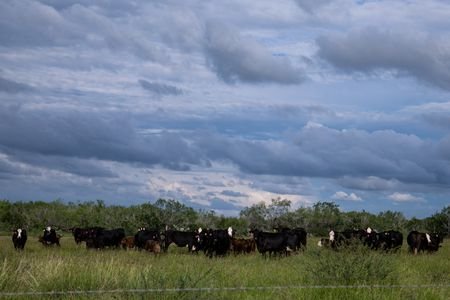
It's a brighter story in Mexico's northern border state of Coahuila, where farmers who used to send live cattle north are now exporting beef to the United States. Rancher Enrique García's pens were recently full of black cattle eagerly awaiting an afternoon feeding. He has doubled his workforce, including to fatten cattle and process beef, with aspirations to sell his product to U.S. consumers.
In Texas, the nation's biggest cattle-producing state, closing the border has forced the $100 billion U.S. beef industry to contract. But in Mexico - where screwworm has infested nearly 28,000 animals - the beef industry has capitalized on the setback to build up its own feedlots to keep cows longer and prepare them for slaughter, as well as expand processing facilities. Moving up the supply chain like this can be profitable. In the first four months of 2026, Mexican beef exports to the U.S. soared.
"If they end up feeding and processing them in Mexico, how are we winning?" said Kyle Williams, manager and part owner of Lubbock Feeders. "We're giving this to them on a silver platter, the feeding industry. That's work, that's labor, that's people that are not getting to do it here in the U.S."
U.S. CATTLE HERD SHRINKS
U.S. beef prices set record highs this year as domestic cattle supplies dropped to a 75-year low because of the ban on cattle imports from Mexico and drought conditions that fueled wildfires across the Plains and drove American producers to slash their herds.
The U.S. formerly imported more than a million cattle a year from Mexico, representing about 4% to 5% of all cattle sold for U.S. beef production, according to industry data.
The animals from Mexico were fattened at U.S. feedlots and then sent to U.S. processing plants, supporting jobs along the way, feeders said. The jobs included truckers who transported livestock, farmers who raised crops to feed the animals, and meatpacking workers who butchered cattle into steaks and hamburger meat.
Now, those cattle are largely staying in Mexico to be raised and slaughtered.
"They're building infrastructure in Mexico," Williams said. "They're forced to figure it out."
The USDA could resume imports safely with cattle inspections and treatments at ports of entry, he added. "Those protocols are in place. There's been training on both sides of the border. Let the cattle move."
The screwworm is a parasitic fly that can infest any warm-blooded animal when the females lay eggs in wounds. It can be treated, if caught early. During an epidemic in the 20th century, the U.S. dropped trillions of sterile flies over hotspots from a fly production plant in Texas that it is now working to resurrect. The massive eradication effort ended the epidemic, but it took the cattle industry 30 years to recover, U.S. Agriculture Secretary Brooke Rollins said last year in justifying the border closure with Mexico.
Suspending cattle movement can slow the spread of the pest, Rollins said this week.
Lubbock Feeders stopped bringing in any cattle to its feedyard months ago because high prices for the animals sourced from U.S. ranches meant the business could lose more than $200 per head, Williams said. The feedlot has the capacity to house up to 40,000 cattle but its headcount has dropped to about 4,000.
Bobby Swift, the feedlot's 57-year-old assistant manager, now arrives at work later because there is little work to do. One of his duties, checking on the cattle, takes just 22 minutes because there are so few, he said.
"When you're as slow as we are, mentally it takes an effect on you," said Swift, a 30-year employee whose father and grandfather worked at Lubbock Feeders.
REBUILDING THE HERD IS SLOW
The rising cost of beef has become an affordability issue among consumers ahead of U.S. midterm elections as they also grapple with increased fuel costs. President Donald Trump has tried to address it by urging cattle producers to lower prices, ordering the Department of Justice to investigate meatpackers, and allowing low-tariff imports from Argentina. But what would help drive down prices more is a larger U.S. cattle herd.
U.S. meatpackers are waiting for American cattle producers to expand their herds to boost beef output, a process that can take two years.
Producers said Trump's push for larger low-tariff beef imports from Argentina made it harder to convince them to rebuild herds. The move upset ranchers but has failed to bring down costs for consumers.
Producers also have been reluctant to increase production because of risks from dry weather and uncertainty over future profits.
In Tulia, Texas, 72 miles (116 km) north of Lubbock, farmer Eddie Womack said he may cut his herd to 200 cows from about 600 cows unless rain arrives this summer to ease a severe drought that left him without crops to use as feed. He bought feed at higher costs instead.
"We go through another devastating year and we'll have to say, 'We're gone. We've got to sell,'" said Womack, 63.
MEXICAN PRODUCERS PROFIT
García is one of many beef producers expanding in Mexico.
He began fattening cattle on a small scale four years ago to diversify his business after previously exporting about 900 head annually to Kansas. The U.S. border closure accelerated his shift and helped boost his income by 8% to 10%, García said.
With screwworm now present in the U.S., the border is unlikely to reopen soon, which García said this week was encouraging him to build out his beef production business.
"In the end, we are going to get to the United States just the same, but now with meat," he said.
Mexico's exports to the U.S. surged by 23% in the first four months of 2026, according to Mexico's main meat producers council, which aims to double shipments next year.
Coahuila, one of Mexico's main beef-exporting states, is pushing to expand federally and U.S.-certified slaughter and packing capacity to support exports with help from the Mexican government, said Isaias Montemayor, the state's deputy minister of livestock and rural infrastructure.
"The passing of the months has taught us that if these producers add value," Montemayor said, "they can obtain a profit equal to or even greater than what they would get if they exported live calves."
Rollins said that suspending imports of Mexican cattle successfully delayed screwworm's incursion into the U.S. and that ports of entry would remain shut to Mexican cattle until further notice.
The White House referred questions to the USDA, which said in a statement: "Efforts at the federal, state, and local levels have been focused on containing the pest and implementing protocols."
Rogelio Perez of Mexico's National Confederation of Livestock Organizations said the border closure had forced Mexico's industry to adjust, and ended up strengthening it. "The profit from producing meat now stays in Mexico with a consequent impact on the American industry," he said.
MEATPACKERS UNDER PRESSURE
The border closure has pressured U.S. meatpackers, in addition to some cattle feeders, by exacerbating already tight domestic supplies. Processors such as Tyson Foods have reported steep losses in U.S. beef businesses as costs for cattle outpaced gains in beef prices.
U.S. meatpacking executives said they need more cattle to operate plants efficiently and that resuming imports from Mexico would have the biggest impact on supplies over the next 12 to 18 months.
Tyson Foods slashed operations this year at a beef plant in Amarillo, Texas, about 120 miles (193 km) north of Lubbock, and permanently shut a massive beef plant in Nebraska. The company said it made the cutbacks, which eliminated jobs for thousands of workers, to be more competitive.
Rivals JBS and Cargill have faced rare labor disputes at U.S. beef plants, pushing back against workers' demands for higher pay.
Darin Parker, president of global meat distributor PMI Foods, said USDA should reopen the border.
"It's quintessential Americana to be in the beef industry," Parker said. "We need to really protect this industry."
(Reporting by Tom Polansek in Lubbock, Texas, and Cassandra Garrison in Saltillo, Mexico. Editing by Emily Schmall and Claudia Parsons)