By Luis Jaime Acosta and Nelson Bocanegra
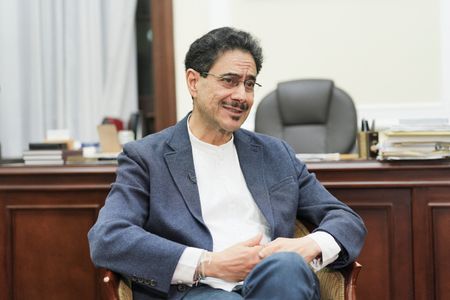
BOGOTA, June 10 (Reuters) - Colombian leftist presidential hopeful Ivan Cepeda told Reuters he will recognize the results of a runoff vote this month even if they do not favor him, but said he would call on supporters to peacefully protest if their rights are not upheld.
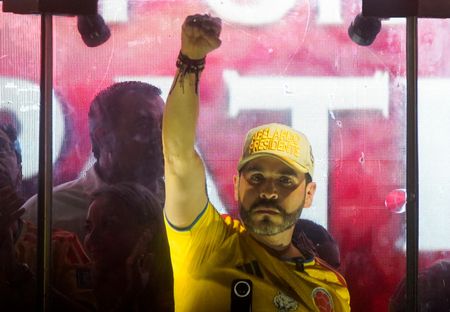
Cepeda, a 63-year-old longtime senator and ally of President Gustavo Petro, will face right-wing lawyer Abelardo De La Espriella in what is expected to be a challenging June 21 runoff.
The vote will pit two sharply different visions for Colombia’s future, with Cepeda pledging to deepen Petro’s social and economic reforms and pursue peace talks with armed groups, while De La Espriella has campaigned on a security crackdown and more business-friendly policies.
De La Espriella beat Cepeda by some 670,000 votes in the first round, and though he did not secure the majority needed to avoid a runoff, he is expected to draw support from other right-wing candidates now out of the race.
"I am a democrat. Now, that does not exempt me from my responsibility to verify that the result is transparent," Cepeda said in an interview on Tuesday evening.
Cepeda took a week to acknowledge the first-round results, initially citing a discrepancy in the electoral register and atypical voting at some polling stations.
De La Espriella said this week, without presenting evidence, that he had information about an alleged plan by the left to launch violent protests if he were to win. Cepeda said he would only call for protests if people's rights were violated.
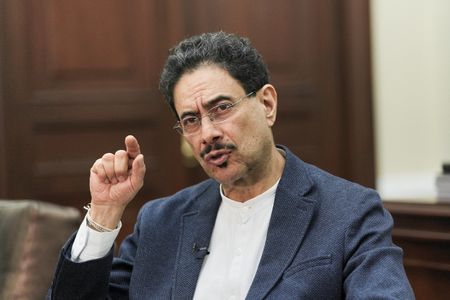
“I would call on the people to defend their rights through constitutional and legal means,” Cepeda said, emphasizing that he rejects violence. “Within that exercise, of course, there is the functioning of institutions, but there is also another institution that must be respected, which is an engaged citizenry."
DEEPER REFORMS, OPEN TO GAS
If elected president, Cepeda said he would seek to deepen reforms to healthcare, education and pensions, and distribute land to farmers as part of an effort to make Colombia a "global agricultural power."
He said he would prefer to reach a deal with business leaders to reduce tax evasion and provide resources for his government, instead of pursuing tax reform in congress.
“We should reach a tax pact, a fiscal pact, so as not to have to resort to a reform that could be unpopular with sectors of the economy,” he said, adding he would like social and business sectors to coordinate interest rate decisions with the central bank, with whose board outgoing president Petro has repeatedly clashed.
It would be difficult to revive oil exploration contracts under his potential government, Cepeda said, because Petro's ban on new exploration has shifted the focus of the economy, and environmental policy must acknowledge an “immense" crisis.
But, he said he is open to possible gas exploration and the development of mining.
Relations with the United States, which is Colombia’s top trading partner but whose government has had repeated clashes with Petro, will be managed with respect and sovereignty to “build innovative bilateral solutions", Cepeda said.
He would try to advance peace talks with illegal armed groups in an effort to end six decades of war, Cepeda said, and seek legislation allowing criminal groups to get legal benefits for disarming.
Petro's efforts to demobilize more than 20,000 combatants have shown few tangible results and armed groups have added thousands of members during his term.
(Reporting by Luis Jaime Acosta and Nelson Bocanegra, Editing by Julia Symmes Cobb and Sanjeev Miglani)