By Laila Bassam and Steven Scheer
BEIRUT/JERUSALEM, June 15 (Reuters) - Fighting between Israel and Hezbollah in Lebanon eased significantly on Monday but did not halt completely despite a U.S.-Iran deal to end the wider conflict, with one person killed in an Israeli strike, underscoring the fragility of the truce.
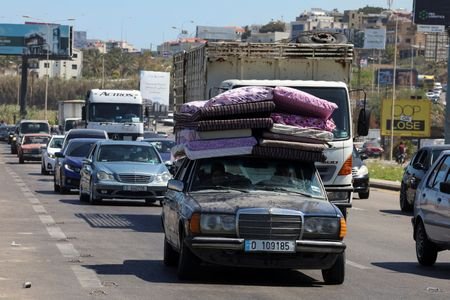
Lebanon has suffered the deadliest spillover of the conflict between the U.S. and Iran, with nearly 3,800 people killed and some 1.2 million people uprooted by an Israeli offensive against the Iran-backed Hezbollah group, which opened fire on Israel in support of Tehran on March 2. A halt to the fighting there is key to the broader agreement, with Tehran having pushed for a Lebanon ceasefire to be included.
Pakistan, a key mediator between Tehran and Washington, announced that a deal struck early on Monday local time called for "the immediate and permanent termination of military operations on all fronts, including in Lebanon."
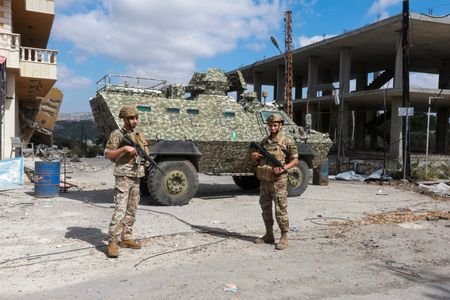
The declaration brought relative calm to southern Lebanon, though sporadic violence persisted as Israeli troops remain stationed in territory they have occupied in the three-month war, according to Lebanese and foreign security sources.
An Israeli drone strike on a car in the southern Lebanese town of Kfar Tebnit killed the driver. Hezbollah said it fired drones and rockets at Israeli military vehicles that it said were trying to push deeper into southern Lebanon, in its first attack since the deal.
The Iran-aligned group also said it fired salvos of rockets and artillery shells against the Israeli troops in southern Lebanon, where the clashes were still ongoing.
Later on Monday, the Israeli military confirmed it intercepted rockets launched by Hezbollah toward an area where troops were operating in southern Lebanon. It added that anti-tank missile and mortar shells were also fired, with no injuries reported.
An Israeli drone could be heard circling over Beirut and its southern suburbs throughout Monday, according to Reuters reporters and other residents of the city.
ISRAEL'S PM SAYS ITS TROOPS WILL STAY
In a written statement on Monday before Israel's drone strike, Hezbollah welcomed the U.S.-Iran deal, saying it had resulted in a comprehensive ceasefire including in Lebanon.
A Hezbollah official earlier told Reuters the group's position on the ceasefire was linked to Israel adhering to it.
The official, who declined to be named, said Iran delayed signing its memorandum with the U.S. until June 19 partly to monitor whether Israel would keep up strikes on Lebanon.
Israel is not a party to the U.S.-Iran deal. Israeli Prime Minister Benjamin Netanyahu said late on Monday that his troops would remain in southern Lebanon as long as needed, saying Iran had demanded a withdrawal but that he "stood firm".
He said the Israeli military would maintain "freedom of action" in Lebanon to thwart attacks by Hezbollah and that it killed four militants who approached Israeli troops.
Reuters could not independently confirm those incidents.
Hezbollah, meanwhile, said it rejected any situation in which Israel could keep up its strikes on Lebanon and warned Israel against continuing attacks.
AOUN, BERRI WELCOME DEAL
Israeli Defence Minister Israel Katz said the security zone in southern Lebanon would be cleared of local residents and "all terrorist infrastructure, including houses", a reference to Hezbollah.
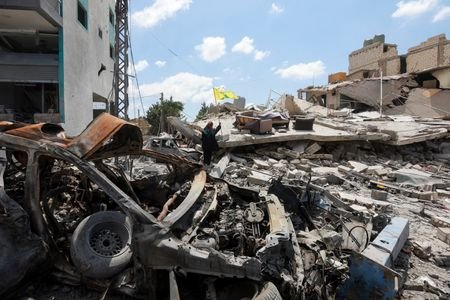
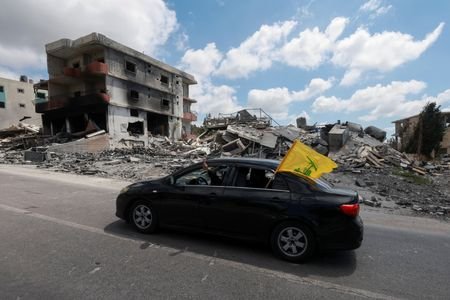
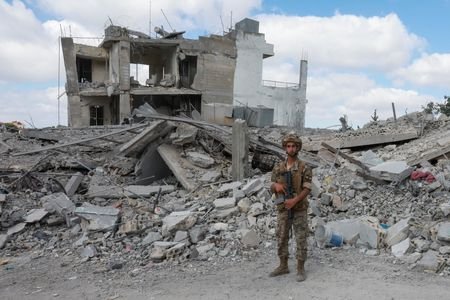
The Israeli military has been razing villages in southern Lebanon for weeks, saying it is acting against Hezbollah militants embedded in civilian areas of the predominantly Shi'ite Muslim region. Hundreds of thousands of Lebanese Shi'ites are sheltering in other parts of the country.
In Nabatieh, a devastated city in the south, Mohammed Daqdouq said he had returned on Monday morning to check on his home. "We'll need a lifetime to rebuild," he said.
Local authorities called on residents to hold off on returning home.
Lebanese President Joseph Aoun issued a carefully worded statement on Monday in response to the U.S.-Iran deal, saying he was grateful to those who had worked towards de-escalation in Lebanon and appreciated the deal's recognition of the importance of his country's stability.
He did not mention Iran or Israel specifically. Aoun previously accused Tehran of using Lebanon as a bargaining chip in its negotiations with Washington.
Aoun later spoke to Iranian Foreign Minister Abbas Araqchi by phone and issued a second statement welcoming the deal.
Araqchi also separately spoke to Parliament Speaker Nabih Berri, a political ally of Hezbollah and head of the Shi'ite Muslim Amal Movement, who hailed the agreement.
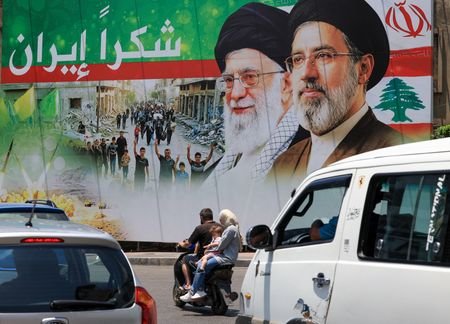
Iran, whose Islamic Revolutionary Guard Corps established Hezbollah in 1982, had insisted that a Lebanon ceasefire be included as part of any broader deal with the United States.
(Reporting by Jihed Abidellaoui, Laila Bassam, Maya Gebeily and Tala Ramadan in Beirut and Menna Alaa El-Din in Cairo; Writing by Tom Perry and Maya Gebeily; Editing by Gareth Jones, Ros Russell ,Cynthia Osterman and Sanjeev Miglani)