By Yves Herman, Nacho Doce and Lefteris Papadimas
LE TEMPLE, France/LA VILAVELLA, Spain/ATHENS, July 29 (Reuters) - Three Greek firefighters died battling blazes during high winds on the island of Crete and the mainland as wildfires spread across Europe on Wednesday after days of devastating fires in Spain and France.
Two firefighters became trapped in the Crete blaze near the village of Krya Vrysi while they were driving between fire fronts. Another died in a separate fire in the Peloponnese region, a fire department spokesperson told Reuters.
Residents and tourists were evacuated from Krya Vrysi and other nearby villages, locals told Reuters by phone, as high winds pushed the fire out of control near popular holiday spots.
“The wind is unbelievable – you can’t stand sometimes. The flames were huge, it was really scary," said resident Chrissa Gioukaki.
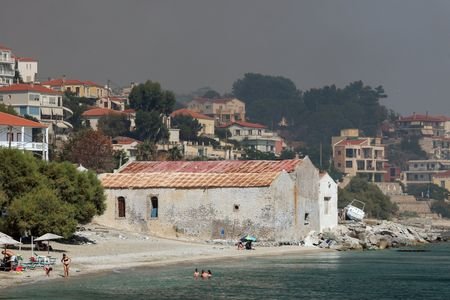
The flames headed southeast towards the coastal town of Agia Galini, where hotels line a hill above a small harbour. Tourists were evacuated on buses and in cars on Wednesday afternoon, said Charalampos Sevvas, owner of the Galini Mare hotel.
Earlier on Wednesday, the head of the EU's emergency response centre said that Greece and Italy were set to face a heightened wildfire risk in the coming weeks.
Europe, the world's fastest-warming continent, has endured record-breaking heatwaves this year, as human-driven climate change is intensifying the heat and drought that allow wildfires to spread faster.
MAJOR SPANISH FIRE STABILISED
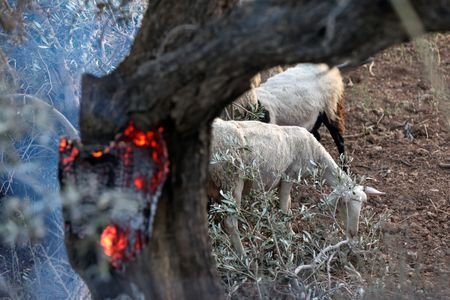
Blazes have forced large-scale evacuations of people in Spain and France over the past days, scorching through forests and killing wildlife.
Spanish Interior Minister Fernando Grande-Marlaska warned of "three tough days" ahead, with strong winds and high temperatures, even as the major fire in the Avila and Madrid region stabilised, allowing authorities to lift some of the evacuation and shelter-in-place orders.
Officials meanwhile warned of another fire in the northwestern Spanish province of Zamora. They issued an evacuation order for six towns and asked about 1,000 people to shelter in place.
Spain's weather agency AEMET said temperatures were expected to reach 40 degrees Celsius (104 degrees Fahrenheit) on Wednesday in at least six regions, which have been placed on orange alert, the second-highest level.
FIREFIGHTERS WARY OF NEW TEMPERATURE RISE
In France, temperatures in the southwest, hit by devastating fires, were expected to rise from around 33 C on Tuesday to peak at 41 C, according to Meteo France, while dry winds in the afternoon could stoke flames.
French firefighters kept a major blaze west of Bordeaux stable overnight. And near Bordeaux's airport, which has remained open, tramway services resumed and hotels reopened.
But officials warned the wildfires were far from over. The southwestern municipality of Lege-Cap-Ferret flagged several flare-ups in the area, adding that firefighters had managed to stabilise them.
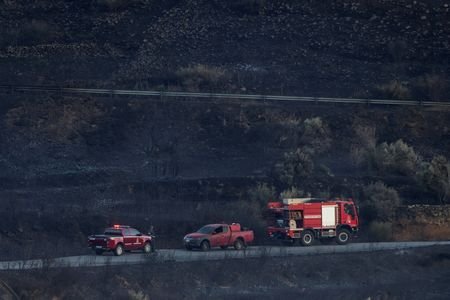
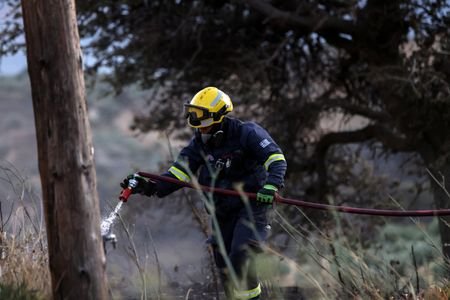
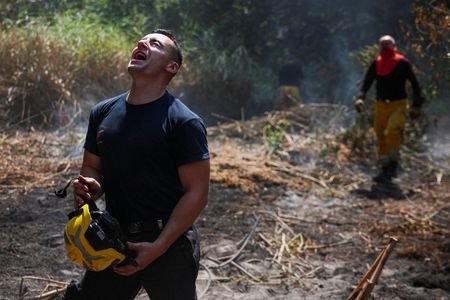
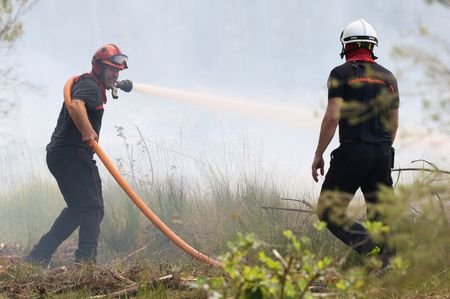
In Le Temple, around 30 km away, firefighters with trucks and hoses and supported by aircraft worked to extinguish a reigniting fire that set trees and vegetation ablaze.
"We remain vigilant of course today, considering the forecast weather conditions, with a new rise in temperatures and higher wind speeds in the afternoon," firefighter commander Matthieu Jomain told reporters earlier in the day.
EVACUATIONS AND SHOCK AT RUINED HOMES
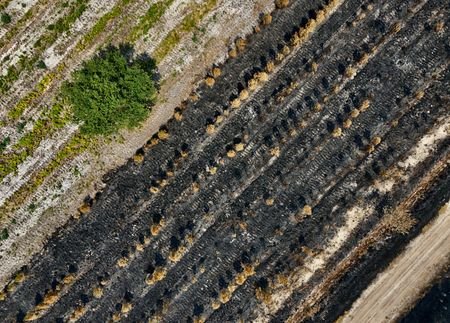
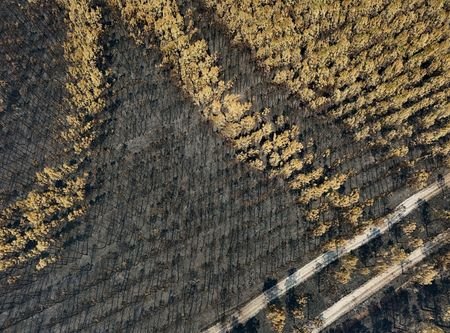
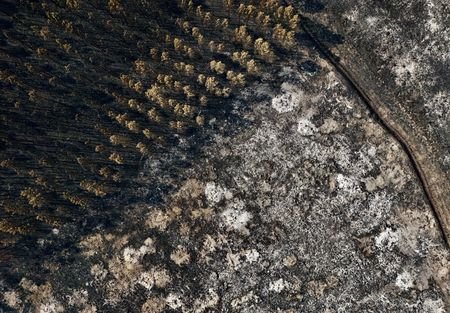
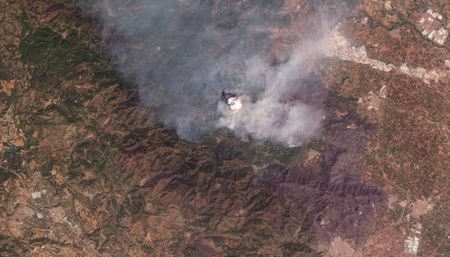
The impact on the forests has been widespread. The wildfire in the Landes area west of Bordeaux, a popular tourist destination, has devastated 42,000 hectares (104,000 acres) of mainly pine trees.
Authorities have evacuated about 220,000 people, including holidaymakers and local residents, as the fire threatened the Cap Ferret peninsula on the Atlantic coast, only accessible by one road. About 60,000 people have been allowed back.
Raphael Fohanno could not believe what had happened to his parents' house in the small beach town of Biscarrosse, also hit by wildfires in southwestern France.
"It’s a shock, thinking that just an hour earlier I’d been in my room and everything and now, there’s nothing left,” 18-year-old Fohanno said. His parents and sister had been evacuated by helicopter while he was out of the house.
FIRE IN SPAIN'S CASTELLON RAGES FOR FIFTH DAY
From Thursday onwards, danger levels in southwestern France appear likely to decrease thanks to some thunderstorms, lower temperatures and increased humidity, but will remain high in the southeast, Meteo France said.
Four people were arrested in recent days in the area, one on suspicion of stealing jewellery from evacuated houses, two for allegedly stealing food from an evacuation centre in Bordeaux, and one for pretending to be a therapist and offering paid sessions to evacuees, police said.
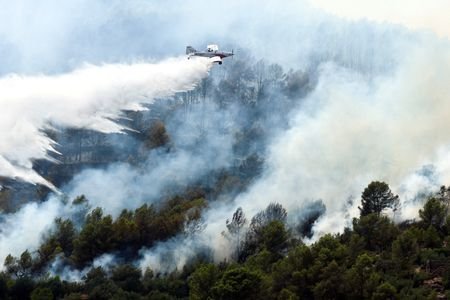
In Spain, while the situation had improved in the central provinces of Avila and Madrid, a blaze in eastern Castellon remained out of control after burning more than 10,000 hectares as weather conditions triggered several flare-ups.
Around 10,000 evacuated residents were still unable to return to their homes in Castellon.
But in a moment of hope, a veterinary hospital housing dozens of horses was saved from the flames in La Vilavella in the province, thanks to the efforts of locals.
"Miracles exist. We have been saved!" said veterinarian Oscar Quemades.
DEER KILLED IN SPANISH FOREST
More frequent and intense heatwaves are causing thousands of excess deaths and increasingly disrupting everyday life, from snarling road and rail travel to hindering river shipping.
Highlighting the devastation wrought on the countryside and wildlife, Reuters drone footage from El Tiemblo, in Spain's Avila province, showed charred deer carcasses in a forest burnt to ashes.
A Madrid resident who gave her name as Cintia was horrified by the scene in El Tiemblo, a place she has often visited.
"We used to bring food up for the animals," she said. "And look where it is today.”
(Additional reporting by Edward McAllister and Lefteris Papadimas in Athens, Leonardo Benassatto in La Vilavella, Guillermo Martinez in El Tiemblo, David Latona and Emma Pinedo in Madrid, Inti Landauro, Kate Abnett and Sudip Kar-Gupta in Brussels, Janis Laizans in Bordeaux; Writing by Ingrid Melander; Editing by Alison Williams and David Holmes)