By Kyu-seok Shim, Daewoung Kim and Dahyun Lee
SEOUL, Aug 3 (Reuters) - A record heatwave is gripping the Korean Peninsula, sending temperatures soaring across South Korea and North Korea as authorities expand emergency measures and residents seek relief in cooling shelters, beaches and water parks.
Forecasters said on Monday that extreme heat, previously concentrated in South Korea's southeast, was spreading to the Seoul metropolitan area and other western regions. North Korean state media also reported temperatures approaching 40 degrees Celsius (104 degrees Fahrenheit) in parts of the country and a fifth straight tropical night in Pyongyang.
South Korea's weather agency warned temperatures could rise further in western regions this week and said the heatwave and tropical nights were likely to persist.
Data released by the Korea Disease Control and Prevention Agency on Sunday showed that 14 had died and 1,889 people had suffered heat-related illnesses since mid-May.
The Korea Meteorological Administration (KMA) said Yangsan recorded 42.5 C on Sunday, the highest temperature measured in 122 years of weather observations. The southeastern city had already broken the national record on the two preceding days.
Prime Minister Han Seong-sook ordered ministries and local governments to mobilise all available resources to respond to heatwave and drought risks after the government raised its heatwave response alert to the second-highest level, unlocking funding for relief efforts and more frequent inspections in affected areas.
Power authorities have activated emergency measures and are closely monitoring supply and demand as electricity consumption is expected to reach a record high in late August amid surging air-conditioning use.
The KMA on Monday issued its first-ever severe heatwave warning for parts of Seoul and neighbouring Gyeonggi Province, while the same highest-level heat alerts remained in effect across southern regions including Busan, Ulsan, South Gyeongsang and parts of Gwangju and South Jeolla Province.
BASEBALL GAMES CANCELLED
Local governments have scrambled to protect vulnerable residents. Seoul districts have expanded cooling shelters and distributed free water and sun umbrellas, while Yangsan has expanded water-spraying operations and water distribution.
Searing temperatures have disrupted daily life. Over the weekend, the Korea Baseball Organization cancelled games in Busan and Changwon and said further schedule adjustments could be considered if dangerous conditions persist.
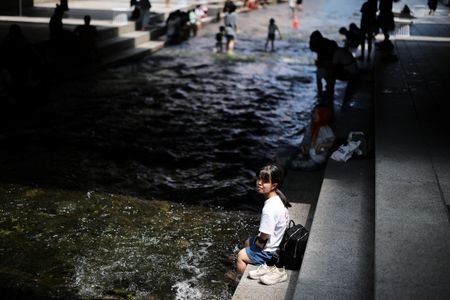
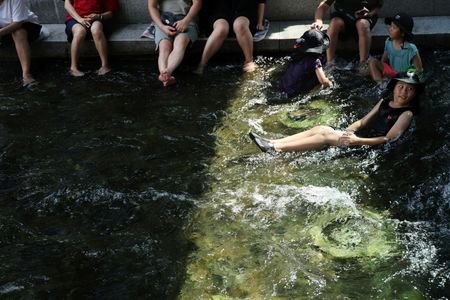
Local media reported packed beaches, water parks and riverside recreation areas.
At Seoul's Cheonggyecheon stream, where the city is running a summer water festival featuring temporary paddling zones and splash areas, families sought relief from the heat.
"Forty degrees is not a number we used to see in Korea, but now it feels like we see it all the time," said Park Jin-woo, 39, who brought his children there to cool down.
Seoul resident Lee Jub-young, 43, said the heat had made parasols a necessity rather than a fashion accessory.
"This climate crisis has become something citizens can feel on their own skin," he said.
North Korea is experiencing similar conditions. State media said heat advisories covering much of the country would remain in place through the week and reported that tens of thousands of people visited the Wonsan Kalma Coastal Tourist Zone during July.
Water parks in Pyongyang were also packed, according to state television.
(Reporting by Dahyun Lee, Daewoung Kim, Kyu-seok Shim and Joyce LeeEditing by Ed Davies)