By Maximilian Heath and Oliver Griffin
BUENOS AIRES/SAO PAULO, Aug 13 (Reuters) - Latin America is bracing for what experts say could be the strongest El Niño on record, raising questions about how the climate phenomenon will affect the world's top food-exporting region.
El Niño, characterized by unusually warm sea surface temperatures in the central and eastern tropical Pacific Ocean, disrupts weather patterns worldwide. In Latin America, it typically brings heavier rainfall to the south while increasing drought risks further north, affecting agriculture, energy production, trade routes and the environment.
An unusually wet Southern Hemisphere winter, disruptions to Pacific marine ecosystems and dry conditions are already affecting parts of the Caribbean and the Amazon. Researchers expect the phenomenon to strengthen from September and potentially exceed the intensity of the 2015-16 El Niño — the strongest in modern records.
Below are some of the expected impacts:
CROP IRRIGATION
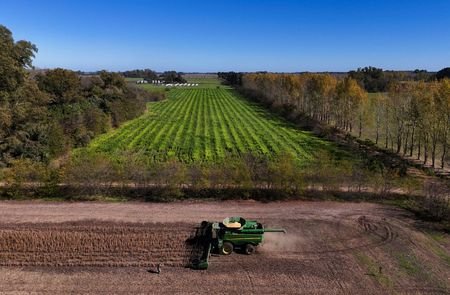
In Argentina's fertile Pampas, Paraguay, Uruguay and southern Brazil, El Niño usually brings above-normal rainfall. Despite concerns over a strong or "super" El Niño, analysts said more water is generally good for crops.
Germán Heinzenknecht, a meteorologist at Argentina's Applied Climatology Consultancy, said that, as in previous cycles, El Niño could boost soybeans, corn and wheat harvests by providing soil moisture for planting and improving water availability during the December to February summer.
Excess humidity can, however, increase fungal disease and wash nutrients from fertilized fields.
VULNERABLE INFRASTRUCTURE
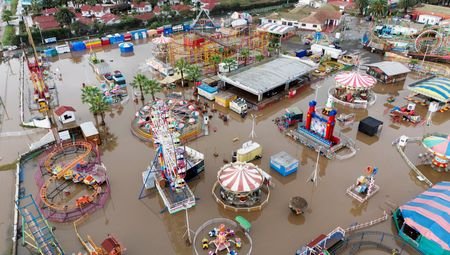
A stronger El Niño could also mean some rural areas will flood, though these will mostly be lands geographically prone to such events, Heinzenknecht added.
Muddy or flooded roads can prevent South American farmers from accessing fields, complicating efforts to apply fertilizers and chemicals to protect yields, he said.
Many of the rural roads crisscrossing the region's southern agricultural heartlands are already in poor condition.
Heavy rains from September could also cause floods in cities and transport routes to ports — prompting Paraguay's government to put military units on alert and mobilize civilian engineering teams in July.
Peru's northern coast faces flooding while the highlands suffer from water scarcity, a pattern likely to be repeated in Chile and elsewhere on the Pacific coast, according to the United Nations Food and Agriculture Organization.
Warmer sea temperatures are also pushing commercial fishing species into deeper waters and reducing catches. The shift has already hit Peru's fishing industry, with activity down 31% in the first five months of the year.
ENERGY OPPORTUNITIES
Uneven rainfall could be good news for Argentina's growing energy export sector.
Hotter, drier conditions forecast for northern and western Brazil could boost demand for Argentine natural gas to supply thermal power plants, according to the Latin American and Caribbean Energy Organization, OLADE.
Southern Brazil and northeastern Argentina, by contrast, will see a sharp rise in rainfall, swelling the Paraná River and allowing greater use of hydroelectric dams along its course.
Rainfall increased in hydroelectric basins across southern Brazil in July, reaching 256% of the long-term average, according to data from grid operator ONS.
“Every El Niño tells a different story,” said Leydson Dantas, a specialist at Brazil's National Institute of Meteorology, adding that a month’s worth of rain can sometimes fall in some areas of the center-west and southeast of Brazil in a week.
WATERWAYS AT RISK
Drier conditions expected in northern Brazil threaten the Amazon basin's vast river network, a key transport corridor for the world's largest soybean exporter.
Forecasts also point to an increasing risk of drought, extreme heat and wildfires across Brazil, Colombia and Venezuela, threatening crops and livestock production.
Further north, the Panama Canal Authority, which operates the global trade route, is tightening restrictions on shipload weights to conserve fresh water needed to operate the canal, as forecasters point to a drought that could be at least as severe as the 2023-2024 El Niño-triggered dry spell.
The authority has been gradually lowering maximum vessel drafts because a planned new reservoir intended to secure water supply for the canal and the country's population will not be ready in time. Lower draft limits force ships to reduce cargo loads, raising shipping costs and risking trade disruptions.
Panama is among the world's wettest countries, making declining rainfall there an important signal of regional drought conditions. The authority has said it does not expect to cut daily transit slots unless strictly necessary. Competition for ship passage is already growing, with last-minute slot auctions fetching millions of dollars as some vessels seek alternative routes affected by security tensions in the Middle East near the Suez Canal.
(Reporting by Maximilian Heath in Buenos Aires and Oliver Griffin in Sao Paulo; additional reporting by Marianna Parraga in Houston. Editing by Lucinda Elliott, Christian Plumb, Rod Nickel)