By Joey Roulette
WASHINGTON, Aug 19 (Reuters) - A mission to rescue NASA's aging Swift observatory in space was canceled on Wednesday after the spacecraft that was launched to tug the satellite to a higher orbit suffered irredeemable technical issues in space, the rescue craft's owner, Katalyst Space, said.
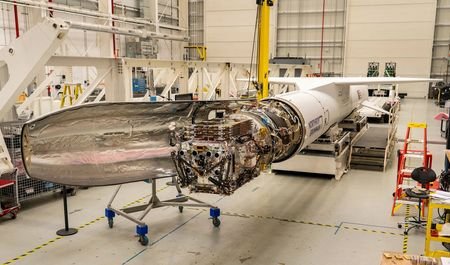
Katalyst's LINK craft was launched in early July to approach the observatory, also known as Swift, some 216 miles (347 km) in space, grapple onto it and then tug it to a higher orbit of roughly 373 miles (600 km), extending its life by years.
But the LINK craft began spinning uncontrollably soon after reaching space. Katalyst engineers spent weeks trying to regain control of the craft, uploading new positioning control software last week that slowed but did not stop its errant spinning.
"Following continued monitoring and assessment of the LINK spacecraft, Katalyst Space and NASA together have concluded that due to ongoing attitude control issues, the mission will not include the capture and boost of NASA’s Neil Gehrels Swift Observatory," Katalyst and NASA said in a joint statement on Wednesday.
The mission failure means NASA's prized $500 million Neil Gehrels Swift Observatory, which has been studying gamma-ray bursts and other cosmic phenomena since 2004, will likely fall into Earth's atmosphere naturally and burn up later this year.
The goal to boost the observatory's orbit and extend its life by years, the first U.S. mission of its kind, was an ambitious endeavor for Arizona-based startup Katalyst, which said it built and tested the LINK rescue vehicle on an unprecedented nine-month production schedule under a $30 million NASA contract.
"We took on this high-risk, high-reward challenge and are proud of the milestones we reached along the way," Katalyst CEO Ghonhee Lee said in a statement.
He added that the company, founded in 2019 to build fleets of autonomous robotic spacecraft, has learned a "tremendous amount" during the mission and plans to implement those lessons on future flights.
(Reporting by Joey Roulette in Washington; Editing by Chris Reese and Matthew Lewis)