By Aleksandar Vasovic
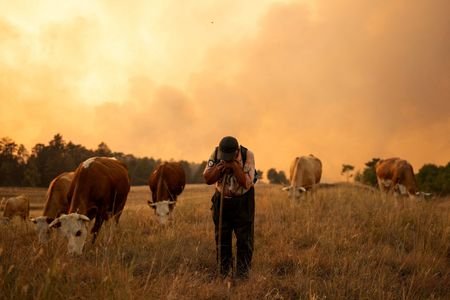
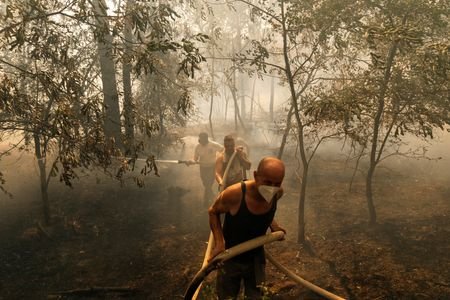
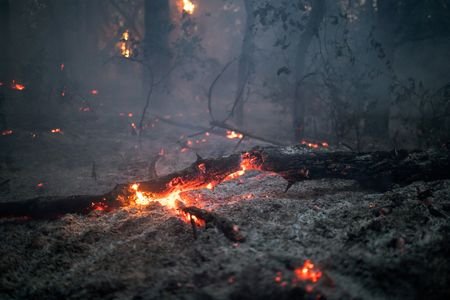
BELGRADE, Sept 1 (Reuters) - More than a month after flames tore through Serbia's Deliblatska Pescara reserve, foresters are facing tough choices as they work on plans to restore its unique dunes and woodlands and give them a better chance against future wildfires.
One core dilemma — what to keep and what to replace in a still-smoldering area where forest fires used to be rare, but are now expected to become more common with the ravages of global warming.
The changes, when they come, will take years to settle in, said Jovana Devetakovic, a lecturer at the University of Belgrade’s Faculty of Forestry.
“For the first 15, 20 or even 25 years, it likely won’t look like a forest — it will look like low shrubland,” she told Reuters.
Damage assessment on its own is a year's work, she said.
Then will come the removal of ravaged material, including half-burned or weakened trees — a very gradual process to make sure it does not fuel new blazes or create breeding grounds for bark beetles that threaten healthy forests.
Then there are the choices on what to replant — birch, poplar, ash and oak could all replace highly flammable conifers in the reserve about 80 km (50 miles) from the capital Belgrade.
Black pines and black locust trees have studded its horizon for more than two centuries. But replanted plots of those trees have fallen victim to past blazes, particularly major fires in 1996 and 2007.
"The real question is: do you want Robinia (black locust) and Pinus nigra (black pine) in this ecosystem?” asked Alexander Held, a senior expert with the European Forest Institute, an organisation backed by 30 European states.
He advised against rushing into large-scale replanting, and recommended a three-to-five-year observation period in areas without immediate risks of erosion.
Data from the European Forest Fire Information System show that 2023 to 2025 was the worst three-year period for fires in Serbia this century.
In a sign of how far things have changed, experts are now drawing parallels with traditionally much drier regions.
Greece faced a similar problem when it reforested sandy parts of the West Peloponnese after the wildfire of 2007, said Theocharis Zagas, Emeritus Professor of Forestry and Natural Environment at the Aristotle University of Thessaloniki.
"Special methods must be applied, using organic material in planting holes and materials that catch water and improve soil humidity,” he said.
(Additional reporting by Lefteris Papadimas in Athens; Editing by Andrew Heavens)