By Yury Garcia and Alexandra Valencia
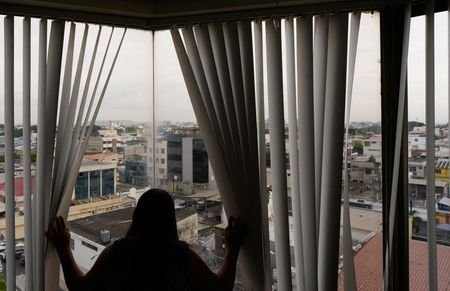
GUAYAQUIL, Ecuador/QUITO, Sept 8 (Reuters) - For one grandmother, it was when bullets began hitting the rooftops of her neighborhood that she decided she would have to leave the housing development where she had lived for nearly 20 years.
A sharp rise in fighting between gang factions in Ecuador has prompted thousands of families to flee and abandon their homes to the gangs, who strip the houses for drug money or use them to hide kidnapping victims, according to residents and police.
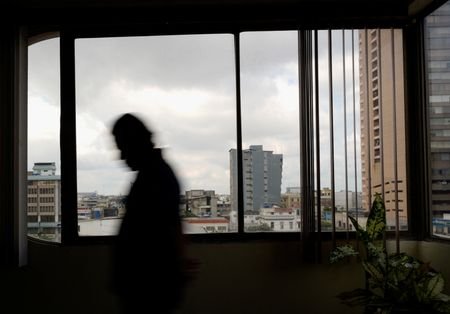
One of the areas that has been the site of the heaviest bloodshed is the Nueva Prosperina district in the coastal city of Guayaquil, where fighting between factions of the Los Tiguerones gang last year killed 22 people. Among those who fled was a 66-year-old woman, who, like other residents of the district Reuters spoke to for this story, asked not to be identified for fear of reprisals from the gangs.
Armed groups were targeting people indiscriminately, assuming that anyone entering the neighborhood belonged to a different gang, she said. She worried that if she had stayed, her daughter, who commutes to work on a motorcycle, could be killed or her teenage grandson recruited.
"It was a terrible situation. Bullets were hitting the rooftops and that made me leave," she said.
The woman and her family are among more than 300,000 people in Ecuador who have left their homes over the past three years because of violence, including death threats, extortion, recruitment by criminal groups or the murder of relatives, according to the UN Refugee Agency and the Ombudsman's Office, though advocates say the true figure could be higher.
Ecuador, once considered a relatively safe part of Latin America, now has the region's third-highest level of internal displacement behind Haiti and Colombia, according to the Norwegian Refugee Council. Displacement has been driven by a sustained rise in nationwide violence, says the Permanent Committee for the Defense of Human Rights in Guayaquil.
President Daniel Noboa took office in 2023 vowing a crackdown on the violence, which derives from Ecuador's increasing role as a drug transit hub.
But Noboa's security strategy has not curbed the violence and may even have worsened it, said the Guayaquil human rights committee. Killings and arrests of criminal leaders have caused many groups to splinter into rival factions fighting over territory.
Ecuador recorded 9,216 violent deaths last year, a homicide rate of 51 per 100,000 inhabitants, some eight times higher than its rate of a decade ago and well above rates of 21.4 in Mexico and 25.8 in Colombia reported last year by authorities in those countries.
Noboa's government says its strategy is nonetheless systematically diminishing criminal groups and killings fell 8% between January and July this year compared to the same period in 2025. The majority of those killed are linked to gangs, the government says.
'FREE INSIDE OUR HOMES'
Criminal gangs use extortion as a systematic means of control in neighborhoods across the country, according to police and the Ombudsman's Office. Half of the families living in Nueva Prosperina have suffered some form of extortion, according to projections by local police.
"A WhatsApp message has almost the same impact as a bomb," said the Norwegian Refugee Council's Francesco Volpi. "It is indiscriminate extortion."
One 45-year-old shopkeeper said he fled Nueva Prosperina after his children received death threats by gangs seeking to recruit them and after intimidation by people he identified as police officers.
Nueva Prosperina police chief Gino Pillajo told Reuters several people in the district had been arrested for impersonating police officers. Many cases of extortion go unreported because of fear, making them difficult to investigate, he added. He said police work with community leaders to gather information about extortion and post QR codes in local shops to allow people to report anonymously. Police also accompany residents when they leave, to provide security and to allow them to map where owners are absent.
The violence and displacement are not confined to Guayaquil. Chachi Indigenous communities near the Colombian border have temporarily abandoned their territory because of threats from illegal miners, according to the Ombudsman's Office. In Babahoyo, in Los Rios province, businesses close early as a self-protection measure, while in the Amazon province of Sucumbios families are abandoning their land to prevent criminal groups from persuading young people to join them, according to cases reported by the Norwegian Refugee Council.
Government officials Reuters spoke to acknowledged the problem but said they did not know which agency was responsible for dealing with forced displacement. Noboa's press office did not respond to a request for comment.
“There is no legal recognition of internal forced displacement caused by violence, and that means the phenomenon is not discussed, no action is taken to protect victims, and no mechanisms are created to monitor and assist affected communities,” said Billy Navarrete, the head of the Guayaquil human rights committee.
That complicates the delivery of assistance to victims of displacement, many of whom end up staying with family in other neighborhoods or even moving cities.
Other families — hamstrung by lack of resources or support networks, or fear of abandoning their belongings — are forced to live alongside the gangs.
"We have to stay silent. We are silent accomplices. We can't say anything because our lives are at risk," said a Nueva Prosperina resident. She said gangs use the neighborhood to hide kidnapping victims, have banned community events, and inspect residents' cellphones to make sure they do not belong to rival gangs.
"We are free inside our homes, but outside we are prisoners," said the 49-year-old woman. "They make the rules. If they don't want you there, they throw you out."
(Reporting by Yury Garcia in Guayaquil and Alexandra Valencia in Quito, Editing by Julia Symmes Cobb and Rosalba O'Brien)