By Ananda Teresia
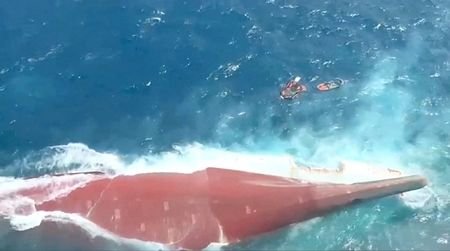
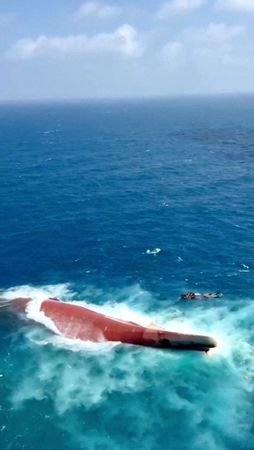
JAKARTA, Sept 15 (Reuters) - Rough seas were still hindering Indonesian rescuers on Tuesday as they searched for 129 people missing after a passenger ship capsized in the Java Sea three days ago, officials said.
If weather conditions improve, rescuers, currently limited to air and sea surface searches, would also launch underwater operations for possible survivors in the sunken ship, the officials said.
The Virgo Transport 8 ship carrying 243 people went missing due to bad weather early on Sunday. At least six people died in the incident and authorities have so far rescued 108 people from the ship which was travelling from Surabaya in East Java to Banjarmasin in South Kalimantan.
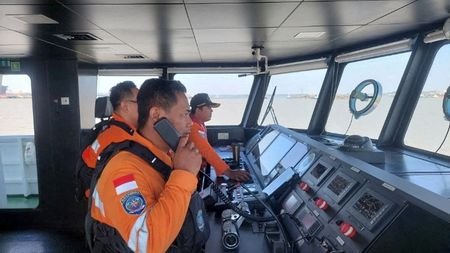
Rescuers on the third day deployed 1,100 coast guard and navy personnel, 10 aircraft and helicopters, and 17 ships, I Putu Sudayana, head of Banjarmasin rescue agency, told Reuters.
"Weather is still same like yesterday, not favourable as of this morning. Wave still high, between 1.75 metres-2.5 metres (5.7-8.2 feet)," he said.
On Monday, rescuers were unable to carry out underwater search operations for the missing because of bad weather, Mohammad Syafii, head of the national rescue agency, told reporters late that day. Rescuers did not find any new survivors or bodies during Monday's search, he added.
On Tuesday, the agency's special team, working with the Indonesian navy, would continue to monitor weather conditions to determine whether underwater rescue operations could proceed, Syafii said.
Underwater rescue would involve specialist divers from the Navy and rescue agency who are capable of diving to depths of more than 100 metres (328 feet), Syafii said.
"Of course we are still hoping to find the victims alive," he added.
The navy will also deploy its Canopus vessel, equipped with an underwater drone, a multibeam echo-sounder to help locate potential targets and a remotely operated vehicle (ROV) for closer assessments, Syafii said.
The technology could reduce risks to divers in poor visibility, strong currents and around an unstable capsized vessel.
Syafii said underwater operations faced challenges because the capsized ship was unstable and could shift unexpectedly due to trapped air and empty compartments.
Divers could also face sudden pressure changes.
"We are also considering how to turn the ship from its upside-down position back upright," he said.
The ship is now at a depth of 30 metres (98 feet), and authorities are considering pulling it to the surface.
(Reporting by Ananda Teresia; Editing by Michael Perry)