By Nidal al-Mughrabi, Haseeb and Alwazeer
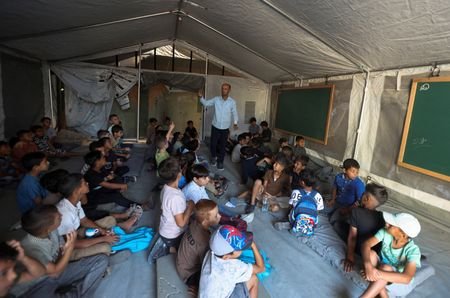
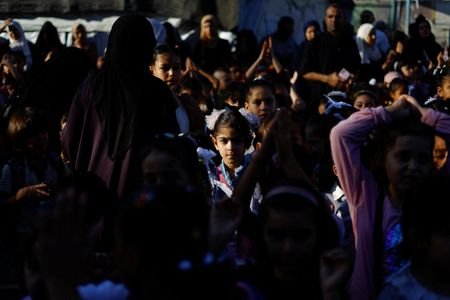
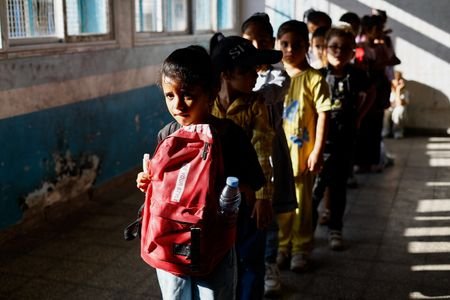
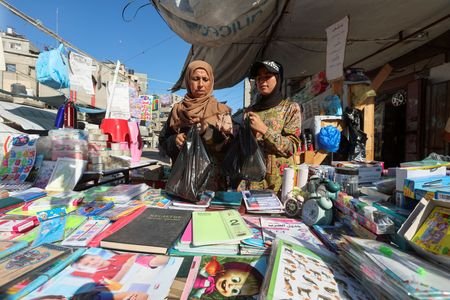
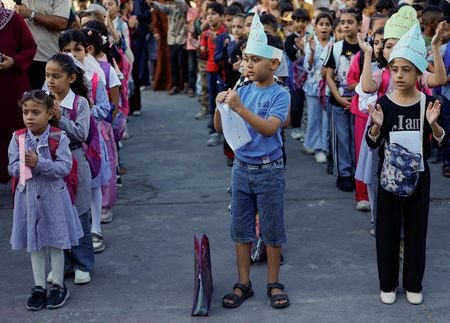
CAIRO/Gaza Sept 21 (Reuters) - Hundreds of thousands of children in Gaza returned to in-person teaching on Saturday for the first time in nearly three years, albeit in damaged or makeshift school buildings and tents, and with uniforms, notebooks and pens unaffordable for many families.
The United Nations Children's Fund (UNICEF) says 98% of schools in Gaza were either destroyed or damaged during the war, and Gaza education officials say about 660,000 students have been deprived of in-person learning and regular participation in education.
The reopening is a fragile milestone for Gaza after a conflict that has killed around 22,000 students and more than 770 education workers, including 532 teachers, according to Ibrahim Ramadan, director of education for East Khan Younis.
"The last time I have been to school was three years ago. Now, we are starting the school year, it is year of joy, happiness and success," said Moayed Abu Mustafa in Khan Younis.
Mustafa said he was determined to learn even though he will sit on the floor in a tent lacking ventilation, he has no decent shoes, nor a notebook and pen, and lost friends during the war.
"Despite all of this we will learn, we will learn even in a tent."
Fifteen-year-old displaced student Samar Abu Salmi, who lives with her family in a tent, is also returning to class.
"We studied on phones and we haven’t seen our teachers... now, we are back pursuing our dream... from one tent to another," she said, speaking in the yard of her new makeshift school.
She also lacks much of the essential equipment, which has become unaffordable for her family.
"Before the war, everything was available for us - notebooks, pens, goods, clothes, outings, things that we could get cheaply," Salmi said.
MATTRESSES AND A BLACKBOARD
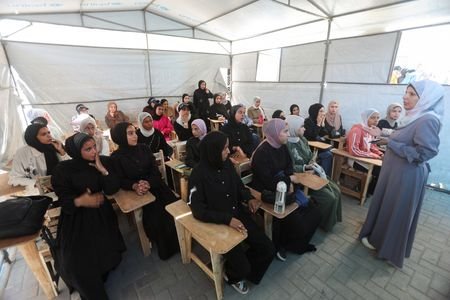
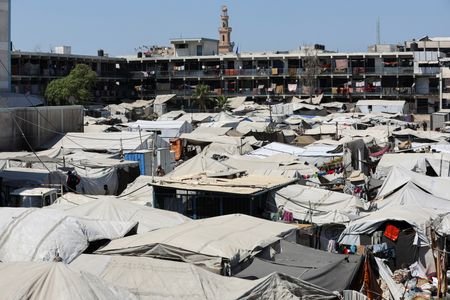
Despite the devastation in the enclave, the Ministry of Education, backed by international and local organisations, has moved ahead with the 2026-27 academic year, establishing dozens of temporary schools made of tents, tarpaulins, sheet metal and wood to accommodate pupils.
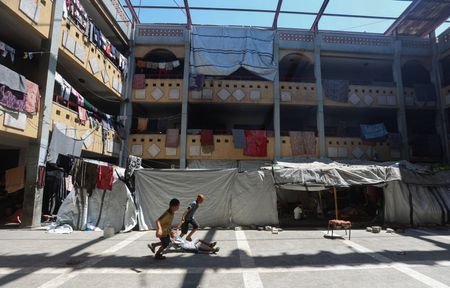
Some are built on sandy ground, others have classrooms with only some mattresses and a blackboard, into which students cram. Others are still housing dozens of displaced families.
Attending another school was 14-year-old Yamen Abu Samra.
"We used to wake up happy to go to school... Now, when we come to school, we’re afraid of stray bullets, rockets, strikes, everything," he said.
"Now, I’m sitting in a tent that has absolutely nothing, just the sun and the heat," he added.
At least 540,000 students are expected to attend in-person classes this year in makeshift private schools, temporary learning centres and educational points, with UNICEF support, according to education officials. Online learning will continue for those who can't attend classes or who left Gaza during the war.
Israeli forces remain in control of more than 60% of Gaza despite last year's ceasefire, which halted major fighting but failed to end the conflict.
Palestinian authorities say more than 73,000 people have been killed in Israel's assault on Gaza, launched after Hamas-led fighters killed about 1,200 people in southern Israel in October 2023.
Stationery trader Khaled Aliyan, 30, said Israeli import restrictions have reduced supplies and hiked prices.
"This notebook, which used to cost 3 shekels ($1), now costs 15 (shekels). All stationery items are expensive," he said.
Israel's COGAT military agency, which controls access to Gaza, did not respond to a Reuters request for comment on restrictions on supplies and strikes on schools. Israel has repeatedly accused Hamas of using schools for military purposes, which Hamas denies.
($1 = 3.0177 shekels)
(Reporting by Nidal al-Mughrabi and Haseeb Alwazeer; Editing by Alexandra Hudson)