By Napat Wesshasartar and Chayut Setboonsarng
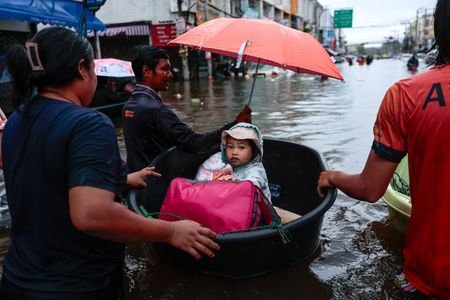
BANGKOK, Sept 27 (Reuters) - Floodwaters receded in many parts of the Thai capital Bangkok on Sunday after torrential rain eased, even as residents in some flooded neighbourhoods remained stranded in their homes.
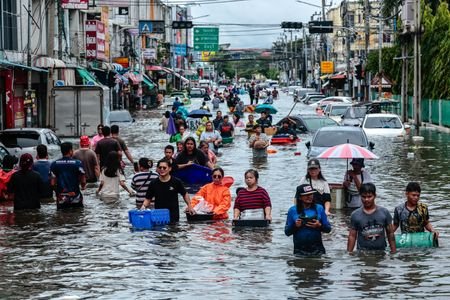
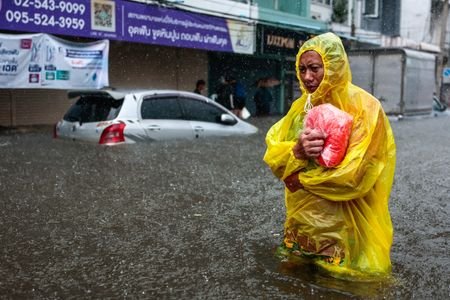
The Bangkok Metropolitan Administration declared the capital a disaster-affected area on Saturday after nearly 300 mm (12 inches) of rain fell over 48 hours, leading to flooding on major roads that left some cars partly submerged.
Arita Sanpoka, 33, a resident of a flooded community, said two neighbours in their 80s remained stranded in their home because they could not get downstairs.
"Right now the water in my house is up to waist height," Arita said. "Everything in the house is ruined."
She said daily life had become difficult, with power cut off on the ground floor and the bathroom unusable as the water level continued to rise.
The BMA said 233 temporary shelters had been prepared and about 4,200 people were using the facilities.
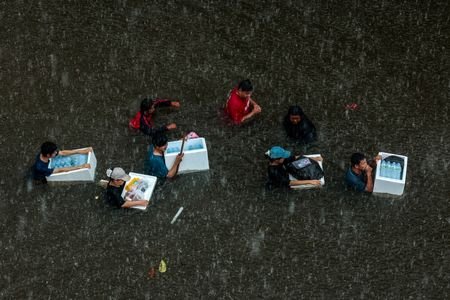
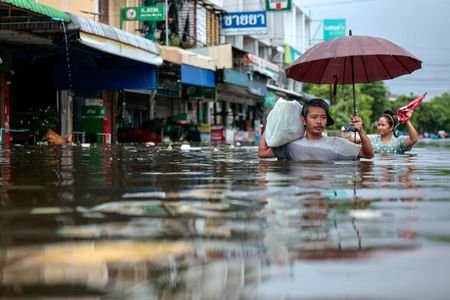
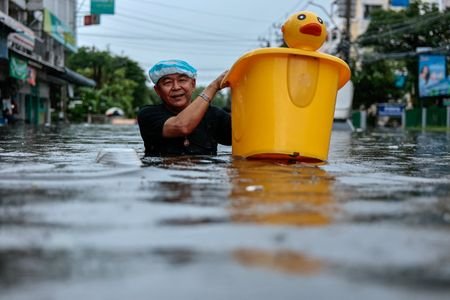
The flooding affected neighbourhoods across the capital, with water entering homes and disrupting transport. Some areas became difficult to access, while residents were forced to wade through the water.
Rachthanichporn Leeput, 37, said she walked 2 to 3 km (1 to 2 miles) through water after flooding in her area occurred rapidly on Friday evening.
"The water rose very fast," she said. "Many people, many households, couldn't prepare in time."
Rachthanichporn, a delivery rider, said the flooding had also cut off her income. She had been wading through the water to buy supplies and resell them to make up for lost earnings.
The BMA said on Sunday that rainfall had eased after a low-pressure system that had affected Bangkok over the previous days moved westward.
Rain was expected to be lighter, although water levels in several major canals remained high as water continued to flow in from surrounding areas, it said.
The weather agency forecasts widespread thunderstorms and isolated heavy rain for Monday.
Authorities were continuing to pump water from major canals and assist residents in areas where flooding remained severe.
(Reporting by Napat Wesshasartar and Chayut Setboonsarng; Editing by Jamie Freed)