By Stephanie van den Berg
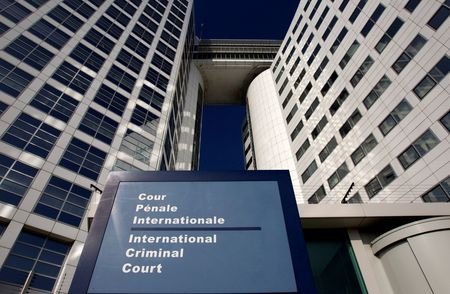
THE HAGUE, Oct 9 (Reuters) - South African judge Navanethem "Navi" Pillay, who was awarded the Nobel peace prize on Friday, has been a judge on several international courts, including the International Criminal Court. Here are some facts about this court:
WHEN WAS THE ICC SET UP AND WHY?
The court was established in 2002 to prosecute individuals for war crimes, crimes against humanity, genocide and the crime of aggression when member states are unwilling or unable to do so themselves. It can prosecute crimes committed by nationals of member states or on the territory of member states by other actors. It has 125 member states. The court's budget for 2026 is about €196 million euros ($2220 million)
WHAT IS THE ICC INVESTIGATING?
The ICC is conducting investigations in the Palestinian territories, Ukraine, African states such as Sudan, Uganda and Democratic Republic of Congo, Venezuela, Myanmar and the Philippines. It says there have been 34 cases before the court, some with more than one defendant. ICC judges have issued 68 arrest warrants.
WHO IS ON THE COURT'S ARREST LIST?
Notable ICC suspects are Israeli Prime Minister Benjamin Netanyahu, accused of being criminally responsible for acts including murder, persecution and using starvation as a weapon of war in the Gaza conflict, and Russian President Vladimir Putin, accused of the war crime of illegally deporting hundreds of children from Ukraine.
Israel and Russia, neither a member of the court, have repeatedly denied committing atrocities in Gaza and Ukraine respectively and have argued that the ICC has no jurisdiction over them.
When it issued the warrant for Netanyahu, the ICC also issued a warrant for Hamas military commander Mohammed Deif, whose death was confirmed after the warrant was issued.
The court has also issued arrest warrants for two senior Afghan Taliban leaders, accusing them of persecuting women, an allegation that the Taliban reject.
Prosecutors have requested warrants for Myanmar's military leader Min Aung Hlaing for crimes against humanity in the alleged persecution of the Rohingya, a mainly Muslim minority. The outcome of that request has not been made public.
WHAT TRIALS ARE PENDING?
Former Philippine president Rodrigo Duterte is due to go on trial on November 30 to face charges of murder and attempted murder as crimes against humanity related to his war on drugs, accusations he denies.
A Libyan accused of overseeing a notorious prison is also awaiting trial.
WHY DOES THE UNITED STATES OPPOSE THE COURT?
While a US delegation was present for the negotiations that produced the court's founding Rome Statute in 1998, it never became a member and always opposed ICC jurisdiction over US nationals. In 2002, Washington even adopted a bill nicknamed the Hague Invasion Act, which authorises the president to use "all means necessary" to ensure the release of any US citizen or US ally held by the ICC.
In the years that followed, the US supported some ICC investigations, notably into atrocities in Darfur and Uganda, but remained firmly opposed to the court looking into alleged crimes by US troops on the territory of ICC member states.
During the first Trump administration, in 2020, Washington imposed sanctions on the court's then-chief prosecutor and another official over an investigation into whether American forces had committed war crimes in Afghanistan. That ban was lifted by the Biden administration a year later.
In early 2025, after the ICC announced arrest warrants for US ally Netanyahu and his former defence minister Yoav Gallant, Trump authorised economic and travel sanctions against ICC officials targeting the US and its allies who are not members of the court. Washington has since imposed sanctions on 13 ICC officials including nine judges.
At the UN General Assembly last month, Trump called the ICC a "rogue institution" and "an evil group of people" and urged its members to resign.
WHY DOES THE ICC CLAIM JURISDICTION OVER SOME NATIONALS OF NON-MEMBER STATES?
Although the court is supported by many United Nations members and the European Union, other countries such as the United States, China and Russia are not members, arguing the ICC could be used for politically motivated prosecutions.
Israel is not a member and does not recognise its jurisdiction, but the Palestinian territories were admitted as an ICC member state in 2015. This, together with a ruling by judges, means the court can look at potential war crimes carried out by Hamas fighters in Israel and by Israelis in the Gaza Strip and the West Bank.
The reasoning for the warrants for Israeli officials is the same as for warrants against Russian officials for crimes allegedly committed in Ukraine: they concern alleged criminal acts that took place on the territory of an ICC member state.
Myanmar is not a member of the ICC but, in 2018 and 2019, judges ruled that the court had jurisdiction over alleged cross-border crimes that partially took place in neighbouring ICC member Bangladesh, such as deportation and persecution, and said prosecutors could open a formal investigation.
The Philippines is not currently a member but was between 2011 and 2019, when the unilateral withdrawal by Duterte became final. Under the Rome Statute, if a state withdraws, the ICC retains jurisdiction there for crimes committed during the membership period.
HOW MANY PEOPLE HAS THE COURT CONVICTED?
ICC judges have issued 15 convictions and four acquittals. Twenty-three people have been held in the ICC detention centre in The Hague and appeared before the court, and 34 wanted suspects remain at large. Warrants have been withdrawn for nine suspects who died.
Of the 15 convictions, 10 have been for the court's core offences of war crimes and crimes against humanity. The others were for crimes such as witness tampering. Those 10 defendants were all African militia leaders from Democratic Republic of Congo, Mali, Sudan, Central African Republic and Uganda. Terms ranged from nine to 30 years in prison. The maximum possible sentence is life imprisonment.
($1 = 0.8913 euros)
(Additional reporting by Anthony Deutsch in the Hague; Editing by Andrew Heavens and Kevin Liffey)