(Corrects status of past investigation into actions of US service members in Afghanistan in paragraph 7. The ICC describes it as "deprioritized", not closed.)
By Humeyra Pamuk, Steve Holland and Anthony Deutsch
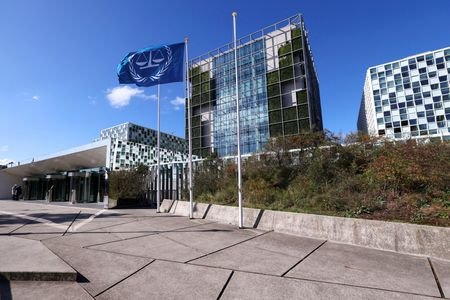
Oct 9 (Reuters) - US President Donald Trump's administration imposed sanctions on the International Criminal Court on Friday, hours after one of its former judges won the Nobel Peace Prize, putting Washington on a diplomatic collision course with European allies.
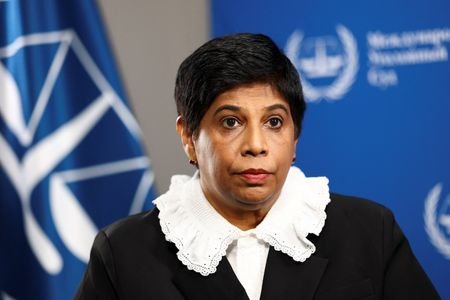
The ICC's deputy prosecutor, Nazhat Shameem Khan, condemned the sanctions and said they would not halt the tribunal's work.
The Trump administration has long been hostile to the court founded in 2002 to prosecute war crimes, crimes against humanity and genocide, and has previously imposed sanctions on its prosecutors and judges. Friday's move would go far further, by potentially punishing companies that provide services to the court itself.
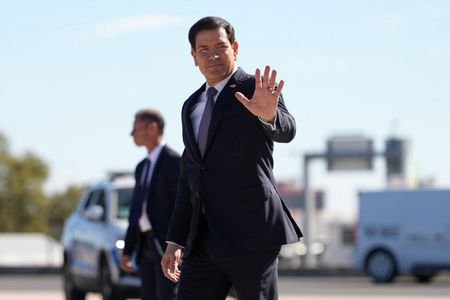
"President Trump will never allow the International Criminal Court to prosecute Americans," Secretary of State Marco Rubio said in a statement, first published by Reuters.
"That is why, today, the United States is sanctioning the International Criminal Court. We will ban transactions with this rogue court, cutting off their resources and crippling its ability to operate."
ICC Deputy Prosecutor Khan told Reuters the sanctions "must be condemned".
"The sanctions are intended to undermine the rule of law internationally and the work that an independent judicial institution is doing," Khan said. "Our work will continue across all our situations, our investigations and our prosecutions."
Washington has denounced the ICC over arrest warrants issued for Israeli officials including Prime Minister Benjamin Netanyahu, and a past investigation into actions of US soldiers in Afghanistan, which the ICC says is "deprioritized".
The court counts 125 countries as member states, including all EU countries and all members of the NATO alliance apart from the United States and Turkey. It has received strong public backing in the past from member countries including major US allies, and is based in the Netherlands, an EU and NATO member.
Navi Pillay, the South African jurist who won the Nobel Peace Prize earlier on Friday, had served as a judge on the ICC's Appeals Chamber from 2003-2008. The prize committee said in its citation that in naming her it had sought to "issue a reminder" at a time when "judges and institutions of international law are under political attack".
"An international legal system in which war criminals are held to account and the victims of abuse see justice served is a precondition for a peaceful world," the prize committee said.
Rubio said the sanctions had been structured to give the court and its member states an opportunity to address US concerns.
Washington immediately allowed some exemptions. Shortly after the sanctions were announced, the US Treasury issued four general licences, which would allow some transactions for ICC telecommunications, software and pension payments, and transactions linked to ICC detainees.
US EXPECTS ALLIES TO 'REIN IN THE COURT'
US sanctions typically bar all US-based companies from any work with a sanctioned organization, forcing banks to shut accounts, insurers to end coverage and software companies to halt cooperation.
The Trump administration previously imposed targeted sanctions on court officials during his first term, which were rescinded under President Joe Biden. Washington announced new sanctions just days after Trump returned to office in January 2025.
Court officials have been preparing for months for the prospect of sanctions on the court itself, shifting office computers from Microsoft software to open-source equivalents and making new arrangements for banking and health insurance.
The court's registrar Osvaldo Zavala Giler called earlier this week for the EU to be prepared to use a so-called "blocking mechanism" that lets it shield European countries from the extraterritorial effects of sanctions.
In his statement, Rubio said the United States had delayed its sanctions hoping that the ICC and the countries party to its founding Rome Statute would address US concerns, but they had failed to do so.
"Either the ICC will end its threats, or we will end the ICC. We expect our allies, many of whom are part of the ICC and that rely on American servicemembers for their defense, to rein in the court," Rubio said.
"We have structured this action to provide an opportunity for States Parties to negotiate and present a solution to address our concerns. If these efforts do not bear fruit, we will continue to adjust accordingly," Rubio said.
(Reporting by Humeyra Pamuk and Steve HollandAdditional reporting by Stephanie van den BergEditing by Peter Graff)