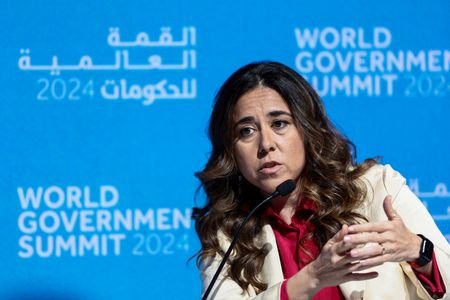
UNITED NATIONS, Oct 27 (Reuters) - Human rights monitors criticized senior UAE diplomat Lana Nusseibeh's candidacy to be the next UN chief on Tuesday, citing her role in championing the country's foreign policy and denying the UAE's role in fuelling the conflict in Sudan.
Pushback against the prominent Middle Eastern candidate has gathered steam since her late entry last week. Her bid upended the gridlocked race to replace UN Secretary-General Antonio Guterres, as he finishes his second five-year term this year.
Despite months of campaigning by several senior UN figures and former country leaders, the competition has struggled to produce a consensus choice among the Security Council’s most powerful nations.
Sudan's war, which erupted in April 2023 following a power struggle between the military and the Rapid Support Forces (RSF), has displaced more than 14 million people and created one of the world's worst humanitarian crises.
"She has been asked about the UAE's role in arming and supporting the RSF, and she just blatantly denies it without regard to the facts — that is not what we need as UN Secretary-General," Kenneth Roth, former executive director of Human Rights Watch, told a webinar organized by the campaign.
Last month, a UN fact-finding mission said foreign weapons, military technology, fighters and logistical networks -- including individuals and entities in the United Arab Emirates, among others -- are helping sustain Sudan's conflict.
"This is the opposite of the kind of moral standing of the human rights leadership that we want from a UN Secretary-General," Roth told the webinar titled "Call To Stop UAE Minister's Bid for UN Top Job Amid Sudan Genocide".
The webinar also featured Sudanese experts, as well as a survivor of the El Fasher massacre, on their concerns about Nusseibeh's candidacy and its implications for the UN's commitment to protect civilians, according to the organizers.
The human rights campaign also includes a "No to Lana" website, which has urged more than 38,000 emails to be sent to various countries' UN embassies urging them to stop her from leading the UN.
Asked by Reuters how the allegations might affect her candidacy when she launched her bid last week, Nusseibeh said she had taken leave from her UAE post and would focus on Sudan's humanitarian crisis.
Reached for comment on the criticism on Tuesday, she added: "I would put the UN's full political and practical support behind ongoing efforts to reach a ceasefire and a credible and inclusive political process that reflects the democratic aspirations of the Sudanese people."
Nusseibeh, 48, served as UAE ambassador to the UN for more than a decade. She previously led the UAE's successful campaign for election to the Security Council. She is widely known by diplomats working in New York, who say she is a competent manager, skilled negotiator and clear communicator.
An informal council poll this month had placed former Costa Rican Vice President Rebeca Grynspan as the narrow frontrunner in the race. But she and all other candidates received two or more opposing votes from the ultimately decisive five permanent members of the council — Russia, China, the US, France and Britain.
Whoever wins will have to tackle multiple crises, including several wars, cutbacks in American contributions to the UN, and the 193-member body's declining political relevance as Washington has pulled out of dozens of its agencies.
The next straw poll could take place as soon as Friday, but the format and exact timing are still being negotiated by the diplomats. Nusseibeh is scheduled to hold an "interactive dialogue" with the UN General Assembly on Tuesday afternoon.
(Reporting by Antoni Slodkowski; Editing by Aurora Ellis)