Israel’s completed election count leaves both main blocs short of a parliamentary majority. The seat breakdown explains why Arab parties, coalition compromises and the government formation process now matter.
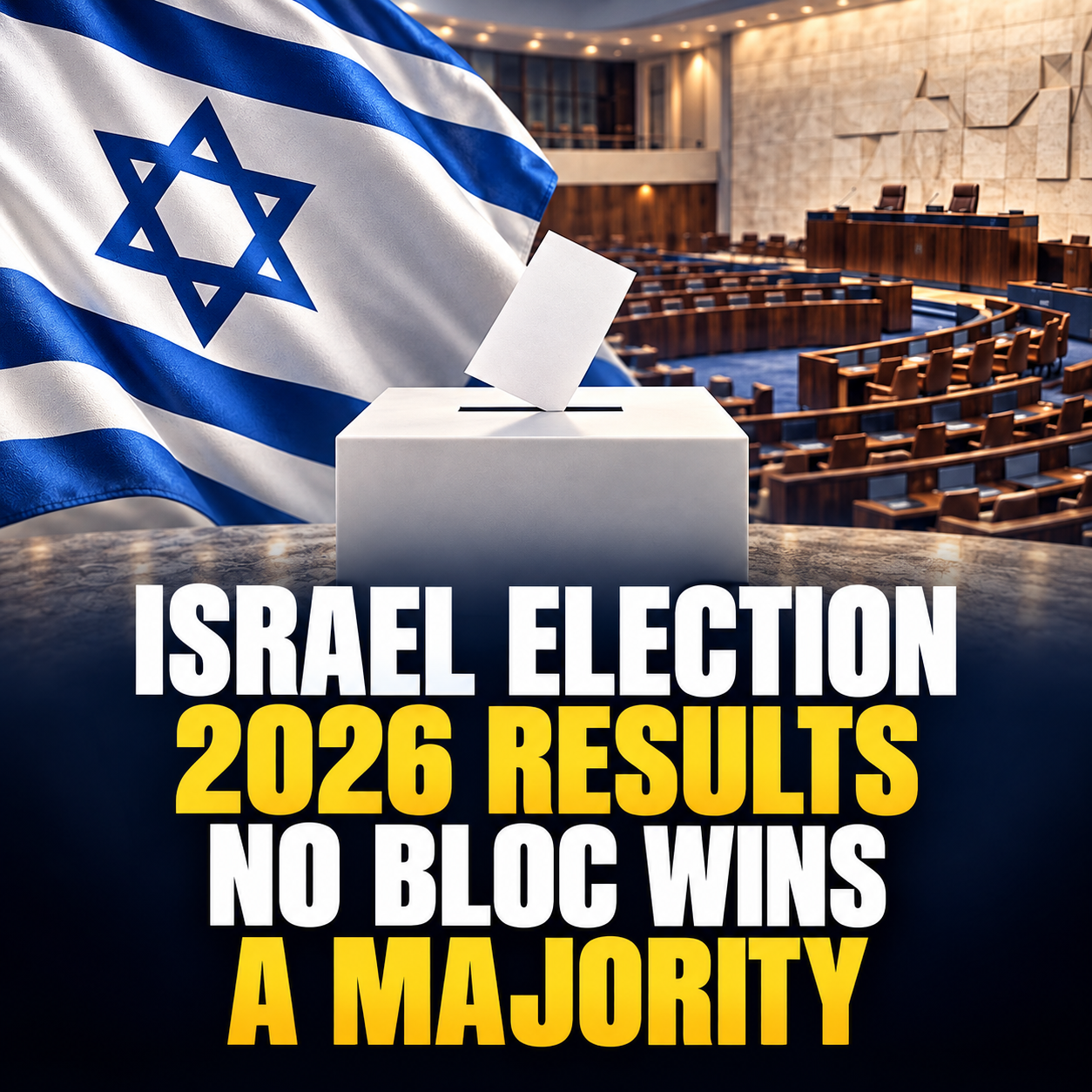
The Israel election results for 2026 have produced a divided parliament, with neither Benjamin Netanyahu’s bloc nor the opposition securing an outright majority. The completed count reported on 30 October gives Netanyahu’s camp 53 of the Knesset’s 120 seats, Gadi Eisenkot’s opposition bloc 48 and the two Arab-led lists a combined 19. [1]
The result means the 27 October election has not yet settled who will lead the next government. Likud remains the largest individual party, but a governing arrangement depends on parliamentary support and agreements between parties. Netanyahu’s lead in seats therefore begins another stage of negotiations. [7, 2]
Israel election results 2026 seat breakdown
Likud won 27 seats, followed by Eisenkot’s Yashar with 21. The Joint List secured 11 seats and Ra’am eight. Turnout reached 77.9%, according to Central Elections Committee figures reported by The Times of Israel. The results are scheduled for formal submission to President Isaac Herzog on 4 November, while the new Knesset is due to be sworn in on 10 November. [1]
Why Netanyahu has not secured a majority
An outright Knesset majority requires 61 seats. Netanyahu’s bloc is eight short of that figure, while Eisenkot’s bloc needs another 13. Being the largest party or bloc gives political weight in negotiations, but it does not itself establish a government. [7, 2]
The central question is which leader can assemble enough parliamentary support. A coalition may bring several parties into government, while a minority administration can seek support from parties that remain outside it. The political terms of such arrangements matter as much as the headline seat totals. [3]
How Arab parties could influence coalition talks
The Arab-led lists hold a potentially decisive position. Combining their 19 seats with Eisenkot’s 48 produces 67, although that calculation is not evidence that the parties have agreed to cooperate. [7]
Reuters identifies several possible routes: an opposition administration supported by Arab parties, a wider unity government or opposition lawmakers joining Netanyahu. Each requires difficult compromises, and none should be presented as a completed coalition agreement. [3]
What happens next in Israel
President Herzog consults representatives of the parliamentary groups before assigning a Knesset member the task of forming a government. The first candidate normally has 28 days, with presidential extensions limited to 14 additional days in total. [2]
If that attempt fails, further procedures allow another candidate or a parliamentary initiative. Another election becomes possible if the formation process is exhausted. Until a replacement is established, the outgoing government continues to perform its functions. Completing the vote count therefore does not immediately end the existing administration’s term in office. [2, 4]
Election disputes and the policy divide
Reuters reported that Netanyahu accused Arab parties of fraud without providing evidence, while Arab leaders rejected the claims. Election officials said there was no basis to suggest that the vote had been systematically compromised. Suspected individual irregularities remain a separate question from claims of widespread election fraud. [5]
Coalition talks also involve substantive disagreements. Associated Press reporting identifies accountability for the 7 October 2023 security failures and military-service exemptions for ultra-Orthodox men as major divisions between the rival camps. Negotiators will need to address those policies alongside ministerial positions. [6]
Impact and conclusion
For Israelis, the immediate impact is uncertainty over the next administration and its domestic priorities. Prolonged negotiations could delay agreement on contested reforms. Any new governing arrangement will also need enough cohesion to maintain parliamentary support after its initial formation.
For Palestinians and neighbouring states, the eventual coalition’s decisions on Gaza, regional security and diplomacy will carry practical consequences. The Israel election results establish the balance of seats, but do not themselves announce a new policy. The next test is whether party leaders can turn that divided mandate into a stable government with clear commitments and public accountability.
Sources and references
[1] The Times of Israel — completed count and timetable, 30 October 2026
[2] Knesset — official explanation of government formation
[3] Reuters — possible routes out of deadlock, 29 October 2026
[4] President of Israel — stages of government formation
[5] Reuters — disputed election allegations, 29 October 2026
[6] Associated Press — election issues and coalition challenges
[7] The Times of Israel — completed election count, 30 October 2026