By Lucy Craymer and James Redmayne
WELLINGTON, Nov 5 (Reuters) - New Zealand's party leaders made final appeals to voters on Thursday, three days before a general election that polls show is too close to call as discontent around an ailing economy continues to swell.
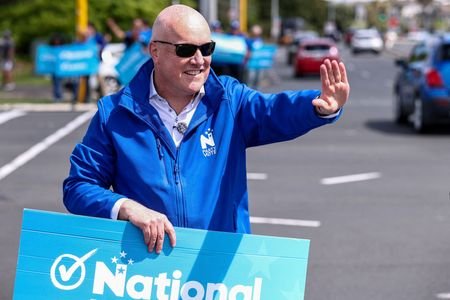
Prime Minister Christopher Luxon told reporters while campaigning in Hawke's Bay that the election would likely go down to the wire.
"The message is pretty simple -- it's going to be tight and close," he told reporters, "we want to encourage everybody to get out and party vote National," urging voters to give National another three years to "complete the job".
Polls released this week showed no clear majority for either bloc of parties, with the centrist Opportunity Party positioned as a potential kingmaker. Political commentators expect it could take weeks for New Zealand to form a government with support growing for smaller parties as voters lose confidence in the two largest ones.
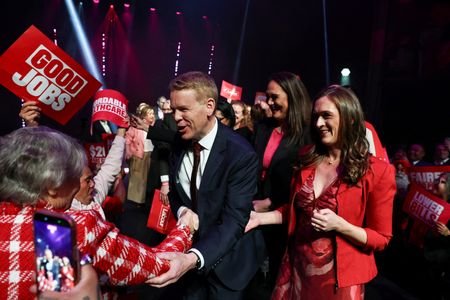
Opposition leader Chris Hipkins said Labour hoped to form a Labour-led government before Christmas.
"The best way to ensure there is a change in government, and most New Zealanders are indicating to us they want a change in government, is to give your party vote to Labour so we are the biggest party," he said.
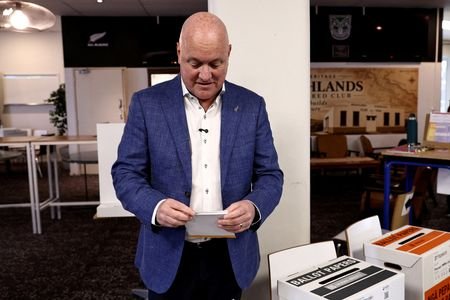
Early voting began on October 26 and, by Tuesday, 1,250,057 votes had been cast, compared with 1,007,928 at the same point in 2023, according to Electoral Commission data.
THE ECONOMY IS KEY
The election is largely a verdict on the government's handling of the economy. Inflation has eased from earlier peaks, but petrol and other everyday costs have renewed pressure on households.
An Ipsos survey published this week found inflation and the cost of living remained voters' biggest concern. Healthcare and hospitals followed at 45%, while petrol prices and fuel rose to third place at 31%, ahead of the economy at 30% and unemployment at 19%.
New Zealand has emerged only slowly from a prolonged downturn, with growth subdued, household budgets strained and unemployment rising to 5.7% in the third quarter, its highest level in 11 years.
"This was very much an election about the economy, so mostly cost of living," said Mona Krewel, a senior political science lecturer at Victoria University of Wellington. "This is the one issue that unites all voters. No matter if people are young or old, it's actually where they come together."
She said Labour had run a strong campaign on the cost of living, while National and other centre-right parties had focused more broadly on the economy.
Krewel said ACT and New Zealand First had sought to elevate immigration as a campaign issue but had struggled to dislodge economic concerns.
(Reporting by Lucy Craymer; Editing by Saad Sayeed)