Nov 19 (Reuters) - The United Nations' highest court will hand down a long-awaited judgment on Thursday in a case accusing Myanmar of committing genocide against the minority Muslim Rohingya population.
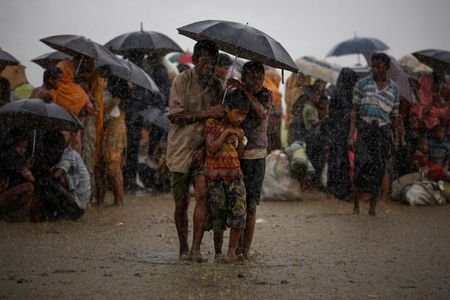
The decision comes nearly a decade after a 2017 military crackdown drove more than 730,000 Rohingya into Bangladesh, and as conflict, shrinking humanitarian aid and dangerous sea crossings continue to leave many members of the community displaced and vulnerable.
WHY DID THE ROHINGYA FLEE MYANMAR?
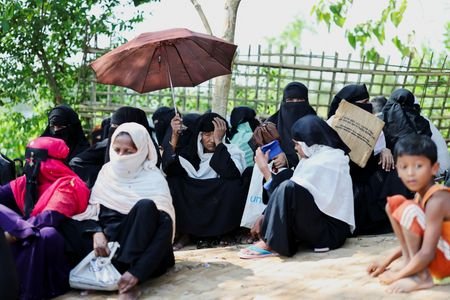
More than 1.3 million Rohingya remain displaced across South and Southeast Asia, including 1.2 million in sprawling refugee camps in Cox's Bazar in Bangladesh, according to the United Nations.
The largest displacement began in August 2017, when Myanmar's armed forces launched an offensive following attacks by the Arakan Rohingya Salvation Army insurgent group on about 30 police posts and an army base.
The military crackdown forced hundreds of thousands of Rohingya to flee into Bangladesh. Refugees described mass killings, gang rapes, torture and the burning of hundreds of villages, according to Human Rights Watch.
Myanmar's government denied the allegations, saying its forces were targeting militants.
WHAT IS THE ICJ CASE AGAINST MYANMAR?
In 2019, Gambia filed a case at the ICJ, also known as the World Court, backed by the 57-member Organisation of Islamic Cooperation, alleging that Myanmar's 2017 military offensive in Rakhine State amounted to genocide.
The ICJ judgments are final and binding, but the court has limited means of enforcement and cannot convict individuals or issue arrest warrants.
In 2019 preliminary hearings in the ICJ case, Myanmar's then leader, Aung San Suu Kyi, rejected Gambia's accusations of genocide as "incomplete and misleading".
The ICJ in January 2020 ordered Myanmar to take urgent measures to protect Rohingya people remaining in the country, including preventing possible genocidal acts and preserving evidence.
WHAT IS THE SITUATION IN RAKHINE?
Myanmar's military, led by Min Aung Hlaing, seized power in February 2021. The overthrow of Aung San Suu Kyi's elected government triggered a nationwide civil war that has killed an estimated 100,000 people and displaced more than 3.5 million.
As conflict spread, renewed fighting between Myanmar's military junta and the Arakan Army rebel group broke out in Rakhine State in November 2023, forcing more Rohingya civilians to flee to neighbouring Bangladesh.
The minority group has also faced attacks by the Arakan Army, which set alight swathes of the Rohingya settlement of Buthidaung in May 2024, Reuters has reported.
WHY CAN'T THE ROHINGYA RETURN?
As conflict rages on in Rakhine, conditions for the safe return of Rohingya refugees do not currently exist, according to aid groups.
Myanmar said in August that it had verified 308,797 people living in displacement camps in Bangladesh as former residents of Rakhine State, but repatriation would begin only when security conditions in Rakhine improve.
Some Rohingya refugees say they are not willing to go back without full rights, dignity, and citizenship.
Myanmar's government has long seen the Rohingya as illegal migrants from neighbouring Bangladesh and denied them citizenship, even though Rohingya families have lived there for generations.
Earlier repatriation plans in 2018 and 2019 resulted in no returns.
(Reporting by Reuters staff; Editing by Raju Gopalakrishnan)