
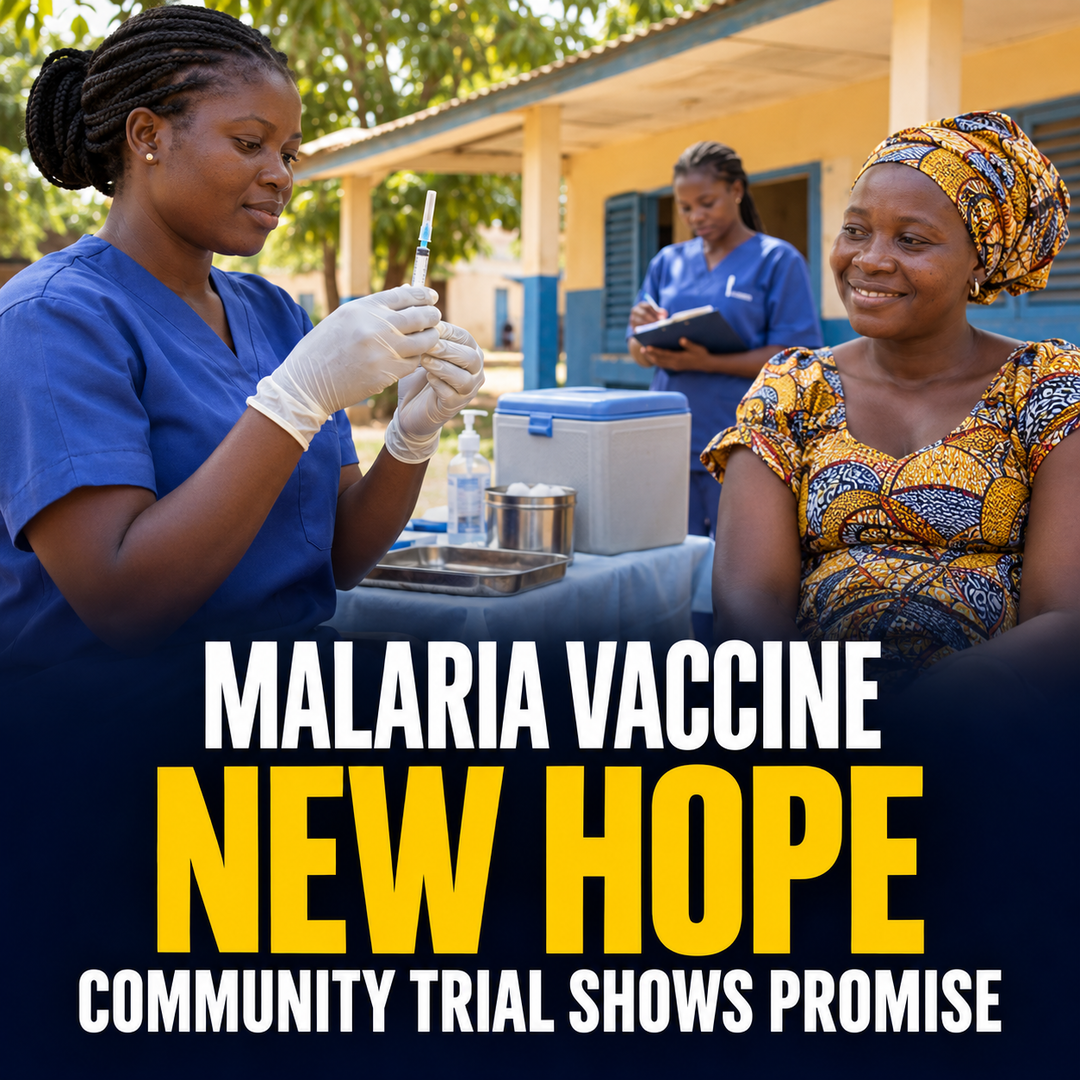
New research from The Gambia and Burkina Faso offers encouraging evidence that malaria vaccination could protect a wider range of people when added to existing prevention programmes. The SERVAL study investigated offering the R21 vaccine across eligible community age groups before the rainy season. [1]
The study was published in The Lancet on 19 November and highlighted by the London School of Hygiene & Tropical Medicine on 20 November. It adds to the evidence for malaria prevention, while leaving important questions about how wider vaccination could be delivered. [1, 2]
What the trial found
Researchers reported that communities offered vaccination alongside standard prevention had 70% lower odds of malaria infection in The Gambia and 25% lower odds in Burkina Faso than comparison communities receiving standard prevention alone. These figures describe reduced odds of infection in the trial settings; they are not a universal reduction in malaria deaths. [1]
The different results matter. They show why a promising finding in one location cannot automatically be applied to every country. The researchers also reported that the vaccine was generally well tolerated, with mainly mild headache and fever. [1, 2]
Why wider community vaccination matters
Malaria vaccines are currently recommended by the World Health Organization for children living in areas where the disease is endemic, prioritising places with moderate or high transmission. This research explores whether extending vaccination beyond young children could provide additional protection. [1, 3]
According to the research team, the study provides evidence of benefit in older children, adolescents and adults as well as young children. Further assessment will be needed before community-wide vaccination can be translated into routine policy across different settings. [1, 2]
A further tool alongside existing protection
The findings do not remove the need for other prevention measures. WHO says the greatest impact comes from combining recommended interventions and adapting them to local conditions. Vaccination belongs within that approach, alongside mosquito control, preventive medicines where appropriate, diagnosis and treatment. [3]
Access also remains a challenge. WHO reports that vaccine supply can meet demand, but limited funding is preventing many countries from reaching their planned coverage. Delivering additional doses would require resources as well as clinical evidence. [3]
Impact and conclusion
The good news is a further credible route to reducing malaria’s burden. This trial supports examining broader vaccination rather than assuming its benefits end with early childhood. Its eventual public-health value will depend on the strength of follow-up evidence, local priorities and the ability to deliver vaccines without weakening existing prevention and care.
Sources and references
[1] London School of Hygiene & Tropical Medicine. Vaccinating entire communities could help reduce malaria infections study finds. 20 November 2026. Source link
[2] London School of Hygiene & Tropical Medicine. Seasonal mass vaccination with the R21 vaccine effective in reducing malaria. 20 November 2026. Source link
[3] World Health Organization. Malaria vaccines RTS S and R21 questions and answers. Accessed 24 November 2026. Source link
[4] The Lancet. Dabira and colleagues Seasonal mass vaccination with R21 Matrix M against malaria in The Gambia and Burkina Faso. 19 November 2026. Source link