
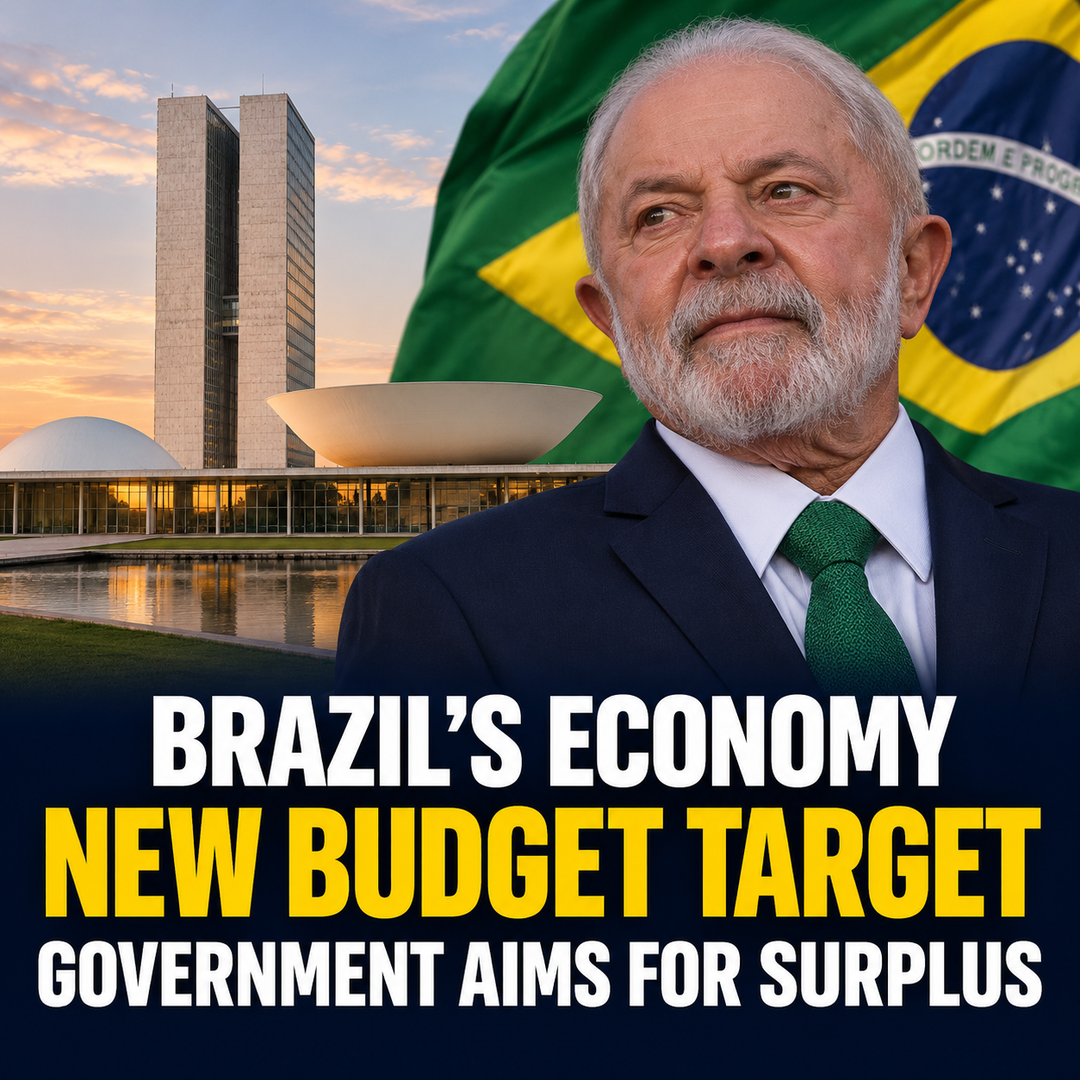
Brazil’s government is aiming for a primary budget surplus of 1.5% to 2% of gross domestic product by the end of President Luiz Inácio Lula da Silva’s next term, Finance Minister Dario Durigan said on Monday, 23 November. [1]
Speaking at an Itaú BBA event, Durigan also presented restoring investment-grade credit status as an objective. The announcement sets out an ambition for future public finances; it does not mean Brazil has already achieved the surplus. [2]
What a primary surplus means
A primary balance compares government revenue with expenditure before net interest costs. A surplus means that revenue is higher on that measure. Brazil’s Treasury distinguishes it from the overall fiscal result, which also reflects interest payments. [3]
That distinction is important when assessing claims about balanced books. A government can record a primary surplus and still face an overall deficit once interest costs are included. The announced target therefore needs to be read alongside borrowing costs and the path of public debt. [3]
Why the government is emphasising credibility
Durigan said improving the public accounts was needed to create conditions for lower interest rates. He described a gradual adjustment and said the government was not planning a radical change of direction. His comments linked the fiscal programme to confidence in the country’s economic management. [2]
A target alone does not determine interest rates or credit ratings. The practical test will be whether subsequent budgets and reported results make the proposed path convincing.
What to watch next
The next budgets will show how the government proposes to close the gap between revenue and spending. For readers following the issue, it is useful to separate announced goals, measures approved by lawmakers and results actually recorded in the accounts.
The composition of any adjustment will also matter. Changes in revenue collection, the efficiency of spending and the pace of expenditure can have different effects on households and public services. Brazil’s Treasury describes fiscal policy as serving economic stability alongside investment, employment and social protection. [3]
Impact and conclusion
The new target provides a clearer benchmark against which to judge Brazil’s public finances. Its significance will depend on delivery and on the choices used to pursue it. A credible fiscal path could support confidence, but the central political test is whether the government can improve the accounts while maintaining effective public services and social support.
Sources and references
[1] Reuters. Brazil targets primary surplus of up to 2 percent of GDP by end of Lula’s next term. 23 November 2026. Source link
[2] Estadão Conteúdo via UOL. Vamos perseguir superávit entre 1 5 e 2 ao fim do governo Lula afirma Durigan. 23 November 2026. Source link
[3] Brazil National Treasury. Sobre Política Fiscal. Accessed 24 November 2026. Source link