By David Morgan
WASHINGTON, Nov 10 (Reuters) - One week after the massive election defeat that repudiated their fealty to President Donald Trump, Republicans in the US Congress were set on Tuesday to decide who will lead their party next year when Democrats take over the Senate and House of Representatives.
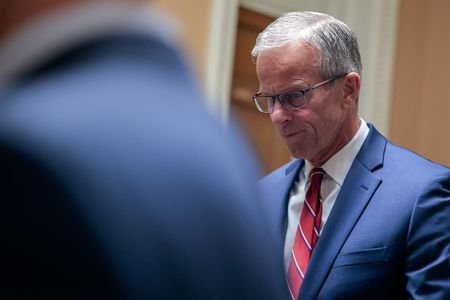
Senate Majority Leader John Thune appeared to face no challengers to his bid to become minority leader in January, even as a group of hardline Republican senators pressed to delay party leadership elections in favor of holding a post-mortem session on the election defeat.
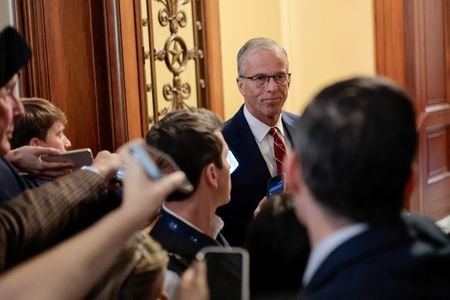
Thune told reporters on Monday that Republicans would talk about the election losses before moving forward with the leadership vote.
"I'm running for leader, but I think it's important that we have that discussion. And we will, and everyone will have a chance to weigh in, and then we'll hopefully move forward," he said.
Across Capitol Hill, House Majority Leader Steve Scalise and House Judiciary Committee Chairman Jim Jordan were locked in a tight race for minority leader, after House Speaker Mike Johnson signaled that he had no interest in remaining at the Republican helm and Trump said he would not get involved.
Johnson, who presided over a fractious Republican majority that sometimes derailed its own legislation, predicted "chaos" in the House with Democrats in charge.
"I'm sorry that voters made the wrong choice," the Louisiana Republican said. "If we had kept the majority, we would stay on course."
The House and Senate leadership elections, which will be settled by respective secret ballots in the US Capitol, will determine what role Republicans intend to play as the minority party in Congress during the final two years of Trump's presidency.
Democrats won at least 54 of the Senate's 100 seats and at least 252 of the House's 435 seats, giving them substantial majorities to pursue legislation on priority issues in the run-up to the 2028 presidential election.
"We're about to become the largest landslide in the history of the Senate since the '50s, and now we're ready to roll up our sleeves, get to work, and lower costs for the American people,” Senate Democratic leader Chuck Schumer told reporters on Monday as the lame-duck session of the current Congress got under way.
But Democrats will still need Republican support to move major initiatives in the Senate, where the filibuster rule requires 60 votes for most legislation. Their majorities in both chambers also fall well short of the two-thirds votes needed to override presidential vetoes.
After the election, Thune vowed that Republicans would work with Trump to block "Democrat extremism" and work against any attempt by Democrats to unwind Republican achievements including border security and judicial appointments.
But the South Dakota Republican, known for his mild manner and consensus-building leadership style, has come under fire from Trump's MAGA supporters, who blame him for not pursuing Trump policies more aggressively ahead of the election, including sweeping federal election restrictions sought by the president.
(Reporting by David Morgan; Editing by Michael Learmonth and Alistair Bell)