By Nafisa Eltahir
Dec 29 - International aid staff who accessed Sudan's al-Fashir for the first time since its takeover by a paramilitary force found the city largely deserted, with a few people sheltering in buildings or under plastic sheets, a senior U.N. official said on Monday.
More than 100,000 are estimated to have fled al-Fashir since late October after the paramilitary Rapid Support Forces took control there following an 18-month siege that plunged the city into famine.
Survivors reported ethnically-motivated mass killings and widespread detentions during and after the takeover. Many people remain unaccounted for in al-Fashir and surrounding areas.
In an interview with Reuters on Monday, Denise Brown, the U.N. Resident and Humanitarian Coordinator for Sudan, described al-Fashir as a "crime scene".
"The town was not teeming with people. There were very few people that (they) were able to see," she said, describing a visit to al-Fashir by U.N. staff on Friday that lasted several hours.
U.N. requirements of safe passage and free movement took weeks to negotiate, despite RSF attempts to portray the city as back to normal soon after its takeover.
FEW SIGNS OF LIFE
Brown said it was not possible to give a precise number of those remaining in al-Fashir. Those who U.N. staff did see were living inside empty buildings or in rudimentary camps using basic plastic sheets.
There was a small market functioning, but with few items, mainly locally grown vegetables.
"We have photos of people, and you can see clearly on their faces the accumulation of fatigue, of stress, of anxiety, of loss," Brown said.
Other aid workers have previously said that those remaining are most likely those too old, sick, or injured to leave.
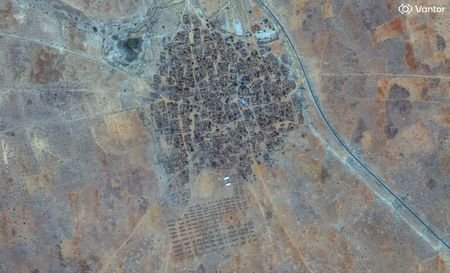
Satellite imagery from December 16 analysed by the Yale Humanitarian Research Lab showed signs of the removal of bodies but few signs of life.
At the Saudi Hospital, which the World Health Organization says was the site of a massacre of 460 people, Brown said medical personnel were observed, but they had no supplies.
Brown said villages around the city appeared to be deserted.
CONCERNS FOR THE INJURED AND MISSING
The attack on al-Fashir was one of the most violent episodes of a war that has raged since April 2023 between the RSF and the Sudanese army. It allowed the RSF to consolidate control over the Darfur region in Sudan's west, a push that continued in the northwest of the state this month.
Brown said Friday's visit was aimed at assessing whether al-Fashir could be accessed safely as the U.N. looks into what basic supplies can go in. "But to be honest, we're still very concerned about those who are injured, who we didn't see, those who may be detained," she said.
Later visits will look at water and sanitation, she said.
(Reporting by Nafisa Eltahir; Editing by Aidan Lewis)