By Nafisa Eltahir
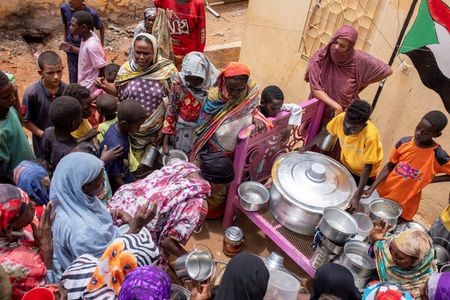
CAIRO, May 14 (Reuters) - Some 19.5 million Sudanese people, or more than 40% of the population, are facing acute hunger, according to a report by a global hunger monitor, as the contours of a war that has created the world's worst hunger crisis shift.
The spread of hunger and famine has become a hallmark of the three-year-old war in Sudan, which is estimated to have killed hundreds of thousands of people as well as devastating the economy and agriculture and displacing 14 million.
The estimate by the U.N.-backed Integrated Food Security Phase Classification (IPC) is slightly lower than last fall's estimate of 21.2 million people, but some 14 areas in the country's North Darfur, South Darfur, and South Kordofan states remain at risk of famine, where 135,000 people face "catastrophic" levels of hunger.
Those areas include the cities of al-Fashir and Kadugli, judged last year to be experiencing famine largely as a result of sieges by the Rapid Support Forces. But in October, the RSF completed their takeover of al-Fashir, largely emptying the city, while this year the army broke the siege of Kadugli.
Drone warfare has seemed to replace such ground campaigns as the leading mode of warfare in Sudan. Fighting rages on in the Kordofan region as well as Blue Nile state, with drones killing at least 880 civilians since January according to the U.N.'s human rights office. Drones have targeted civilian infrastructure including markets, hospitals, and power stations.
"Ongoing hostilities - especially around major supply routes, such as El Obeid in North Kordofan - and the possibility of renewed siege‑like conditions continue to heighten risks," the IPC said in a statement.
Some 825,000 children are expected to suffer from severe acute malnutrition as insecurity, access restrictions, and budget cuts have made aid deliveries to many parts of the country difficult, the IPC said. Sudan's rainy season, which begins around July and coincides with the leaner planting season, is expected to also worsen conditions.
Among the other areas at risk of famine are areas in North Darfur hosting those fleeing from al-Fashir, including Tina, Um Baru, and Kernoi, which have seen drone attacks as well as fighting as the RSF consolidates its control of the area.
The regional Iran crisis also threatens to worsen the situation, raising food, fuel and fertilizer prices and making a successful harvest later this year less likely.
(Additional reporting by Olivia Le Poidevin; editing by Philippa Fletcher)