By Humeyra Pamuk
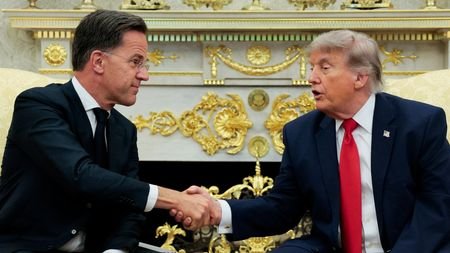
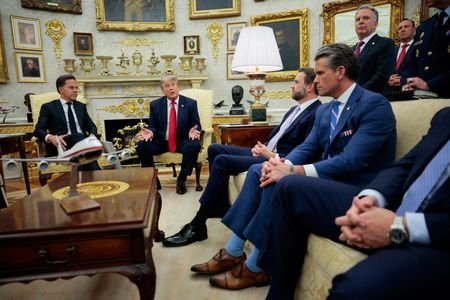
WASHINGTON, June 24 (Reuters) - NATO Secretary-General Mark Rutte sought to calm tensions with President Donald Trump at the White House on Wednesday, using a mix of flattery and gentle pushback to argue that examples of allies' reluctance to support the U.S. war with Iran were "isolated cases."
The NATO chief is visiting Washington to try to ease strains over the Iran war and U.S. threats to draw down troops in Europe ahead of a pivotal NATO leaders' summit in July in Ankara.
Trump, a longtime NATO critic who has called the alliance a "paper tiger," has been angered by its reluctance to support the U.S. in the Middle East conflict or help reopen the Strait of Hormuz after a U.S.-Israeli attack on Iran on February 28 disrupted the major oil shipping route.
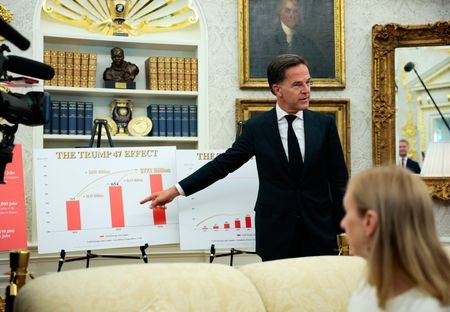
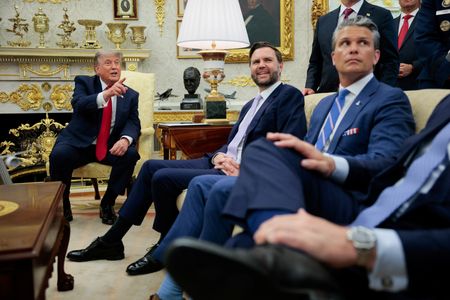
During the Oval Office meeting, Rutte used cardboard charts to show how much NATO countries have stepped up their defense spending since Trump first came into office in 2017.
He also said thousands of U.S. military planes had operated from bases in Europe during the war, pointing to that cooperation as a sign of the allies' support.
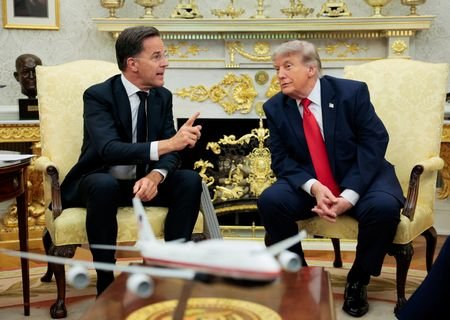
"I know there have been isolated cases about which you are really disappointed, but generally speaking your European allies have been there," Rutte said.
Trump appeared largely unconvinced, though he praised Rutte's efforts.
"You really have done a good job, and I think if anybody else were in that position, we wouldn't even be meeting today, to be honest with you, because we were let down. We didn't need help on this at all," Trump said.
One of Rutte's primary roles since Trump's second election victory in November 2024 has been managing the president's hostility toward the alliance and preventing tense moments, including Trump's push to acquire Greenland, from spiraling into lasting crises.
Tensions between Washington and NATO have escalated in recent months. After NATO allies refused to back Trump's Iran campaign, which he began without prior consultation, Trump openly questioned whether the U.S. should stand by NATO’s mutual defense pact and said he was considering leaving the alliance.
(Reporting by Humeyra Pamuk in Washington and Lili Bayer in Brussels; Additional reporting by Andrew Gray in Brussels; Editing by Colleen Jenkins and Nia Williams)